
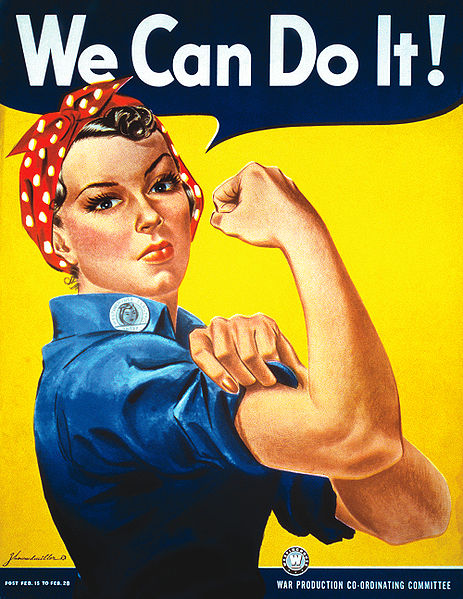
 Rosie the Riveter is a cultural icon of the United States, representing the American women who worked in factories during World War Two, many of whom produced munitions and war supplies.
These women sometimes took entirely new jobs replacing the male workers who were in the military. Rosie the Riveter is commonly used as symbol of feminism and women’s economic power.
The term “Rosie the Riveter” was first used in 1942 in a song of the same name written by Redd Evans and John Loeb. The song was recorded by many artists, including the popular big band leader Kay Kyser, and became a national hit.
The song portrays ” Rosie” as a tireless assembly line worker, doing her part to help American war effort. The words of the song are: All the day long. Whether rain or shine, She’s part of the assembly line. She’s making history. Working for victory, Rosie the Riveter.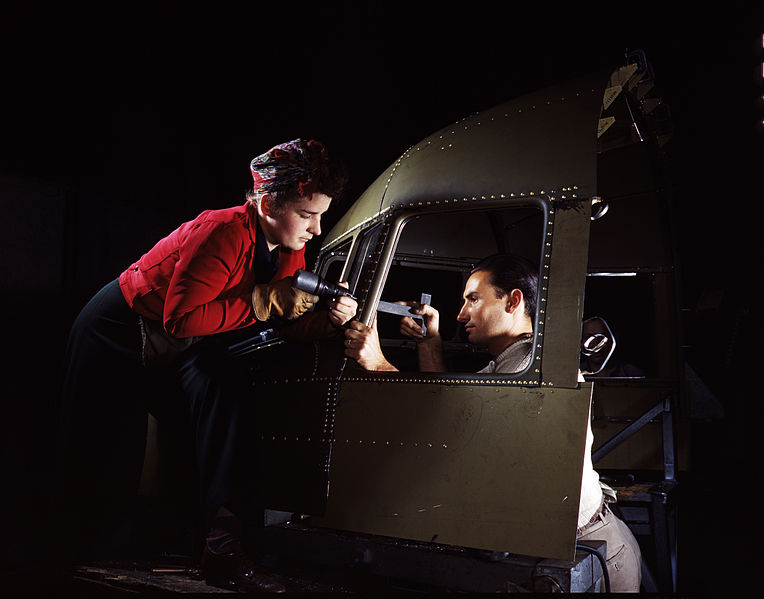
Although women took on male dominated trades during World War two, they were expected to return to their everyday housework once men returned from the war. Government campaigns targeting women were addressed solely at housewives, perhaps because already employed women would move up to the higher-paid essential jobs on their own, perhaps because it was assumed that most would be housewives. One government advertisement asked women “Can you use an electric mixer? If so, you can learn to use a drill.
Propaganda was also directed at their husbands, many of whom were unwilling to support such jobs. Later, many women returned to traditional work such as clerical or administration positions, despite their reluctance to re-enter the lower paying fields. However, some of these women continued working in the factories.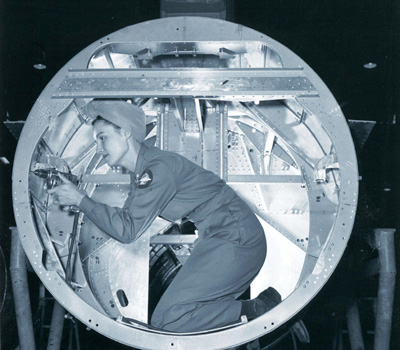
Rosie the Riveter became most closely associated with another real women, Rosie Will Monroe. She worked as a riveter at the Willow Run Aircaft Factory in Michigan, building B-29 and B-24 bombers for the U. S. Army Air Forces.
Monroe achieved her dream of piloting a plane when she was in her 50s and her love of flying resulted in an accident that contributed to her death 19 years later. Monroe was asked to star in a promotional film about the war effort at home. The song Rosie the Riveter” was popular at the time and Monroe happened to match the woman depicted in the song.
Rosie went on to become perhaps the most widely recognized icon of the era. The films and posters she appeared in were used to encourage women to go to work in support of the war effort.
According to the Encyclopedia of American Economic History, “Rosie the Riveter” inspired a social movement that increased the number of working American women to 20 million by 1944, a 57% increase from 1940. By 1944 only 1.7 million unmarried men between the ages of 20 and 34 worked in the defense industry,while 4.1 million unmarried between those ages did so. What unified the experiences of these women was that they proved to themselves and the country that they could a “man’s job” and could do it well. The average man working in a wartime plant was paid $54.65 per week, while women were paid about $31.50 per week. 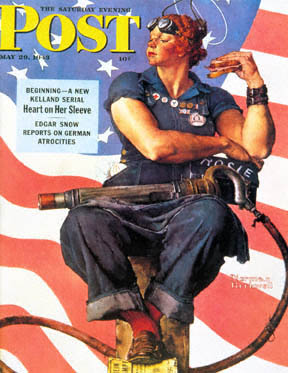
Some claim that she forever opened the work force for women, while others dispute that point, noting that many women were discharged after the war and their jobs were given to returning servicemen.
These critics claim that when peace returned few women returned to their wartime positions and instead resumed domestic vocations or transferred into sex-type occupations such as clerical and service work.
Some historians emphasize that the changes were temporary and that immediately after the war was over women were expected to return to traditional roles of wives and mothers. Finally for the first time the working woman dominated the public image and women were riveting housewives in slacks, not mother domestic beings, or civilizers.”
On October 14,200, the Rosie the Riveter/ World War Two Home Front National historical Park was opened. In Richmond, California, site of the four Kaiser shipyards, where thousands of “Rosie’s” from around the country worked. Although ships at the Kaiser shipyards were not riveted, but rather welded. Over 200 former Rosie’s attended the ceremony.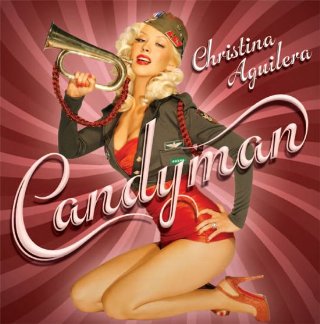
Most recently Christina Aguilera, emulates the famous Andrews Sisters vocal harmonies of the WW-Two Era. While wearing a red bandanna and shot with the era’s vintage Technicolor processing scheme, Christina gives the famous “Rosie” pose, with fist-up, and right hand on biceps. What is it about “Rosie the Riveter” that we just can’t seem to get enough of?
 LOVE IN BLOOM BLOG