Coast Guard Grandparents

JesseThere’s never been a generation like the baby boomers, and there never will be again! Some Boomers are retired Cost Guard, they are informed, enthusiastic, ready to beat the odds and they know how to laugh but are they really prepared to babysit?

Do they know the difference between a pull up and a pop up? Don’t laugh! I called Jeremy’s pull ups, pop ups it was an honest mistake. Plus he had to show me how to use his mother’s kitchen gadget stuff. I can’t be the only granny that can’t figure it all out!

If your grandchildren’s parents are in the coast guard then Facebook and Skype have probably become very important to you. Currently Facebook is our way of staying connected to them and my daughter in laws blog. We are so happy to be able to see what they are all up to these days it really means the world to us.

 Six years ago my son met a lovely gal and four years later they got married and when they said, “I Do ” and he became a father to her son. Then while they were stationed in the South they had two babies, a boy and a girl. Perfect! During that time I moved to the south with them (not so perfect) but then I meant a wonderful southern gentleman and now we are married. Perfect!
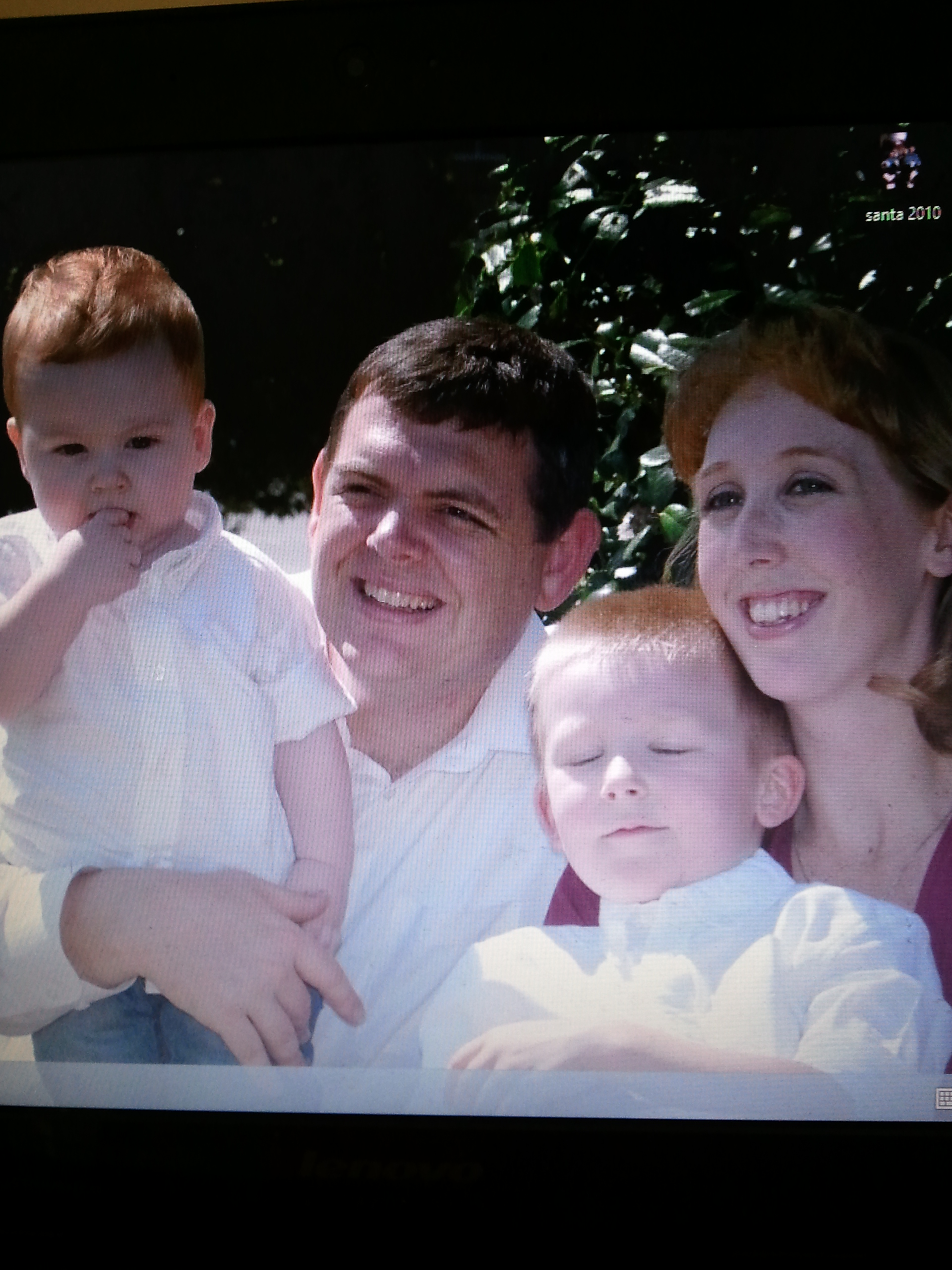
SAMSUNGWhen my son joined the Coast Guard he was a bachelor and I never thought  about the future or what it would be like to be a grandmother and having grandchildren moving every four years. However I did experience all the emotions mothers have when their sons and daughters are in any branch of the Military and have to move around.
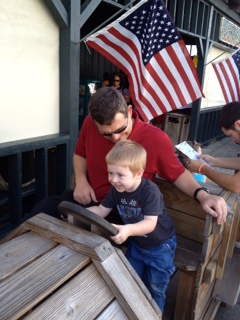
Jesse And His DadThe up side of spending time with them these past four years was experiencing how awesome they are as a couple and parents and I will always consider it an honor to get to know them as a family. They are terrific people and they seem to just role along with where ever the cost guard takes them.
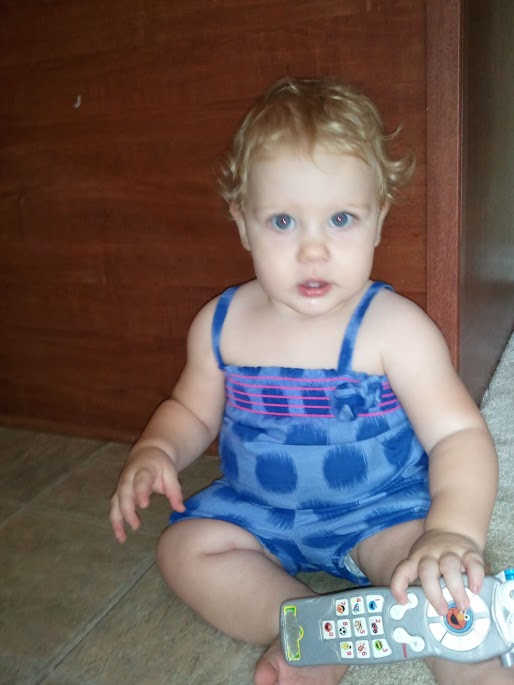
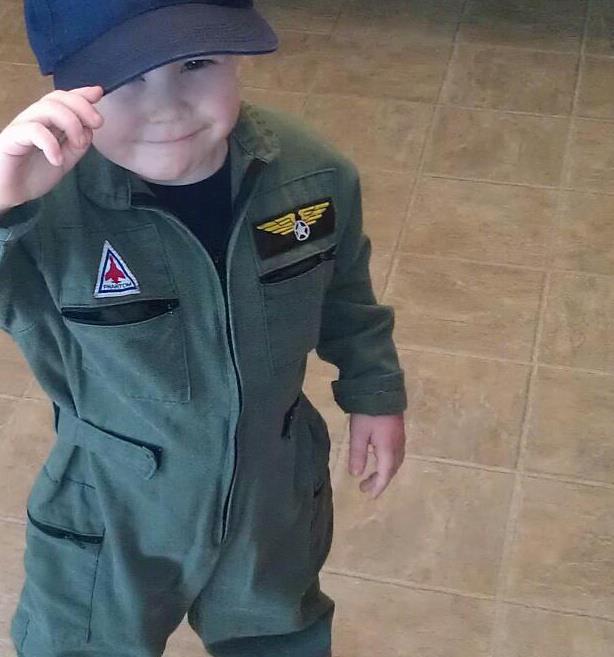
Miss Julie On The PhoneIt’s also been a blessing to have experience the past four years with Jeremy, and the first three years of Jesse’s life and the first year of Miss Julie‘s life. Last month they moved from The South to Alaska. It took me two weeks to adjust but I’ve made it through and now when I  drive past the Coast Guard base and see the air plane out in front and I’m happy to say, I don’t tear instead I smile!

My husband and I used to like to kid around and say “We child proofed the house and they still got in.” I know! But it’s funny. All kidding aside we had a blast with our grand-kids and suddenly for a while we were wise and loved again just because we were us.
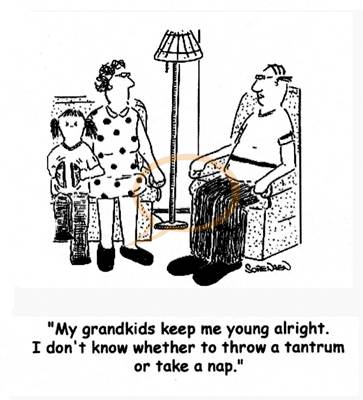
Grandkids Keep Us YoungI’m sure they felt we were a bit odd, and occasionally I felt as though I would catch them giving each other meaningful glances that seemed to say, They’re old and we must be the patient with them.
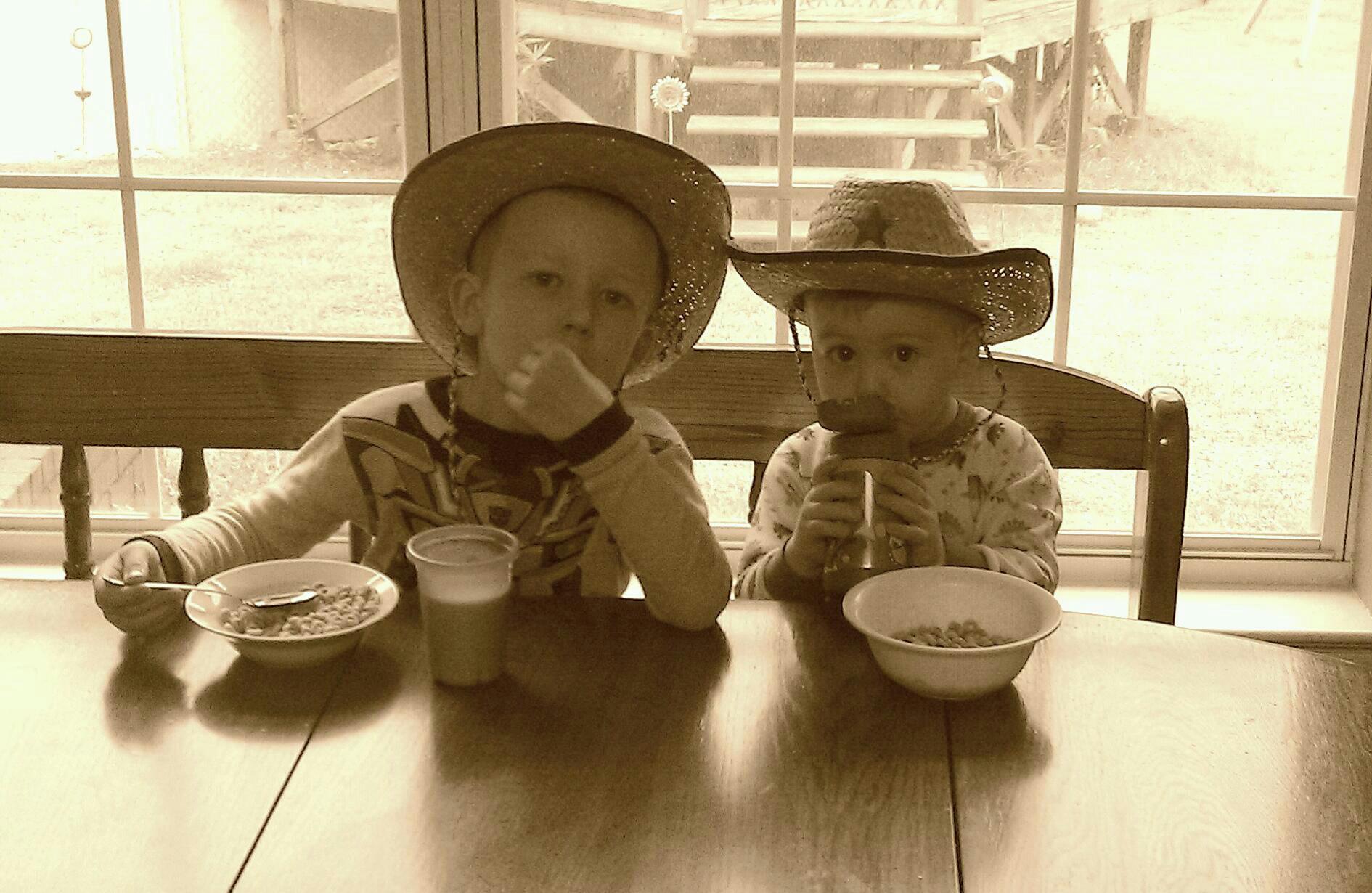
Jeremy & JesseNevertheless Jesse and Miss Julie did not show any signs of age discrimination and treated us as though we were as young as their parents. I use to wonder if Miss Julie was thinking, oh no, here comes those old people again. Where’s the pretty blond lady? I’m referring to our friend Lynn, who loved to gently rock Miss Julie to sleep. While on the other hand I spent my time with Miss Julie walking and walking around the house for what seemed like a million times telling her she could do it and in own time she did.
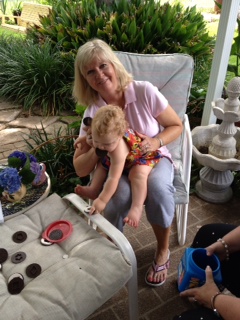
 Miss Lynn & JulieWe want to thank Lynn and Victor (retired Coast Guard) for stepping up to the plate and helping us the first time we babysat Miss Julie or as the young people say, hung out with Miss Julie. We were surprised when it took three baby boomers and one retired Coast Guard guy to take care of one baby girl and when her parents came home she stayed up and played with her brother and we went home to take naps. Is that called role reversal? Parents taking naps instead of the kids!

Love from a Granny In Training
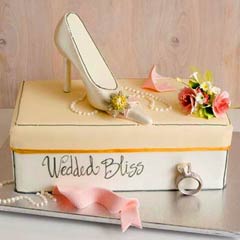
“Wedding Bliss In A Shoe Box”

 Wedding Bliss                                                                                       

Stella and Johnny spent their fiftieth wedding anniversary reminiscing about how amazing their wedding was. Stella said, it seemed like each flower bloomed on que and represented their love for each other, the candles were bright and dancing, the wedding party didn’t miss a step as the wedding march played. 

It was a grand wedding and after the I do’s and good byes Stella’s, elderly grandmother Sadie, stopped Stella and reminded her of the two promises that Stella, had made to her when she announced her wedding plans.  Stella,reassured Sadie,that she was looking forward to fulfilling her grandmothers requests. 

The first request was that Stella and Johnny would spend their honeymoon in Niagara Falls, New York because it was family tradition. The second request was that Stella would always keep mad money in the shoe box on the shelf in her closet and that Johnny would never snoop in it. Sadie, gave her a decorated wedding shoe box that she called, her “wedding bliss box” and promised her grand-daughter that it would work.

After Johnny carried Stella across the threshold of their first home, she placed a shoe box on a shelf in her closet and asked him never to touch it. For fifty years Johnny left the box alone. But one day, while he was searching for the deed to their house, he spotted the box. Caving in to temptations, he opened it. To his surprise, he found two doilies and $75,000 in cash. He put the box back in the closet. Puzzled about what he had found, he confessed to Stella that he had opened the box and begged her to explain the contents. 

“Grandma Sadie”, gave me her shoe box just as I was getting ready to walk down the aisle, to say my wedding vows,” Stella explained. “She told me to make a doily for every time I became mad at you and we would enjoy a long and happy marriage” Johnny was genuinely touched that in a half century, his wife had been mad at him only twice. ” So where did the $75.000 come from?” he asked.”Oh, replied Stella’s, “that’s the money I made from selling the rest of the doilies.”  Stella, smiled and under her breath thanked her grandmother for the best advice a bride could receive.

Success Is A Mind Set

In the midst of difficulty lies opportunity. ~ Albert Einstein.

Researcher Carol Dweck refers to The Natural Genius’s as a “fixed mindset.” In her book Mindset: The New Psychology of Success, Dweck summarizes three decades of research that demonstrates the enormous impact your views on intelligence and what it takes to succeed have on how you see your own capabilities.

Briefly, when you have a fixed mindset, your energies are focused on performing well and being smart, both of which require you to continually prove yourself. Succeeding does inspire self-confidence for a while. When you’re faced with a setback, however, you often go to great lengths to avoid challenge and failure.

To the fixed-mindset person, intelligence and skill are seen as a sum game. Either you can do math or you can’t. You’re artistic or you’re not. You have what it takes to sell or to be a great speaker or you don’t. Not surprisingly, Dweck found that people who have a fixed mindset are more likely to rate high on the impostor scale.

A major reframe for the Natural Genius involves the recognition that innate talent has remarkably little to do with greatness. Not only can you learn how to any number of things, you can even become great at them, if you’re willing to work at it. As extensive research in the United States and Britain reveals, people who excel in fields from music to sports to chess are the ones who devote the most time in engaged “deliberate practice.”

This involves not just repeated practice but repeated practice based on highly targeted measures and goals. Even people who’ve already reached the top know that staying there requires constant practice. That’s why sports figures are constantly practicing their sports even off-season. This emphasis on continuous improvements is indicative of what Dweck calls a “growth mindset.” In direct contrast to the fixed mindset success is not considered a function of being inherently, gifted, or skilled. Instead the path to mastery is seen as a lifelong learning and skill building.

And because growth-mindset people know how to learn from mistakes and failure, rather than withdrawing from difficult endeavors or becoming discouraged, they redouble their efforts. When you see yourself as a work-in-progress, you’re automatically less likely to experience feelings of inadequacy. Not only is natural talent not required to be competent, having it does not automatically guarantee success. Dweck cites example after example from the world of sports and art of people who started out with only average abilities but were willing ot perceives and wound up doing as well and after better than those who are naturally gifted but fail to apply themselves.

The good news is that effort is available to anyone willing to use it and that includes you. With practice you get better, and when you get better, you feel better. Best of all, you’ll have the hard-won confidence to prove it. Will you encounter setbacks along the way? Bet on it!  The difference is that instead of seeing difficulty and challenge as signs of your ineptness, you now approach them as opportunities to grow and learn. Here’s where the power of self-talk and reframing comes in.

Instead of thinking, I’m unqualified, think, I may be inexperienced but I’m fully capable of growing into the role. In the past, when you were faced with something you’d never done before, you thought, Yikes, I have no idea what I’m doing! Now you tell yourself , Wow, I’m really going to learn a lot, words really do matter. Simply changing how you talk to yourself about a difficulty or a challenge changes how you approach it.

Michelangelo said, “Genius is eternal patience.” writing a dissertation or building a practice or doing anything of consequence takes much time, effort, and patience. Remember that your first draft, first presentation, first painting, or first anything is never going to be as good as your second or your two hundredth. swap your false notions of overnight success for the ideal slow, steady progress, and you’ll discover the true meaning of genius. Remember effort seems to trump ability, challenges are often opportunities in disguise and real success always takes time.

What Do Grandparents Want To Know

Being a grandparent in today‘s world isn’t what it use to be, it’s better. If you’re already a grandparent you know that being a grandparent today isn’t just about babysitting and boasting it can be the most challenging role of your life.

 Grandparents today are so different from all other generations especially from their grandparents. A new grandparent is created every twenty seconds and if you are one of them, welcome!

There are a lot of us already statistics show that we make up one-third of the U.S. population. There are now 70 million grandparents in the United States, and 1.7 million more every year. And while there are a lot of books written to help parents who worry about their baby’s health, their baby’s size compared to the charts, and what IQboosting toys they should buy for their toddlers, there are very few books for us. Their parents. The grandparents!

Do we really need a book about grandparenting? After all, weren’t we parents already? Aren’t we founts of help and advice? Thrilled and devoted? Ready to jump in and help, but wise enough to know when to bow out and be silent? The givers of gifts, and guardians of family history? Mature? Mellow? and Marvelous?

You might be thinking yes, but… and isn’t grandparenting natural? Weren’t their grandparents long before there were books? Isn’t it instinctive? Basic? And built-in? Yes, but… haven’t we grown up watching our own grandparents in action? We had grandparents, our children have grandparents, and now our grandchildren have grandparents. It’s the way of the world, isn’t it? Yes, but… You’ll find that while your emotions may be universal and the problems are timeless, one thing is very different for today’s grandparents. We are different!

Who we really are is a question that many grandparents are asking themselves and each other in today’s society. Here is what a few grandparents are saying; We are healthier, more active, and more youthful and young at heart than our predecessors. Plus, we’re still working and working out, teaching, and learning, traveling, marrying, divorcing, remarrying, and melding our families. Grandparents today have more access to information full of tips on ways the can be the best grandparent they can be.

Our book cases are full of books about cooking, traveling, art, gardening, home improvements, investing money, how to look ten years younger, how to use our nooks, Ipads, cell phones, computers, the million apps that we can use for free, consumer reports covering the A to Z’s of any thing you could think of to buy along with the series of “Dummy Books” and let’s not forget how to be a modern grandparent.

I don’t know if there is a book called ” Grandparenting for Dummy’s” or not I just thought of that. I can tell you that if there isn’t one I’m sure someone will write one soon and it will probably be a best seller. It’s time to google Dummy Books to find out if there is a Dummy Book for Grandparents let me know.

What do grandparents today want to know? Since we are grandparents like no others, our questions are like no others. We want to know how to pick a name of ourselves. What’s wrong with “Grandpa” or “Grandma”? Nothing, but it’s often already taken, since our parents, and perhaps even their parents, are still alive. With so many grandparents, blended and melded grandparents, and great-grandparents in most families, grandparents today want to know how to be the favorite or at least, among the favorites.

We want ot know if it is normal to have “favorites,” to feel bored at times or stressed when our grandchildren visit. We want to know how to make grandchildren smile without spoiling, and help their parents provide for them financially in this bad economy without becoming a purse or a nurse.

We want to know how to handle divorce without hurting the grandchildren (our divorce, their parents’ divorce). We want to know what our daughter-in-laws really think about us and how to develop a better relationship with them so we can get even closer to our grandchildren.

Grandparents want to know so they participate in groups focused on distant granparenting, daughter-in-law problems, grandfathering, financial concerns, and much more. Lots participate in the online surveys. Many of them enjoy contributing and reading grandparent humor. I love everything about grandparenting humor and sometimes I write about something my grandson’s have just done and I find myself laughing as I am writing it’s a blast isn’t it?

Grandparents from every walk of life and from across this country are asking questions about grandparenting we want to know and if someone would write a book called “Straight Talk for Grandparents” telling us what we want to know we would appreciate it and maybe in the future our grandchildren will say thank you grandma or grandpa for believing in me. Grandparents are busy enough so a book written in plain english full of do this and do that because it is in the best interest of your children and grandchildren would help make the world of grandparenting run a lot smoother.

I want to thank my grandparents for making me feel like the smartest and most talented grandchild in the world. Doesn’t that statement just melt your heart? Take a minute and  image that your grandchildren are saying thank you Nana for making me feel like the smartest and most talented grandchild in the world. Don’t you feel all warm and tingling all over just thinking about them saying that to you? I know I do!

Let Go And Surrender

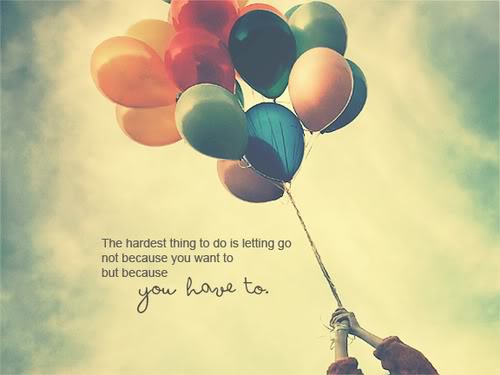
Letting go is an emotional and spiritual surrender. It means willingly jumping out of the lifeboat of your preconceptions of reality and taking your chances out in the open sea of anything-can-happen.

It means that even as your definition of reality is dissolving before your very eyes, you willingly relinquish it, instinctively comprehending that the state of surrender itself will be a creative condition. It’s hard to let go, to live in a formless, destinationless place. All our lives we’re taught to hold on, to be the masters of our fate, the captains of our souls. Letting go isn’t comfortable; it can feel like anything from laziness to utter loss of control. It’s not aggressive and self-assured. It’s not the American way.

But letting go is, in truth, is a most elegant kind of daring. It is vulnerability of the highest order, an emptying out of self, of all the clutter, chatter, ideas, attitudes, schemes, and plans that, ordinarily, we all contain. In this emptiness, there is room for so much; in this vacancy, anything can happen: breathtaking transformations, changes of directions, miracles that will purely astound you, love that comes out of a spiritual conversion. But only if you are willing to truly let go of it all: as the tree dropping her bright leaves for winter, the trapeze artist, suspended in midair between two bars, the diver free-falling from the high dive, have all unequivocally, wholeheartedly let go.

Letting go is being alive to the power of anything is possible. It is living in surrender, trust, and the belief that emptiness is at once the perfect completion and the perfect beginning. So let go. And remember that if you hang on to even a shred or try to make a deal with Gods meaning of letting go you might not experience all the wonderful things that are ment happen to you.

Roll Out Those Lazy, Hazy, Crazy Days Of Summer

Roll out those lazy, hazy, crazy days of summer. Days of Juicy Juice, Goldfish and Mom’s yummy home-made monster cookies. Dust off the sun and the moon and sing a song of cheer. Fill your lunch boxs full of your favorite summer goodies. Lock up the house, load up the SUV and buckle up and lets Go, Go, Go on an adventure at the seashore.

Roll out those lazy, hazy, crazy days of  summer when boys and girls are happy day dreaming about swimming at the seashore, listening to the ocean in seashells and drawing funny faces in the sand. They are hoping that they will win first place for building the tallest sand castle.

Roll out those lazy, hazy, crazy days of summer as the clumsy toddlers with their legs sprawled out for balance and a shovel gripped awkwardly in a little fist as they are  intent on filling a bucket full of sand and sea shells and are fully unaware of their mothers loving gaze. Dust of the sun and the moon and sing a song of cheer and roll out those lazy, hazy, crazy days of summer.

 Love from Grandma

Fifteen Ways To Kiss Your Love

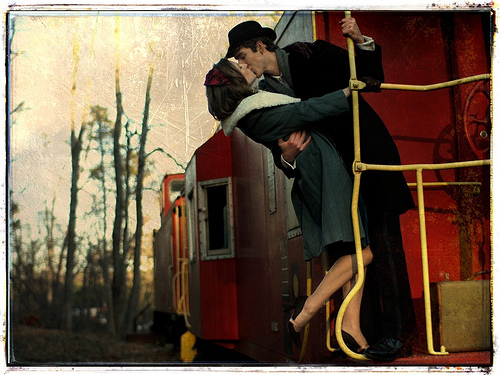
The days of true romance and passion are back. Kissing your love no longer needs to be a routine event bordering on the tedious.  Put some fire  back into your romance with a different kind of kiss.

 Whatever the mood or the time, there is a kiss to fit the  moment.

You and your love can continually discover new and exciting ways to kiss in unique ways. Here is a list of fifteen fun ways to kiss your love.

  1. The Great Expectation Kiss: Inform your love one morning that he or she will soon receive a fabulous kiss. Later, call your love with a reminder. Then the next you see your love, pull out the stops and plant a long, hot passionate kiss.
  2. Goodbye Surprise Kiss: Send off your love in the morning with a quick kiss. As your love turns to leave, pull him or her back for a second, more passionate kiss.
  3. The Full Moon Kiss: The next time there is a full moon take your love someplace where the two of you can smooch by moonlight. A full moon can be very romantic.
  4. The forewarned Kiss: Leave your love a note alerting him or her about where you will be kissing him or her later. When you two meet next… watch out!
  5.   The S.W.A.K. Kiss: Write a love letter and seal it with a kiss.
  6. The Rose and Violet Kiss: Place a rose and a violet on your love’s pillow with the note: “Roses are Red, Violets are Blue.” I may be at work, but my thoughts are of kissing you.”
  7. The Answering Machine Kiss: After the beep, leave a long, sloppy kissing sound and the message, “There’s more where that came from!”
  8. Eventful Kiss: Tell your love that for a kiss, you will provide a big surprise. Upon receipt, present your love with a pair of tickets to his or her favorite event (e.g. Football, Opera, Theater). Whether you like it or not, agree to go with your love.
  9. The Car Door Kiss: Just before you or your love opens the car door, give them an unexpected kiss.
  10. Welcome Home KissGreet your love at the door with a big warm kiss and a cheerful “Glade you’re home.” Take his or her baggage, direct to a comfortable chair, remove shoes, and hand him or her the remote control and their favorite dessert.
  11. The Network Kiss: Is your love a subscriber to one of the personal computer networks? If so, send him or her kisses through the electronic mail function. If not, just post a note for all to read espousing your love’s puckering prowess.
  12. The Couch Cornering Kiss: In 1936 author Hugh Morris proclaimed the best way to kiss your love was to first corner him or her against the arm of a sofa. “First flatter them, then grab hold and finally move in for the kiss.”
  13. The Blow Kiss: This one is funny. The two of you puff out your cheeks with air. Now, zero in for a kiss, keeping your eyes open and trying not to laugh.
  14. The Vow Kiss: Think of a vow you would like to share with your love and memorize it. Then, standing a few feet apart, face your love hand-in-hand, and recite your vow. Afterward, both close your eyes and lean forward until your lips meet in a kiss.
  15. The Reconcile Kiss: Hate reconciling your checking account? Make a deal with your love to be kissed any way they want if the check book is successfully balanced.

 I hope you and your love continually discover new and exciting ways to kiss each other for many more years to come.

The History of Cup Cakes

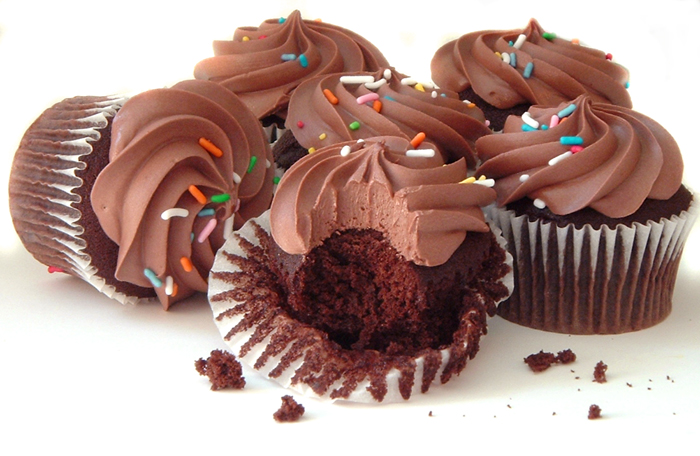
If you’re a cup cake baker extraordinaire like I am? Then you will enjoy reading about the history of cup cakes. When my daughter was three years old we started going to a french bakery. The Baker would come over and say, “Bonjour” to her and she would say “Bonjour” back to him. It’s always so sweet when little girls say “Bonjour” isn’t it?  Then he would offer her a taste of one of his scrumptious desserts but she would shake her head as to say “no” and ask him for a cup cake please!  As time went by she had tasted every kind of cup cake the baker could think to make. If she liked it he would make it the cup cake of the week. As a result he came up with  many creative ways to decorate the cup cakes and his cup cake sales increased by fifty percent.

 I became inspired and learned how bake and decorate cup cakes like the ones he baked at the bakery. I can honestly say that If there’s a way to decorate a cup cake I have tried it. Sometimes they turned out perfect and other times they ended up in the trash but it didn’t matter because I always had one fan who didn’t care if the cup cakes turned out the way I wanted them to or not she would eat them.  If you are a cup cake extraordinaire or just enjoy eating cup cakes. 

 The History of Cup Cakes

A cupcake (also British English: Fairy Cake; Australian English: Patty cake or Cup Cake is a small cake designed to serve one person, often baked in a small, thin paper or aluminum cup. As with larger cakes, frosting and other cake decorations, such as sprinkles, are common on cupcakes.

Although their origin is unknown, recipes for cupcakes have been printed since at least the late 12th century. The first mention of the cupcake can be traced as far back as 1796, when a recipe notation of  “a cake baked in small cups” was written in American Cookery by Amelia Simms. The earliest documentation of the term cupcakes was in ” Seventy-five Receipts for Pastry , Cakes and Sweetmeats” in 1828 in Eliza Receipts cookbook.

In the early 19th century, there were two different uses for the name cup cake or cupcake. In previous centuries, before muffin tins were widely available, the cakes were often baked in individual pottery cups, ramekins, or mold and took their name from the cups they were baked in. This is the use of  the name that has persisted, and the name of  “cupcake” is now giving to any small cake that is about the size of a teacup.

 The name “Fairy Cake” is a fanciful description of its size, which would be appropriate for a party of diminutive fairies to share. While English fairy cakes vary in size more than American cupcakes, they are traditionally smaller and are rarely topped with elaborate icing.

The other kind of “cup cake” referred to a cake whose ingredients were measured by volume, using a standard-sized cup could also be baked in cups; however, they were  commonly baked in tins as layers or loaves. In later years, when the use of volume measurements was firmly established in home kitchens, these recipes became known as 1, 2, 3, 4 cakes or quarter cakes so-called because they are made of four ingredients: one cup of butter, two cups of sugar, three cups of flour, and four eggs. They are plain yellow cakes, somewhat less rich and less expensive than pound cake, due to using about half as much butter and eggs compared to pound cakes. The names of these two major classes of cakes were intended to signal the method to the baker; “Cup Cake” uses a volume measurement, and “Pound Cake” uses a volume measurement , and “Pound Cake” uses a weight measurement.

In the early 21st century, a trend for cupcake shops was reported in the United States, playing off of the sense of nostalgia evoked by the cakes. In New York, cupcake shops like Magnolia Bakery gained publicity in their appearances on poplar television shows. In 2010 television presenter Martha Stewart published a cook book dedicated to cup cakes.

Cupcakes have become  more than a trend over the years; they’ve become an industry. Rachel Kramer Bussel, who has blogged about cupcakes since 2004 at Cupcakes Take the Cake, said that in the last two years or so cupcakes have become popular nationwide.

A “cake in a mug” is a variant that gained popularity on many internet cooking forums and mailing lists. The technique uses a mug as its cooking vessel and can be done in a microwave oven. The recipe often takes fewer than five minutes to prepare.

After I read the history of cup cakes  I wonder did I miss my calling? Should I have become a cup cake extraordinaire baker? No! I don’t think so. I was happy to just bake cup cakes for my family. However I am looking forward to eating cup cakes with my grandchildren in the future.

Antiques and Keepsakes

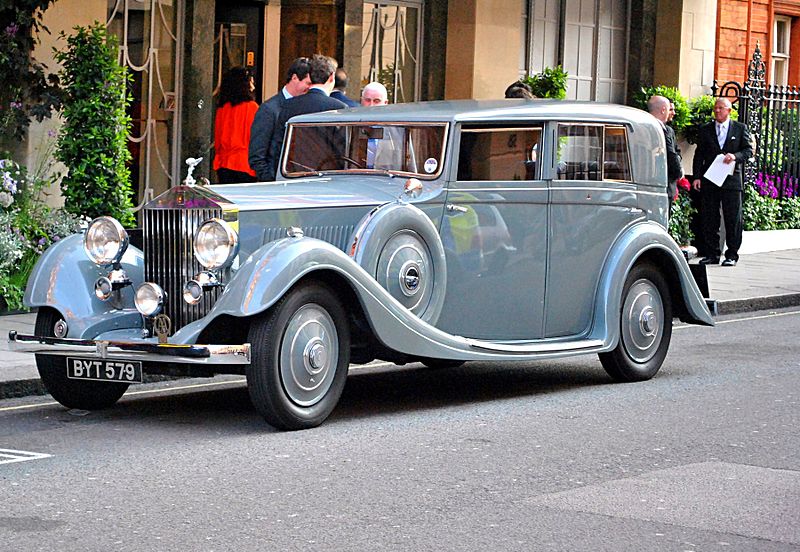
The definition of antique varies from source to source, product to product, and year to year. The only known exceptions to the “100 year rule” would be cars. Since the definition of the term antique requires an item to be at least 100 years, or older, and the items in question must be in its original and unaltered condition to be an ‘antique’ if they are roughly 75 years old, or more (some cars can be registered as “classic” when  25 years old, such as muscle cars and luxury vehicles such as a ( Rolls-Royce and Bentley). Further, this is not n universally accepted concern, but rather a consideration made almost strictly by car collectors and enthusiasts.

In the United States, the 1930 Smoot-Hawley Act defined an antique as “works (except rugs and carpets made after the year 1700), collections in illustrations of the progress of the arts, works in bronze, marble,terra-cotta, Parian, pottery or porcelain, artistic antiquities and objects of ornamental character or educational value produced prior to the year 1830. 1830 was roughly the beginning of mass productions in the US and 100 years older than Smoot-Hawley Tariff Act. These definitions allow people to make a distinction between genuine antique pieces, vintage items, and collectible objects. The term antiquarian refers to a person interested in antiquities, or things of the past.

The definition of a keepsake is some object given by a person and retained in memory of something or someone; something kept for sentimental or nostalgic reasons. She gave him a lock of her hair as a keepsake of their time together. Historical specifically, a type of literary album popular in the nineteeth-century, containing scraps of poetry and pose, and engravings. Keepsakes can be called mementos, souvenir, and memorabilia retained in memory of something, someone or a special occasion. Life is full of keepsakes. Every person has them. Every person keeps them. We find them in closets, in scrapbooks, under beds, in attics and in garages. Keepsakes are forever.

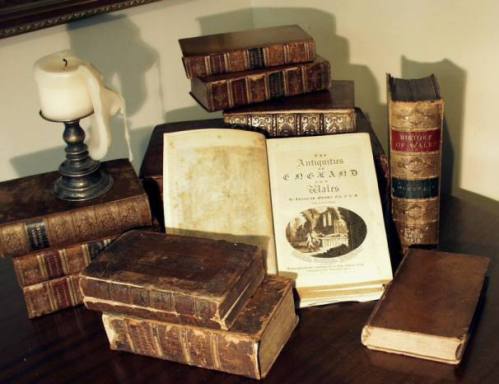
 The other day I stopped in at an estate sale the house was bulging at the seams with antiques and keepsakes.  Everything from Vintage jewelry to first edition books signed by the authors. The owners also had beautifully crafted figurines inspired by artist Muriel Joseph George. It got me thinking. What is a keepsake? The thesaurus gives synonyms for keepsakes: mementos, memorial, remembrance, souvenir, symbol, token, trophy. But I’m not sure these words adequately describe a keepsake.

To me, a keepsake is something that when I look at it, my mind becomes flooded with the taste, smell, sound, and memory of an event. It’s something that I don’t have to write an explanation for in the scrapbook. When I glance at a program from a day at the “Ice Capades” all my sense’s come alive. Once again I can pretend that I’m a famous Ice Skater like the one’s in the Ice Capdes that day. Our keepsakes are like a life long friend, who reminds us of the all those special occasions we have experienced in life.

Neverland

The clock struck twelve and my third-grade class-mates and I ran from our desks and out the door. It was recess the best part of the day that we all looked forward to.

 My friend Billy and I hit the playground, we ran to the farthest part of the play ground because no one played there.  If they wanted to play basketball or kickball they would play in the area close to the drinking fountain. When we weren’t playing on the courts we could be found on the swings or monkey bars.

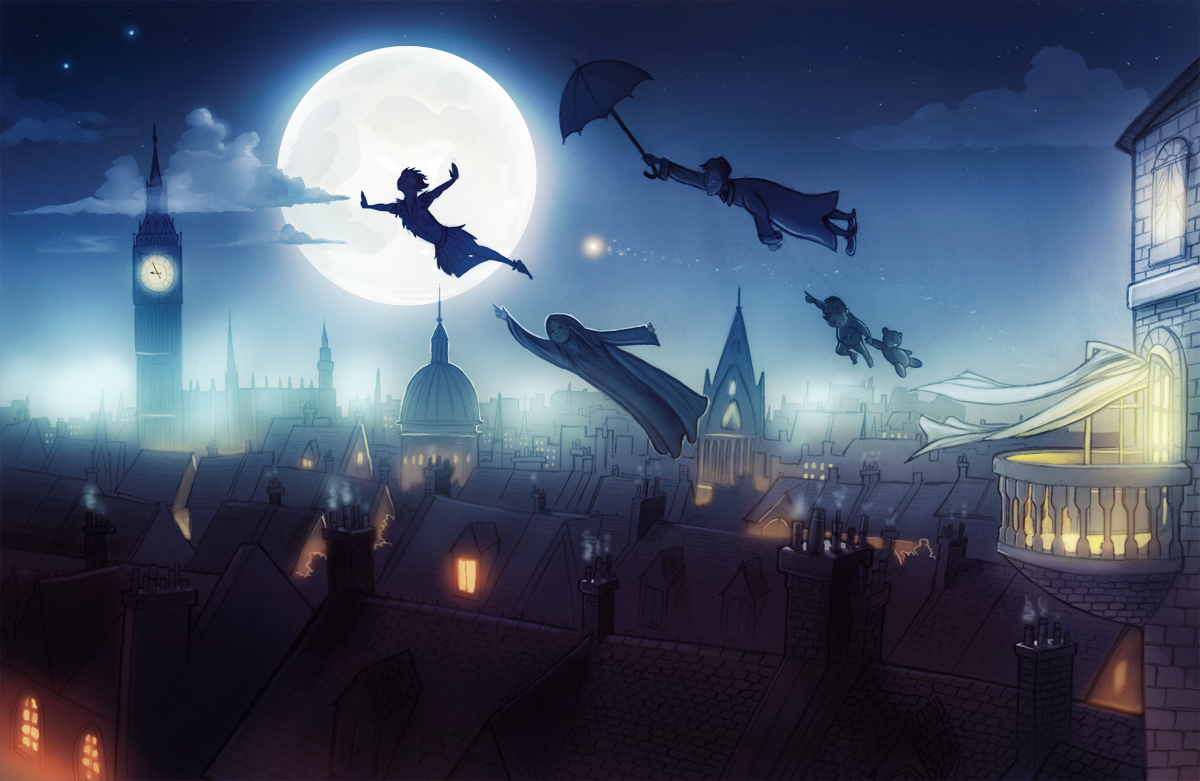
Billy and I pretended that we were in different places, like the Jungle, the Desert, or in the Ocean. One day we decided to play Peter Pan. “All right, here is where “Wendy” lives,” I said, pointing to a four-square section of the court. “And Peter Pan will live near that basketball hoop.” Billy liked my idea and we started to make up our game.

“Peter will be in trouble, so Wendy has to come in the middle of the night and save him,” Billy told me. “That sounds good… I think I’m going to be Tinkerbell.” I said, Suddenly Billy looked at me. ” But I want to be Tinkerbell today.  He complained. I told him that I had thought of the idea first, he still whined. “Come on, Billy you can be Tinkerbell tomorrow,” I said, hoping he would drop it. “No! I’m going to be Tinker Bell today. It’s only fair”, he yelled. “How fair is that?” I asked. “It just is!” I sighed. This fight was going nowhere. “Okay,” I said,” either I get to be Tinkerbell, or we won’t play this game at all.”

 Billy yelled at me that’s a stupid idea I guess that’s how girls with portuguese names are then he walked away. I stared at him as he walk toward the swings. I wondered what happened?  What does me being portuguese have to do with the both of us wanting to be Tinkerbell?  Up to that point I thought I was like everyone else. I knew that it really didn’t mean anything but it still wasn’t right or a nice thing to say. Just then the teachers blew their whistles, and recess was over. I told the teacher that Billy and I had gotten into a fight and she let us talk outside the classroom.

 Talking to him didn’t seem to make a difference he didn’t seem to care that he had hurt my feelings. I didn’t know how much it had hurt until I realized I was yelling at him. I stopped and told him I was sorry. “It’s okay. What I said was rude and I shouldn’t have said it. I guess I’m the one that’s sorry,” he said. “Thank you, I whispered. “No problem. And I promise never to make fun of your last name again. Do you forgive me?” he asked. “Of course, I forgive you! I laughed as we held hands while walking back into the classroom.

Once a year Billy and I would go to Disneyland with his family. Billy and I continued to pretended he was Peter Pan and I was Tinkerbell even if we were to old to. Billy and I stayed best friends until high school then we went to different schools and eventually drifted apart. 

I never forgot him or that he never insulted me again just as he promised. I always wondered who told Billy that I my last name was a portuguese name and that made me different from him? It’s obvious that an eight year old boy wouldn’t know something like that? Isn’t it? How did I know it was wrong of him or anyone to make fun of my name?

Nana’s Hands

If we can be generous with our hearts, ourselves, we have no idea of the depth and breadth of love’s reach. Our Nana was a generous woman with a big heart not just to her family but to all kinds of people, even people she didn’t know.

 She did nice things without expecting anything back. Nana was especially good at baking and she made the best chocolate chipcookies in the world.

One of the best things about Nana was that she loved people and they loved her back. Friends and family knew they could stop by and see her anytime and Nana would always welcome them. Everyone in her family depended on Nana to keep them up with the latest birth or who got married in the neighborhood (in the old neighborhood) as my dad use to say. They grew up in Massachusetts and Rhode Island. 

Now Nana’s not here to tell us what’s going on, or to bake those favorite things she was so good at making. Nana passed away a few years and my cousin found this poem and we realized that it describes how we felt about our Nana. It’s called “Nana’s Hands.”

Nana’s Hands used to touch us with. Nana’s hands would scold us and sit us down in a chair. Nana’s hands would applaud us when we did something good. Nana’s hands would hold us every chance they could. Nana’s hands would aid us when we fell down. Nana”s hands, Yes I miss them, they were the best hands around. Nana’s hands would spank us and she would say, “Now, Baby, you act right.” Nana’s hands would stroke us and tuck us in at night. Nana’s hands would pray for us, they would pray for everyone she knew. Nana’s hands would rise in the air as in God she put her trust. Nana’s hands were special; they were the very best. Nana’s hands got tired, and now they are at rest.

We thought a lot about the last line of that poem it taught us that it can be hard to lose people we love but it can sometimes be for the better too. When Nana got sick we felt bad for her when we realized she couldn’t do things she loved anymore and she was in pain. At least we knew that she didn’t hurt anymore.

 We also realized that we never thought about how things would change once Nana was gone. Losing someone you love can definitely help us appreciate the people who are special to us while we still have them in our lives.

Rosie The Riveter

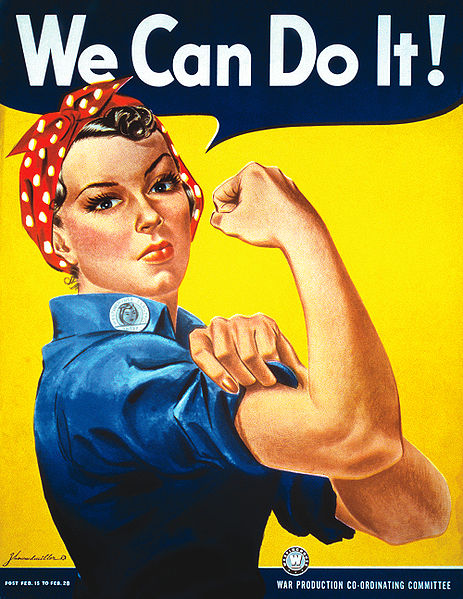
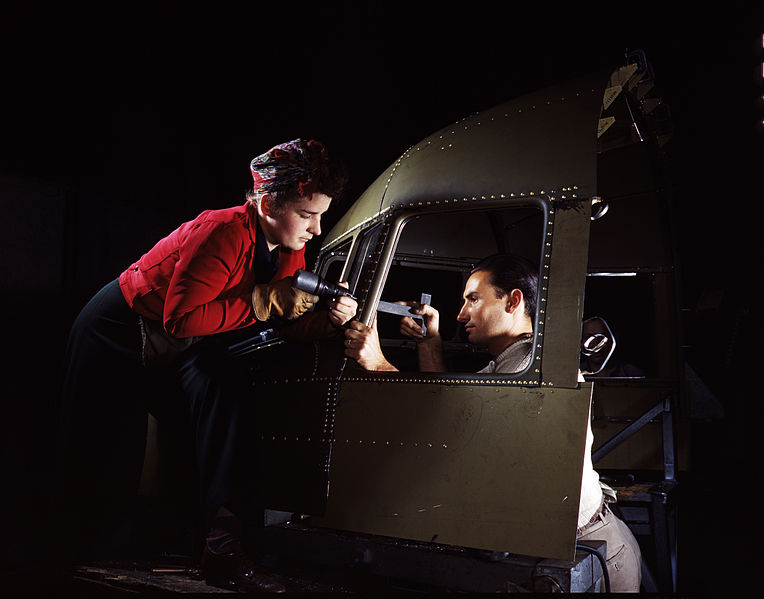
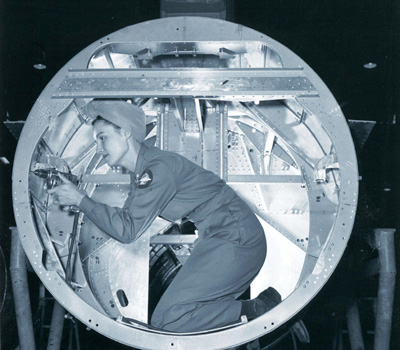
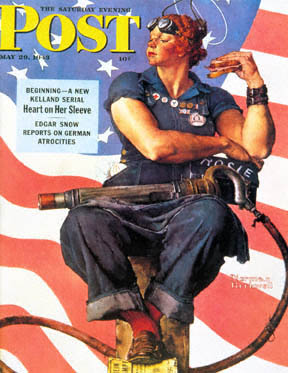
Rosie the Riveter is a cultural icon of the United States, representing the American women who worked in factories during World War Two, many of whom produced munitions and war supplies.

 These women sometimes took entirely new jobs replacing the male workers who were in the military. Rosie the Riveter is commonly used as symbol of feminism and women’s economic power.

The term “Rosie the Riveter” was first used in 1942 in a song of the same name written by Redd Evans and John Loeb. The song was recorded by many artists, including the popular big band leader Kay Kyser, and became a national hit.

 The song portrays ” Rosie” as a tireless assembly line worker, doing her part to help American war effort. The words of the song are: All the day long. Whether rain or shine, She’s part of the assembly line. She’s making history. Working for victory, Rosie the Riveter.

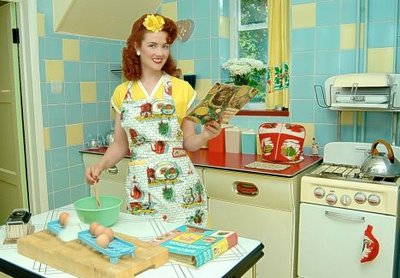
Although women took on male dominated trades during World War two, they were expected to return to their everyday housework once men returned from the war. Government campaigns targeting women were addressed solely at housewives, perhaps because already employed women would move up to the higher-paid essential jobs on their own, perhaps because it was assumed that most would be housewives. One government advertisement asked women “Can you use an electric mixer? If so, you can learn to use a drill.

 Propaganda was also directed at their husbands, many of whom were unwilling to support such jobs. Later, many women returned to traditional work such as clerical or administration positions, despite their reluctance to re-enter the lower paying fields. However, some of these women continued working in the factories.

Rosie the Riveter became most closely associated with another real women, Rosie Will Monroe. She worked as a riveter at the Willow Run Aircaft Factory in Michigan, building B-29 and B-24 bombers for the U. S. Army Air Forces.

Monroe achieved her dream of piloting a plane when she was in her 50s and her love of flying resulted in an accident that contributed to her death 19 years later. Monroe was asked to star in a promotional film about the war effort at home. The song Rosie the Riveter” was popular at the time and Monroe happened to match the woman depicted in the song.

Rosie went on to become perhaps the most widely recognized icon of the era. The films and posters she appeared in were used to encourage women to go to work in support of the war effort.

According to the Encyclopedia of American Economic History, “Rosie the Riveter” inspired a social movement that increased the number of working American women to 20 million by 1944, a 57% increase from 1940. By 1944 only 1.7 million unmarried men between the ages of 20 and 34 worked in the defense industry,while 4.1 million unmarried between those ages did so. What unified the experiences of these women was that they proved to themselves and the country that they could a “man’s job” and could do it well. The average man working in a wartime plant was paid $54.65 per week, while women were paid about $31.50 per week.

Some claim that she forever opened the work force for women, while others dispute that point, noting that many women were discharged after the war and their jobs were given to returning servicemen.

These critics claim that when peace returned few women returned to their wartime positions and instead resumed domestic vocations or transferred into sex-type occupations such as clerical and service work.

Some historians emphasize that the changes were temporary and that immediately after the war was over women were expected to return to traditional roles of wives and mothers. Finally for the first time the working woman dominated the public image and women were riveting housewives in slacks, not mother domestic beings, or civilizers.”

On October 14,200, the Rosie the Riveter/ World War Two Home Front National historical Park was opened. In Richmond, California, site of the four Kaiser shipyards, where thousands of “Rosie’s” from around the country worked. Although ships at the Kaiser shipyards were not riveted, but rather welded. Over 200 former Rosie’s attended the ceremony.

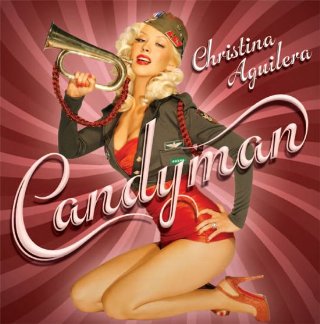
 Most recently Christina Aguilera, emulates the famous Andrews Sisters vocal harmonies of the WW-Two Era. While wearing a red bandanna and shot with the era’s vintage Technicolor processing scheme, Christina gives the famous “Rosie” pose, with fist-up, and right hand on biceps. What is it about “Rosie the Riveter” that we just can’t seem to get enough of?

Create A Family Value’s List

 What are your top five family values?  What traits do you hope your child or grandchildren will have as an adult? 

 Using the following five strategies in the acronym “TEACH”  can help you decide which traits really mean the most to you.

T- Target the value you want to apply right this minute in your home. Focus on only one at a time so you don’t get overwhelmed and spin you wheels trying to do to much. Many moms and grandmothers target a different key value each month. Write down your choices so you don’t forget.

E- Exemplify this value in your own everyday behavior. The easiest way for children and grandchildren to learn any new value is by actually seeing it in action. So intentionally start looking for ways to tune up your chosen value anytime you’re with your children or grandchildren.

A- Accentuate the targeted value in simple ways. For example, if respect is your targeted value seize the opportunity to make a point about treating all people with dignity by showing respect to the people in your life. 

C-Catch your children displaying the value and praise them for it. ” Hey, I know it was hard to admit you broke your brother’s hockey stick. I appreciate your honesty.

H- Highlight the value of the value. ” I loved how you smiled at Grandma today. That was being really kind. Did you see how her face lit up? Whenever you’re kind, it helps make the world a better place.” Whenever you highlight a value be sure you name the value and tell your child exactly how they made a different.

Here is an example of a few values : assertiveness, caring, charitableness, courage, excellence, fairness, friendliness, dependability, determination, generosity, helpfulness, honesty,industriousness, kindness, joyousness, politeness, tolerance, understanding, unselfishness, wisdom, purposefulness and a hundred more words that describe family values. This is something that grandparents can do to.

Grandparents Can Bring Back Letter Writing

In this age of cell phones, Email, faxes, letter writing is an all but forgotten practice and most young children have never written a letter.

 Now days we talk to our friends on our cell phones it rarely occurs to us to write a letter. When was the last time your received a nice long juicy letter?  Having grandchildren is an excellent opportunity to revive an old custom.

One of the most important things to remember about letters is that they are both a form of communications for the present and a record for the future. Ask your grandchildren to keep a copy of your letters, but to be on the safe side, keep a copy yourself. When I was a young girl my grandmother and I wrote letters. I would read her letters ( and my replies) they were full of grandmotherly advice. I still have a few of the letters she sent, and I treasure them dearly, even though they are more than forty years old. I only wish they contained more details.

Even if your grandchildren don’t appreciate the letters now they will in the future. Letter writing is only one way of fulfilling your role of family historian. Don’t limit yourself to writing standard letters. Even your youngest grandchildren can look at pictures and if you have the skill of drawing you can send one of your drawing to them. 

As they get older you can send them picture letters where the message is conveyed by a few pictures or drawings about things they are interested in. If there’s a cartoon or comic strip you think your grand-daughter would appreciate send it to her. As they get older you can send them a disposable camera with an addressed and stamped mailing envelope and ask them to take pictures of anything they want and send them to you. And don’t forget to send pictures and postcards when you travel!

Once children get used to the idea that there may be letters arriving containing news, pictures, stories and other treats intended especially for them, they will come to look forward to them. Despite all our technological advances, most people I know feel a little rush of anticipation when they open their mail and hidden in among the bills, solicitations, and magazines is a personal letter or a post card.

Twentieth-century technology has vastly changed out ability to communicate over distance. Although it hardly seems believable today, at the end of World War Two only half of American homes had a telephone. Even in the late 1950s as many as a quarter of households had no telephone. Our grandchildren will probably find it just as hard to imagine that in 1990 only 27th percent of U.S. households had a computer!

 For hundreds of years or at least since pens and paper became commonplace and people who wanted to get in touch with other people separated by distance had only one way to do it. They wrote letters it was the only means of long-distance communication, at least until the telegraph was invented in the 19th century. 

Today the schools are considering replacing cursive writing with texting and key boarding. Grandparents can start hand writing letters and have their grandchildren write back to them. There are hundreds of fun subjects to write about while creating letters that in the future will become keepsakes.

The Song In Dreams By Roy Orbison

 A dream is an especially difficult thing to describe and dreams aren’t concrete until they come to pass.

 Before then they are like clouds and when both of us look at a cloud you may see one thing while I see another. And the picture you see in one moment may quickly change when the first wind comes along.

 As time goes by-a day, a week, or a year-you may not even remember what you saw. That’s why they say one way to make you dream more concrete is to write it down the second it comes to you because it can flee as fast as it comes. When it comes to giving voice and life to their dreams most people need some help.

Roy Orbison is an American singer-songwriter and he is well-known for his distinctive, powerful voice, complex compositions, and dark emotional ballads.

The Words To Roy Orbison’s song “In Dreams” for the ones we love and are gone.

In Dreams a candy colored clown they call the Sandman. Tiptoes to my room every night just to sprinkle star-dust and to whisper: ” Go to sleep, everything is alright” I close my eyes then I drift away into the magic night. I softly say oh, smile and pray Like dreamers do. Then I fall asleep to dream my dreams of you, in dreams…I walk with you. In dreams…I talk to you.

In dreams your mine all the time we’re together In dreams… In dreams. But just before the dawn I awake and find you gone. I can’t help it …I can’t help it. If I cry. I remember that you said goodbye to end all these things and I’ll be happy in my dreams. Only in dreams in beautiful dreams I love to dream especially when I have a beautiful dream about someone I love. Don’t you?