
Fight The Good Fight

No relationship is without conflict and differences of opinions, preference, and even direction and a relationship is only as good as the conflict it can contain.

 This means that a relationship has vitality only to the degree that it can endure the stresses of each difference and resolve them through healthy conflict, so that the relationship and the individuals in it can move toward greater authenticity.

Then notion of the totally tranquil, we-never-fight relationship as the paragon of love is a dangerous fallacy. All too often the persons in such a situation are scared to death of testing the resilience of their relationship by airing their real differences, or have so suppressed their individual selves that their differences seem invisible.

Many couples are scared of conflict because they don’t know how to fight. They are afraid their own anger will run away with them, that they’ll lose control and become vicious, vituperative, or even physically destructive. They maybe afraid of the other person’s anger. They wonder will he or she yell, throw things, slam the door, or maybe walk out?

These behaviors can sometimes occur and can even be a real danger, especially for people who have been abused with anger themselves. But even they can learn to express anger in a constructive way.The sign of a good fight is that it makes you both feel you have discovered something, that you know one another better.

Even if you fight again and again about the same issues (and most people do), a good fight gives you hope about the future because you have gained a measure of insight about something that previously baffled or frustrated you. Here’s some help:

1. Try to see what you’re upset about. This is usually something very specific:”That he or she didn’t call you” not “Because life is miserable.”

2. State your feelings and why you feel that way: “I’m upset that you didn’t call because it makes me feel unloved.”

3. Say what you need in recompense: ” I need you to apologize.”

4. After your mate has given the apology, ask yourself and him or her if you feel totally resolved.

5. Kiss and make up.

For example: “I’m upset with you for yelling at me about burning the tea kettle. You embarrassed me in front of Jane. It made me feel belittled to have to have her hear you talk to me like that. I need you to apologize.” I’m sorry, honey. I was in such a rush this morning and was anxious about that big meeting. I was out of line. I don’t want to make you feel that way. Please forgive me.”  

 

This kind of fight could win the  “Academy Awards for the Most Civilized Fight”. There are many people who agree to disagree about an offense and make it a point to resolve it in a timely manner.

They never go to bed upset with each other. Yes! They do deserve an award for being the kind of people that we all should aspire to be like. Don’t they?

You can learn to be gracious when someone offends you. To start with try to remember.

1. A good fight isn’t a free for all. Don’t say everything you feel like saying even though you may have a legitimate gripe. Remember that words can wound, and after the fight you don’t want a battered mate.

2. Be specific with your complaints. Don’t throw in all your grievances since time began.

3. Let the other person’s words sink in before you take up your cudgel. Remember, you’re having this fight to learn something, to arrive at some new insight as well as an immediate resolution.

4. Go easy on yourself and your honey when you don’t do it perfectly.
Make Every Day You’re In Love Memorable

When you’re in love, every day should be considered, memorable. Every good-morning kiss, every hug, every caress, every cuddle. As the years of your couplehood fly by, you accumulate a house full of furniture, an attic full of old clothes, a heart full of children, a garage full of treasured junk, and one mind, shared by two people full of golden memories. You’re not conscious of making memories. A walk down the aisle, a period of tropical bliss, a toddler’s first steps, and a family vacation may stand out, but the majority of your precious minutes together on earth are not so easily held onto.

 Can you possibly remember every shared moment? Of course not. But while so many thousands of events can’t possibly  stick out in your mind, it doesn’t mean that you shouldn’t act like they will. Even if you can’t remember every time you do something together, by putting more of yourself into each and every shared moment, they’ll mean so much more to you when they’re occurring.

 For instance don’t just kiss perfunctorily. Put more energy in your hugs. Look your partner in the eyes, and it when you say “I love you.” At the end of the day, your memory banks may not be any fuller, but your love will be a lot richer.

Everybody Has A Story To Tell

When we’ve been connected for a long time to someone, we think we know each other. We do, of course, know a whole array of things about one another, but it’s really only when we tell our stories.

Those touching vignettes that embody our struggles, sweet moments, disappointments, or wild hopes and dreams, that our most real, most vulnerable selves are revealed. Indeed, if we don’t tell each other our stories, we’re all one-dimensional, blank screens on which we project our assumptions about one another.

Everybody has a story, and because we all do, when we hear each other’s stories, we feel suddenly connected. Story is the great river that runs though the human landscape, and our stories are the little creeks that flow through us all to join the river at its source. When you tell your story, however you open yourself to the level of fragility that, as human beings, we all share; for no matter how different our stories, at the bottom of them all is the well of pain from which we have each dipped a drought.

Tell him or her your story, tell them the most exciting moment, the greatest regret of your adult life, the most painful event in your childhood and you will discover, in-depth, a self you never knew. That’s because between the sentences of our stories the gist of things slips out, not merely the facts, but the feelings that have shaped us, the point, in anyone’s journey, from which there was no return.

For example, although you may be aware of your husband’s  fascination with architecture, you may not understand why he never pursued it, until you hear the story about the night their father got so angry at him for staying up late drawing that he broke all his drafting pencils, threw them in the trash, and raved, “Since you’re waiting time like that, you’re never going to get a cent to go to college.” or, you may know about your wife’s interest in the big dipper but not know where it came from, until she tells you the story about how when she was a little girl and she heard her parents downstairs arguing at night, she would lie in bed looking up at the Big Dipper until it seemed like the stars beamed their white light right into her room so she could finally go to sleep.

When you tell your personal tale, spinning and spinning, telling, retelling, the tight thread with which you have wrapped up your pain will gradually start loosening. and when you listen to her or his story, he or she will become, in the process of your listening, a fully formed human being. So tell each other your stories. They’re more than entertainment for the dinner table or a long ride in the car. They are your true selves, spelled out and spoken, brought forth in time and in your own language, a loving gift you give to each other.

Rediscover Harmony And Belonging

Belonging is the spiritual beauty of any intimate relationship. It is elegant coexistence, peaceful compatibility, a similarity of frequency. It’s knowing that you share the same view of the world, that what you want out of life runs along parallel lines. It’s looking at your beloved and being able to say to yourself, “We stand for the same things, don’t we? We may encounter some rough spots, but at heart we both share the same values and we always find our way back to harmony.” In relationship, belonging and harmony is a gift of the spirit. It is a mystic similarity of essence that allows you to operate both separately and together from the comfortable wellspring of knowing that between you there is a sacred resonance. In a sense, it’s the very reason you chose each other in the first place. If there weren’t a certain degree of belonging and harmony between you, you wouldn’t have thrown you lot in together and established a relationship.

When there’s belonging and harmony, you can feel it; it will add grace to all your undertakings, the rearing of your children, the way you conduct the actions of your daily life, the way you handle conflict, and what you perceive to be the underlying deep direction of your life.

Unfortunately to many demands can undermine the pleasant ground of any union’s harmoniousness and we can lose sight of our belonging feelings. Schedules, children, unexpected little assaults from others can make all us feel at times as if there’s no harmony or belonging between us.

Conversely, harmony is nurtured and restored by being lovingly remembered. So if the harmony is out of balance in your relationship, ask yourselves the following questions:
After all the fuss and fray, when the kids are in bed, when the disagreement is over, is the stream of our life together most of the time good? In general, can I give thanks for his or her presence in my life? Do I still know that I still belong to her or him?

In what ways are we at the core a complement, a mirror, a balance for one another? What things still give us pleasure together? What is the higher purpose of our relationship and what is our common undertaking?

If you have a hard time finding answers to these questions, take a good look at what’s compromising the harmony and feeling of belonging in your relationship. Is it something you can change? Is it circumstantial, your husband has been on the road for a month or is it an emotional issue that needs to be dealt with? What is the one thing you could do or say that would be a first step toward restoring harmony and the feelings of belonging?

Harmony and creating the feelings of belonging is the spiritual balance in any good relationship. So give thanks for the harmony you have, develop the harmony that’s missing, and nurture the harmony that ensures the feeling of belonging to your love.

Fifteen Ways To Kiss Your Love

The days of true romance and passion are back. Kissing your love no longer needs to be a routine event bordering on the tedious.  Put some fire  back into your romance with a different kind of kiss.

 Whatever the mood or the time, there is a kiss to fit the  moment.

You and your love can continually discover new and exciting ways to kiss in unique ways. Here is a list of fifteen fun ways to kiss your love.

  1. The Great Expectation Kiss: Inform your love one morning that he or she will soon receive a fabulous kiss. Later, call your love with a reminder. Then the next you see your love, pull out the stops and plant a long, hot passionate kiss.
  2. Goodbye Surprise Kiss: Send off your love in the morning with a quick kiss. As your love turns to leave, pull him or her back for a second, more passionate kiss.
  3. The Full Moon Kiss: The next time there is a full moon take your love someplace where the two of you can smooch by moonlight. A full moon can be very romantic.
  4. The forewarned Kiss: Leave your love a note alerting him or her about where you will be kissing him or her later. When you two meet next… watch out!
  5.   The S.W.A.K. Kiss: Write a love letter and seal it with a kiss.
  6. The Rose and Violet Kiss: Place a rose and a violet on your love’s pillow with the note: “Roses are Red, Violets are Blue.” I may be at work, but my thoughts are of kissing you.”
  7. The Answering Machine Kiss: After the beep, leave a long, sloppy kissing sound and the message, “There’s more where that came from!”
  8. Eventful Kiss: Tell your love that for a kiss, you will provide a big surprise. Upon receipt, present your love with a pair of tickets to his or her favorite event (e.g. Football, Opera, Theater). Whether you like it or not, agree to go with your love.
  9. The Car Door Kiss: Just before you or your love opens the car door, give them an unexpected kiss.
  10. Welcome Home KissGreet your love at the door with a big warm kiss and a cheerful “Glade you’re home.” Take his or her baggage, direct to a comfortable chair, remove shoes, and hand him or her the remote control and their favorite dessert.
  11. The Network Kiss: Is your love a subscriber to one of the personal computer networks? If so, send him or her kisses through the electronic mail function. If not, just post a note for all to read espousing your love’s puckering prowess.
  12. The Couch Cornering Kiss: In 1936 author Hugh Morris proclaimed the best way to kiss your love was to first corner him or her against the arm of a sofa. “First flatter them, then grab hold and finally move in for the kiss.”
  13. The Blow Kiss: This one is funny. The two of you puff out your cheeks with air. Now, zero in for a kiss, keeping your eyes open and trying not to laugh.
  14. The Vow Kiss: Think of a vow you would like to share with your love and memorize it. Then, standing a few feet apart, face your love hand-in-hand, and recite your vow. Afterward, both close your eyes and lean forward until your lips meet in a kiss.
  15. The Reconcile Kiss: Hate reconciling your checking account? Make a deal with your love to be kissed any way they want if the check book is successfully balanced.

 I hope you and your love continually discover new and exciting ways to kiss each other for many more years to come.

Find A Mentor

A mentor is a trusted friend, counselor or teacher, usually a more experienced person. Some professions have “mentoring programs” in which newcomers are paired with more experienced people, who advise them and serve as examples as they advance.

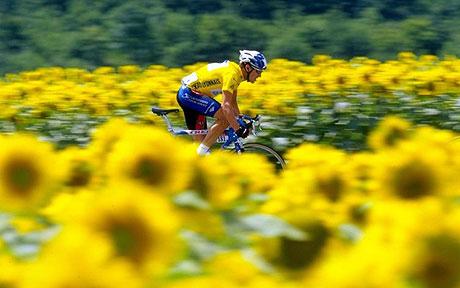
Schools sometimes offer mentoring programs to new students having difficulties. Today’s mentors provide expertise to less experienced individuals to help them advance their careers, enhance their education, and build their networks. In many different arenas people have benefited from being part of a mentoring relationship, including: Athletes Eddy Merckx (five-time Tour de France winner) mentored Lance Armstrong (seven-time Tour de France winner). Bobby Chariton mentored David Beckman.

Mentorship refers to a personal developmental relationship in which a more experienced or more knowledgeable person helps a less experienced or less knowledgeable person. The person in receipt of mentorship may be referred to as a protegé’ (male), a  protegée (female), an apprentice or, in recent years, a mentee. “Mentoring” is a process that always involves communication and is relationship based, but its precise definition is elusive.

Think about the things you have learned over the course of your life. Many of those skills and bits of wisdom have stuck with you because of how you felt about the person you learned them from. When a coworker, friend, parent or even a casual acquaintance asks you if you can help them succeed.

 If you are a parent or a grandparent you are a mentor and its an honor; however, if you are feeling a little wary, here is a good reason to cast off your fear, its to experience the joy and satisfaction that comes from teaching your children, grandchildren and others in its purest form.  If you want a life that is larger than life be a mentor or find one.


The Notion Of Love As Service

Most of the time we think of love in terms of what love can do for us, imagining that when we “fall in love,” all our dreams will come true.

We want so badly to have our own feelings recognized, our own needs met, our own insecurities handled, and our own desires fulfilled that the notion of love as service is almost inconceivable to us. We can get so caught up (or bogged down) in the notion of love as a what will I get out of the experience that the idea of serving another is extremely distasteful.  At a deeper level, we’re afraid that by serving we might lose the sense of our selves we’ve worked so hard to attain.  But in its purest state, love is service,  a wholehearted offering so satisfying that it doesn’t feel like service at all, but rather self-fulfilment of the highest order.

Most of us still need practice for this particular outreach of love. We’re not sure how to serve or what our true service might be, and we haven’t  practiced serving  to such a degree that it feels second nature, graceful, or effortless to us.  The truth is that we’re all already serving in one form or another. If you’re a parent, you’re serving your children.  If you’ve cared for an invalid neighbor or an aging parent, you have also served in love. If you’ve bandaged the wing of a wounded bird, given a homeless person a dollar, saved a stranger from drowning, given up your set on the bus, then you too have served in love. These are the seedings of service , the places where our hearts have started to open, but should you choose to have your service grow into a huge and sheltering tree, you will be given many opportunities to mature your gift  of true service.

Begin by asking yourself the following questions: What does it mean to serve? What would my true service be? How can I develop my service so it can truly become a gift of love?  Service in love is temporarily sitting aside your own needs, wants, and priorities and allowing the needs, want and priorities and allowing the needs of another human being to become radiant, so vivid, and so pertinent that, for a moment, your own are dissolved. This gracious moment is love, and the more we live in the practice of service, the more we create this love. For when we serve one another, we also serve the great cause of Love with grace.

Saying Wedding Vows Wouldn’t Change Him

A wedding is a wonderful day it’s a celebration of your love.  It’s a tying of the knot it’s the making of two lives into one. It’s a contact for life.

But as wonderful as a wedding may be it does not posses supernatural powers . 

The two people who get married are not going to be any different after they exchange wedding vows than they were before. That may seem obvious, yet it comes as a surprise to many people who believe that after they are married, they will be able to change their spouses into someone else.

Were it only so but it’s not people don’t change they may deviate from their norm a bit. They may say they’ll do better and they may make promises. They may give it the old college try but they won’t change. It’s not because they don’t want to it’s because they can’t. Some traits are just hard-wired into the brain. Some bodies won’t get smaller. Some people are so addicted that it takes them years to change and counting on such changes happening can lead to disappointment.

 So instead of thinking of your wedding day as the day your spouse becomes someone new think of it as the day you finally accept your spouse just the way her or she already is. Don’t enter into marriage expecting to change your spouse into a hard worker, a neatnik, a good dresser, a blond, a nonsmoker, a saver, a spender, a size smaller, a teetotaler, a person who only eyes for you if he or she has been unfaithful to you before you say your wedding vows.

If you buy a compact car it won’t turn into a SUV overnight in your garage, no matter how much you try to wish it would. Don’t expect your new spouse to similarly transform just because her or she walked down the aisle with you.

When your partner makes a change because it pleases you, it is really one of the ultimate signs of love. But if you tell your partner that you’re going to stop smoking, for example, and then you can’t. You’ve put your relationship at risk as well your health.  So don’t make rash promises in the name of love. It won’t make such promises any easier to keep, and it might make your life much tougher when you break them.

Don’t wait until you are blind-sided by sudden crises, tragedy or anger because the person you walked down the aisle with didn’t change. Don’t make promises you can’t keep make the changes before you walk down the aisle because the day you exchange vows doesn’t magical change your habits. Sometimes not exchanging vows until the two of you seek premarital counselling can prevent such crises.

 So don’t make rash promises in the name of love you can’t keep it makes life much tougher when you break them. Just talk to anyone who has ever exchanged wedding vows with good intentions and thought love would change their issues. Good Luck…


When We Accept What Is

We usually mosey into relationships seeing their obvious possibilities, imagining specified outcomes, cocooning them with our own expectations.

But what actually occurs is often shockingly different from what we expected.

 The person you wanted to marry has a phobia about commitment. The woman you knew would make a great mother decides to go off to law school.

The suitor with the bottomless trust fund decides to give away all his money and live in a cave. Surprising revisions can happen on even at the simplest levels: “When I fell in love with him, he was wearing a black cashmere sweater and a pair of black dress pants; but after I married him, all he would wear was sweatshirts, his favorite sports hats and jeans.”

Expectations come in two forms: general and specific. General expectations have to do with our dreams and plans for a specific relationship that it will lead to marriage, that it will bring you children, that it will make you “happy.” Specific expectations have to do with what we think we can count on day-to-day – he’ll take out the trash, she’ll handle the kids in a way I approve of. On one level, these expectations are all quite reasonable;  it’s appropriate to have long-range plans and goals, and it’s legitimate to expect specific kinds of participation from your partner.

But when your relationship becomes a litany of failed expectations— what you hoped for but didn’t get—– its time to look at what’s happening from an entirely different perspective. Perhaps, instead of needing to “communicate better” or “negotiate your differences” on an emotional level, you’re being asked, on a spiritual level, to learn to accept what is.

Accepting — finding a way to be comfortable with things as they are—- is actually a very developed spiritual state. It means that you’re relinquished the preconceptions of your ego and surrendered to what’s been given to you. Maybe he’s not the provider you hoped for, but his spiritual strength is a constant inspiration; perhaps she’s not the housekeeper you wanted, but the way she nurtures your children is absolutely beautiful.

Acceptance allows your spirit to grow. When you’re able to recognize the little  miracles and great lessons that replace your expectations, you suddenly discover that what you hoped for— was pitifully puny compared to what was actually held in store for you. And in a way far more complex and elegant than you could have imagined, your life is following a sacred design. 

 So if you want a life that is larger than life and a relationship that is finer than even your wildest hopes, peel back your expectations and start to accept the good in what is.  (This only applies to mentally stable people.)

Leave The Kitchen Sink In The Kitchen When You Fight

When you fight leave the kitchen sink in the kitchen. What that means is don’t just gratuitously throw in things that don’t belong in the current fight. Such as every complaint you’ve ever had since the history of time began something corroded and calcified from ten years ago, or the meanest below-the belt thing that you can possibly think of saying.

Kitchen-sink behavior isn’t profitable. It doesn’t do anything except fan the flames of contention and open an abyss of panic and pain for you partner. Once you’ve gotten the satisfaction of watching the kitchen sink fly by and crash into a wall, you may have a hard time cleaning up afterwards.

So no matter what you’re so furious about try to resist the temptation to let it all out or to let the devil take the hindmost. It’s important to stop and think before you let the other person have it. You might want to stop and ask yourself these questions.

 Do I really need to say this? This is, does this horrible, angry, vituperative, and character-blasting thing really need to be said?  Will it improve the immediate situation? Is there anything useful to be gained from saying extreme statements?  Such as your sex life is awful now and it has been for the past ten years? Will this or similar remarks speed up the other person’s growth and maturity or your own, or is saying it just the indulgence of revved-up emotions that want release?

  Do I really need to say that now?  The diatribe you wants to indulge in some very valuable points that really need to be expressed stop and think is this the time to make them? Will you set off a furor or engender a useful response?

Before you fire your verbal machine gun it’s important to investigate the maturity of your emotions output.  Just because you feel like saying something doesn’t mean it has to be said in the way or exactly the moment that you feel like saying it. Remember your relationship will last rather than erode or be destroyed it’s all in the words that you speak it’s up to you.

If You Swore To Love For Life Once Why Do It Again

If you swore to love for life once why do it again? If you had to do it all over again would you could you? A promise is a promise right? If you swore to love for life once why do it again?

Your first response could be why not? What harm could it do? Is it the vow its self that is the question? Ah, there’s the rub.

You walked down the aisle together once and it was a great day; so great that it could never be repeated and the knot you tied that day became a gnarl of attachments: Kids, deeds, photo albums, possessions galore so how could you ever part?

Do you ever ask yourself if you had to do it all over again would you? That’s the question that begs answering when second or third wedding vows are on the horizon. If the answer is yes then sure say “I do, I do, I do.” If the answer is “I don’t know,” then don’t ignore this warning sign your feelings for each other will have changed over the years; that’s only natural. But would you describe those feelings as being love?

Even if you don’t hate each other do you love one another? I’m not saying that if you’re not at a point where you wouldn’t hesitate to renew your wedding vows that you should split apart. Only that maybe you shouldn’t ignore the state of your relationship. You and your partner might want to seek professional help about your relationship so that the next time you’re asked this question, you will both say yes.

A few years ago my Aunt and Uncle went on a Valentine’s Day Cruise along with eight hundred couples to renew their marriage vowsWhen the eight hundred couples were asked if they planned on renewing their wedding vows in the future they all said, “Yes.”

 When the youngest couple in the group asked my aunt and uncle if renewing their wedding vows was their secret to their loving relationship?  They said, it makes for a very romantic day but they believed it’s what they do for each other the other 364 days that really renews those vows and keeps the relationship on solid ground. Then they were asked how many years had they been married? My Aunt and Uncle smiled and said, a short sixty years and that they renewed their wedding vows every twenty years.

My Aunt said that my Uncle held her hand and gazed into her eyes and said, he was looking forward to the next time. The other seven hundred and ninety-nine couples tenderly smiled at each other as they realized that when you love your partner renewing your wedding vows is a loving way to express one more time to them that they are the only one for you.

Love Is A Spiritual Enterpise

A relationship is always far more than we imagine or expect it to be. It is more than a living arrangement, more than being together in a social circumstance, more than the bright-colored kite tail of romance; it is the coming together of two persons whose spirits connect with one another, beautifully and painfully, in the in the inexorable process of their individual becoming.

In this respect, relationships are like relentless grinding stones, polishing and refining us to the highest level of our radiance. It is this radiance that is the highest expression of love and why a relationship is a spiritual enterprise.

When we look at the person we love with the expectation that he or she will or should solve all our emotional problems or make all our worldly dreams come true, we reduce that person to be a pawn in our own self-serving plot, seeing the relationship as an experience of “What can I get?” or “What can I become?”

When we view a relationship from a different vantage point, one that acknowledges it as a spiritual incubator we start to see the person we love differently. We see him or her as separate from our hope, from our demands that he or she be a particular way now, for us. Rather, we recognize our partner as a spiritual accomplice that we hold in the spiritual light.

Holding your partner in the spiritual light is seeing the other as a soul in a constant state of becoming, encountering your partner in all the radiance of his or her own being and strivings to be. To hold the other in the spiritual light is to seek the pure spirit that lies behind the limitations of individual psychology and social circumstance, to apprehend the full essence of your partner, as he/she was since time began, as they will be for all time after.

To do this is to reach beyond the petty and even gigantic disappointments that you experience during your time together, to apprehend the divinity of this single unique and exquisite being who has been given to join you on the journey of your own becoming. To hold each other in the spiritual light is to see one another’s souls perfectly engaged in the process of love.

Sing and Lighten Up

What lights up your life? Is it the sweet things, the beautiful small things that bring stinging half-tears to the edge of your eyes. What lifts your heart in the moment? What are the beautiful things you remember from two hours ago?

Such as a touching conversation with a stranger, her voice is like a the thin, broken feather of a bird. You feel her courage as she cried a little, when she told you about a song she wanted to write. It was about ordinary things, she said…like love. You find yourself caught up in her passion. Your emotions lightened up. You find yourself singing your favorite love song and remembering what you were doing the first time you heard the song. Before you know it you are not feeling as up set.

Sometimes life can seem miserable, serious, boring, and awful enough that you don’t have to be so uptight, logical, organized, responsible, and on-time-all-the time. Lighten up!  You might be thinking. Yeah, but what about… the dwindling dollar, the falling Dow Jones average, dog tags, medical problems, children’s shots, family, dirty dishes, cooking, children and their homework, marriage counseling, your aging parents and their problems, income tax, dental problems, the rent or mortgage payment, your teenaged children and their problems.

 Some people are wondering how they are going to survive the empty nest syndrome, divorce and the 2 million problems left over from your childhood that you still haven’t solved, not to mention  the answers to questions like; Where did we leave our shoes?  Where did we leave our car keys?  How do we remove that ugly stain on the carpet? The questions are endless aren’t they?

We never run out of things that have to be handled in life. And they will never give you joy. There will always be a few more clothes to pick up at the cleaners; the checkbook will always need to be balanced. Before, during, or after doing any of these things, you will not feel particularly happy, they won’t light up your life.  Take time and think about what you can do to lighten up during these times.

 During these times one way to lighten up is by taking a moment to remember how it feels when he, she, or your grandchildren did something silly, priceless, foolish, and made you laugh.

Remember to plan something fun after taking care of those boring responsibilities singing and dancing is a great way to lighten up. If your driving in your car you can’t stop to dance but you can turn the radio on and sing your blues away.

Always Express Your Gratitude

Saying thank you is how we express our gratitude and it has a great effect on our partners.

For the person being thanked, a “thank you” is a mirror of the love he or she has given.

It not only increases our sense of ourselves as loving persons but enlarges our capacity to be loving.

Whatever form it comes in, smiles, kisses, cash, praise, hugs, compliments, time, candy, lovemaking, letters, texting, listening, a new hat, a new baby, a new car, a planned vacation, a surprise vacation, an insight, a sense of security, a bouquet of flowers, the sharing of some feelings. Saying “Thank You” can have a great effect.

Saying “Thank You” is also important for the person who says it. On the simplest level, it’s an act of courtesy, a recognition of the good thing the other person has done. But on a deeper level, it’s a way of changing our consciousness about the nature of our relationships. For, in uttering our gratitude, we anchor in our minds that fact that we’ve been given to.

It’s all to easy, in any relationship, to become a whining, complaining, grumpy partner who feels as if the other person has never done, and will never do, anything nice or special for you. Saying “Thank You” dispels this feeling of hopelessness and creates an internal attitude of attitude of optimism. A pathway formed in our minds that in time becomes a thoroughfare; the belief that we have been treated with generosity and goodness of heart, that begins to take root in our consciousness. In this sense, saying “Thank You” is a character building act. It develops a positive view of our partners and the people in our lives.

Just as millions of snowflakes pile up to create a blanket of snow, the “thank you’s” we say pile up and fall frequently upon one another until, in our hearts and minds, we are adrift in gratitude.

Finding Peace In Relationships

In the tit-for-tat world of our psychological dramas, we tend to make life adversarial. We take sides. We look at intentions and effects such as she was late just so I’d feel bad; he said that just to hurt me. We seek redress for our insults and wounds; we keep score (you were late more often than I was; you flirted more than I did; you hurt me more than I hurt you; your meaner than I am; well, anyway, you were meaner more times.

It’s as if in trying to find peace in relationships, he thinks, she thinks, keeping score will win the day. Keeping score is like a trash can for misplaced emotions. If he or she looks at you as an enemy they’ll  show you all your crimes, and prove that you’re guilty, thinking they deserve you to make up for it by loving them more because you’ll feel so badly about how you’ve behaved.

 Enemy, crimes, proof of guilt, make up and love them more. This sounds more like the beginnings of a murder mystery and not a loving relationship. Doesn’t it? Unfortunately ( and fortunately, he or she isn’t a corporation that can be sued (and required to make recompense) like a faulty product. People don’t “pay up” in love because they’re shamed or proven guilty. In fact, the stronger inclination is to get away from the heat and head for the hills. Justice doesn’t always prevail. People who keep score and get pay back are like murderers of love. Aren’t they? Taking an adversarial position will only make an adversary of your mate; and adversaries make war, not love.

That’s why, when conflict arises we need to look for common ground. In the midst of the fray, when we seek the kernel of truth that can bridge us to understanding, we can find our way back to union. We all have a dark side; we’ve all hurt one another more than we’d like to admit. But even our misdeeds merit an attempt at understanding, because the truth is that even dastardly acts are born in pain. That doesn’t excuse them, of course, but it’s important to remember that even the difficult, hard, hurtful things we do to each other spring from the woundedness within us.

When I can comprehend your suffering (and, therefore, the crooked behavior you perpetrated on me) and you can comprehend my pain (and, therefore, my wrongdoing to you), we can stand face to face in compassion, unravel the missteps we’ve made, and together start over from a different place.

So if, in your heart of hearts, you seek union, pleasure, companionship, support, and nourishment from your partner, don’t make an adversary out of him or her. Even in the hairiest fray, try curiosity and kindness. “Why were you late?” “Why were you so short with me?” Try it you may find out something surprising. ( I got back a frightening mammogram today”; “The guy right next to you in the gym keeled over and died”), something which instead of turning your partner into the enemy, fill your heart with compassion. Our relationships become sweeter, deeper and more gracious when we are loving and compassionate with our partners.