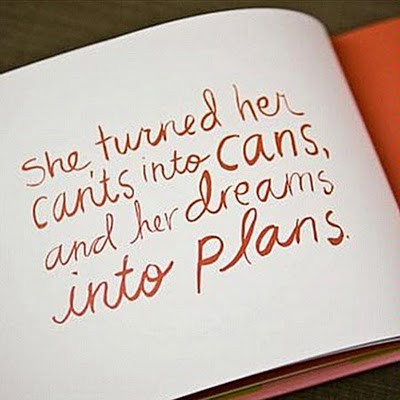
Celebrate Your Specialness

PrettyYou complete me. Many people believe that when  Mr. Right or Mrs. Right comes along then they will be a complete human being. All too many of us consider love to be the miracle by which, we  will become complete human beings. This is the fixer-upper notion of love, the idea that we’re not all right as we are but we could  be  if we could  just find that one person to be loved by,  then that would prove we’re OK.  Love begets love.

If you don’t think well of your self, enjoying and valuing the person that you are, and have an understanding that self-knowledge is a lifelong personnel enterprise. It means that you appreciated yourself at least as much as you value your honey, that you know he or she is as blessed in love as you believe you are. It means you measure your strengths and weaknesses neither with the abuse of self-depreciation nor the insanity of egomania, but with genuineness, with accuracy. Loving  yourself is recognizing your gifts and talents and putting them to good use, acknowledging your flaws and forgiving yourself for them. Loving yourself is reaching for more, for the best in you.

So often people put up with shabby treatment in love because they don’t believe they deserve better. But self-love is always the model for the love you may reasonably expect, the true measure of the love you will give and get. Your heart can only hold as much love as you believe it can. So treat yourself better, believe you deserve to be treated well, and you will get treated ever more wonderfully in love. Love yourself. If you have not been treated kindly throughout your life or are trying to overcome a trauma from the past do yourself a favor and seek professional help and that should put you on a journey to loving yourself. You can exchange those ashes for beauty. Remember God is love.

“Do Activities With Your Sweetheart”

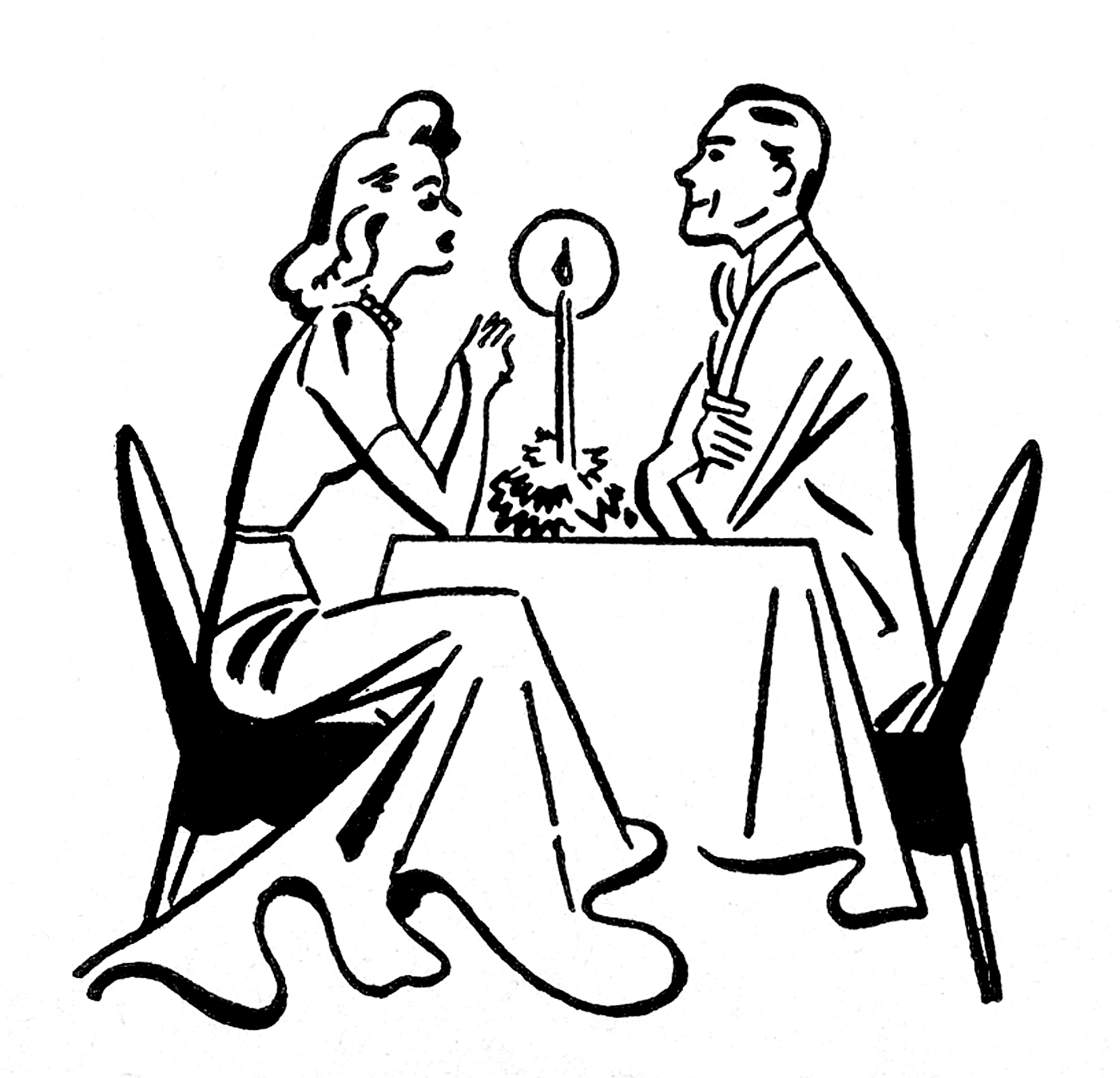
Dinner For TwoCouples who do things together are couples who have good relationships. If they’re schussing down the slopes or batting tennis balls across a net or scouring the countryside for antiques or cooking up a storm in the kitchen or spending a leisurely day at home together or building a house for Habitat for Humanity or singing in a choir or running a business together. . .  then you can be almost certain that their love is strong.

It’s not that you must spend every minute of your lives in each other’s company to have a good relationship. Every individual needs some space, but the more you bathe in each other’s aura, the stronger the ties that bind will be.

Just because you’re drawing breath in the same room doesn’t mean that you’re together. Passive time, like sleeping in the same bed, watching the same glowing TV all night, reading different  sections of the same newspaper, or taking on the phone to other people, doesn’t build a relationship. To brew a strong relationship, you must mix both the quantity and the quality of the time you  spend together.

When choosing activities to do together you are planning for the long haul. There will come a time when your children have left the nest and you’ll want to be able to fill the time with activities you both enjoy.

The Mother In Law Relationship Is Complicated

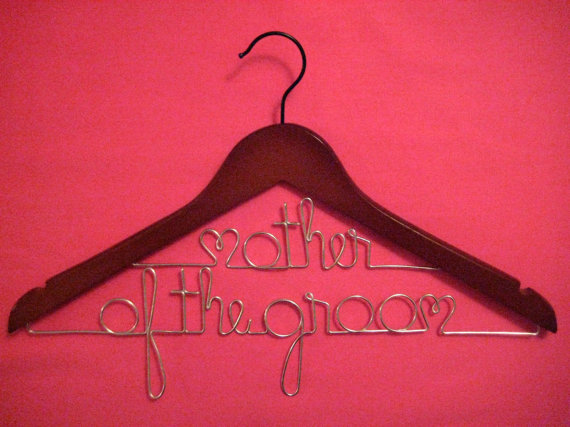
The conflicts between mother-in-laws and daughter-in-laws is still going on it has raged throughout all of history. Nearly 2000 B.C. Rebekah complained to her husband, Isaac, that her daughters-in-law were making her life so miserable that she would rather not even be alive. Read Genesis 27:46).

Today, some 4,000 years later, women are still complaining to their husbands about these women! Mother-in-laws are still wondering why out of all the human relationships, the one between them and their daughter-in-laws is the most complicated? Second only to step relationships of course.

There is a built-in-conflict before the relationship even begins: two radically different views of the same man. The daughter in law will see him first as a man; while the mother in law will always see him first as her child.The mother in law comes into the relationship lugging a suitcase bulging with memories. From the sweetness of babyhood through the tyranny of the teen years into adulthood, these memories have indelibly imprinted her heart. She enters into this life phase acutely aware of a door closing in her life as a mother.

The daughter in law comes waltzing in with a suite case empty of everything but confidence and anticipation. She’s eager to swing open the new door and march in and there lies the basis for struggle. Both the mother in law and the daughter in law are naturally territorial when it comes to their family. Standing in the middle of  these two overlapping territories is a man who is the son of one and husband to the other. It’s in everyone’s interest for the son to step out of the overlapping territory and fully into his wife’s territory and the sooner he does this the better.

The parental relationship is secondary to the spousal relationship, yet the bond between a mother and her child is visceral. The phase “bone of my bone and flesh of my flesh” refers to husband and wife, yet there is little doubt a mother holding her child in her arms feels more “bone of my bone and flesh of my flesh” toward her child than she does toward her husband. Again, the basis for conflict between a man’s mother and his wife.

This motherly feeling of “bone of my bone, flesh of my flesh” had been the source of much marital conflict: a mother consciously or unconsciously placing her child before her husband, magnifying her connection to their child. Even the court system typically give more value to the mother-child relationship.

The undeniable connection can easily cause a mother to overstep her territory and interfere with the process of her adult son transferring thus-far primary relationship, the one he has with her  to the one needs to form with his wife. If you are a mother of a son, you fully understand this tendency, because there is a powerful bond between mother and son. A man’s first significant relationship is with his mother. That bond, forged at birth, leaves a permanent imprint on both mother and son. Even if the relationship is broken, it continues to significantly impact both lives. This powerful attachment between mother and son needs to be and must be reassigned when the son introduces another woman into the picture.

Here is a scenario to consider “Suppose your son, yourself and your daughter in law were in a boat together. If the boat capsized and you and your daughter in law were both drowning, who should he save?  You might be saying to yourself, ” A man can always get another wife, but he has only one mother.”  or a daughter in law might be thinking to herself,” well his mother is old any way.” Now, now is that anyway to be thinking?

As a mother you should want your son to have a strong and healthy relationship with his wife. A mother who wants to maintain a close relationship with her son, who truly has his best interests in mind, must willingly step back and fully acknowledge and respect the relationship he is forming with his wife.

Whether she likes the woman or not. There is nothing to be gained, and much to be lost, by allowing competition to into the in law relationship. While the mother may not view her behavior as being competitive, the truth is that anything she does to maintain her status as the first woman,” whether consciously or unconsciously, will be viewed by the daughter in law as competition.

 Sometimes completely innocent behavior on the mother’s part will be wrongly interpreted this way. Knowing, this the wise mother will refuse to take offense and will carefully watch her behavior until he daughter-in-law is secure in her position. 

 Five years ago my friend Jane’s son  David married a terrific gal named Liz and on the day of their wedding Jane’s mother in law shared some advice with Jane. She said, that she chose to forget everything she had ever knew about her son and let her daughter in law discover him for herself. As any mother can image that is not easy to do. Is it? Jane and her mother in law are truly friends and enjoy each others company.

 Jane, decided  she wanted to have the same kind of relationship with her daughter in law so she decided to take her mother in laws advice and chose to forget everything she ever knew about her son David and let Liz discover him for herself.” It was a choice that has richly rewarded Jane over and over and over again. She said ,she loves how excited Liz gets when she learns something knew about David and Jane enjoys Liz’s excitement,friendship plus she completely understands why her son loves his wife as much as he does.

A successful relationship with your in-law does not necessarily mean you become best friends. It doesn’t necessarily mean enjoying lunch dates or shopping together like Jane and Liz do. Success is simply determining to live peaceably with her by any means. Success is getting up every morning and determining to leave the past in the past. Whatever your history is with your in-law find a way to make admins and move on.

Success is recognizing that at the center of your conflict is a man you both love, children you both love, and finding a way to make room for each of you to benefit from and express that shared love.
Success is consistently acting in love and letting go of the negative emotions you may have toward your in-law,start refusing to let those emotions color the quality of your life for one more minute.

Your love is like a garden, and unless you tend to it, you’ll never reap the full rewards that love can bring.

 

The Wubbolus World OF Grandmothers

Margaret Mead wrote: “The closet friends I have made all through my life have been people who grew up close to a loved and loving grandmother or grandfather.”

In part, she attributed the strong bond between grandchildren and grandparents to the fact that they are united against a “common enemy” the parents.

 It begins to dawn on new grandmothers before that wonderful bundle of joy is brought home from the hospital that this grandmother business can be much more complicated that they had ever imagined.

 When a baby is born, so is a grandmother and that is the beginning of a new love story fresh from heaven. There is nothing for a grandmother to do except love her grandchildren. As days and months follow grandmothers soon learn they can love their grandchildren fiercely, with a passion that can make them hunger for them when they are out of range.

Grandmothers know that their own children love but can they trust them to baby sit? That is an interesting question, isn’t it? You might assume automatically that all grandparents are natural baby sitters but that is not the case in many families.

 Sometimes grandmothers feel like they are auditioning for the role of the” baby sitter grandmother.” Even though your children love you that doesn’t mean that they can trust you with their new bundle of joy. Does that shock you? After all, you are full of motherly wisdom and all that expertise you gained through your years of motherhood. You know how to hold a new-born properly, you are capable of changing their diaper and you know all the ends and outs of bottle feeding. Wait, wasn’t that stomach-down or is it stomach-up just what Dr. Spock advise? 

A wise grandmother will get rid of her’ ” know it all attitude” and ask her little of bundle from heaven parents how they want their child or children cared for and follow their requests because it’s what is best for your grandchild and if your children are happy with you and trusting you then you will have all the Grandmother time you need and that makes for a happy family. 

However with that being said, I suggest that you learn how to pronounce all the tongue twister words in “The Cat In The Hat” books before your grandchild is born. I am recommending this base on an experience that I had while reading to my oldest grandson when he was three or four. He blurted out to me these words to me ” you can’t read very good”, so I don’t want you to read to me any more.

Needless to say I felt crushed but after thinking about it a few seconds I had to agree with him. At the time I didn’t realize I was trying to read made up words by the author Theodor Geisel known as Dr. Seuss. This kind of unexpected situation is not listed in any grandparenting book, so I decided I better get the word out to other grandmothers, so they can be better prepared because there is nothing we enjoy more than our hugs and our reading time with our grandchildren. Is there?

 If you can’t figure out how to pronounce some of the words in your grandchildren tongue twister books ask one of your seasoned grandmothers chances are they have already been through the ranks and will be more than glade to save you from being crushed when your grandchild tells you not to read to them cause you don’t read so good. Welcome to the Wubbolus World of Grandmothers and The Wubbolous World of Dr. Seuss.

Consecrate Your Relationship

A relationship is always far more than we imagine or expect it to be. It is more than an a living arrangement, more than being together in a social arrangement, more than the bright-colored kite tail of romance.

It is the coming together of two persons whose spirits participate with one another, beautifully and painfully, in the inexorable  process of their individual becoming.

Whether it is clearly visible or not, every relationship has a higher power than itself alone, a meaning that goes beyond the conventions of love and romance, and attaches the two people in it to a destiny that has roots in the past, and wings in the future.

This purpose is to shape us individually into the highest and best versions of ourselves and to change, if only some tiny way, the essential character of the reality we have entered here by being born. To know this is to believe that whatever occurs between you such as the petty dramas and traumas, the life shaping tragedies is honing you for your unique participation in the human stream. It is to accept that the person you love has come into your life for a reason that goes beyond the satisfactions of the moment or even your personal future to reach into the web beyond time.

What you do here together, how well and how beautifully you do it, has implications not only for how cozily you sit together in your rocking chairs in your old age, but also for every other living being. We are all participants in the process of creating a species and a world that hums with  peace and is informed by love. This is our highest heritage, and when we sanctify our relationships, the difficulties and insults they contain will be instantly diminished and what will stand in their place is the overwhelming presence of real love.

Sanctifying your relationship means seeing it not as an act of self-indulgence, but as an offering of love that you deliver up with joy to the fulfilment of its higher meaning. This entails not only an attitude of acceptance but also two behaviors: making speech and keeping silence.

It means verbally acknowledging this higher truth to one another: “Thank you for being the instrument for the  discovery of my purpose,” I know we have come together for an important reason.” I love you for being my way to see the holiness of life.”

 At times it also means keeping the silence in your heart, which is a thanksgiving of this higher purpose,or engaging together in a practice of meditation, which is a walking together in spirit, a prayer that your purpose together is revealed.You love is a stitch in the fabric of the All. To see it as such is to place your relationship in the ultimate perspective and to receive from it the ultimate joy.

We all need the paths of our lives to be marked out so that we can be reminded of the quality of our lives and the beauty of our loves. We dignify and consecrate our relationships when we set them apart from the ordinary ritual. Personal rituals provide a reference not only for the value we place upon our relationships, but also for the value we ask be conferred upon them.

Relationship ceremonies say that, this day is not like all other days, this person is not like all the other people; this love is not like all other loves. Not only in our hearts but also in our actions, we intend it to be a union of meaning, with allegiance to a valuable mission. The consecration of your relationship is a creative and deeply private affair.

Set aside for a special time to acknowledge your union, your wedding anniversary perhaps; choose a specific place to honor it; and create your own private ceremony. Light candles, say words, play music. Consecrating your relationship is the sign. repeated and beautiful, that you choose to view your relationship as holy, as no mistake, and that you intend, through it and with your beloved as your witness, always to live it to the highest of its purpose.

What’s On Your Wish List?

How many times have you started a sentence with the words “In my lifetime, I want to…”?

Perhaps what you wanted was something grand, like winning a medal for bravery. Maybe it was something modest, even mundane like a wish to clean out your car or to climb a tree.

Maybe you wished for something fantastic like having your own cooking show on HGTV, for example. Or something utterly practical, like making a budget and sticking to it.

Your wish might have taken you to the other side of the world or as far away as the moon, or it might have meant just a walk around the corner. Maybe you wished to do something generous, or something just for you.

What happened to all those wishes? Where did they go? Wishing is good for us. Daydreams, fantasies, castles in the air, and aspirations all drive us forward, impel us to make things happen. They also tell us a lot about ourselves. Our wishes came straight from our core, and they are loaded with vital information about who we are and who we can become.

Keeping track of our wishes helps us tap into the energy that propels us to go after our happiness. That’s what a wish list can do for you. It is to serve as a wellspring of ideas for things to do, have, see, taste, experience, achieve, give, be, learn, do for others, or try just once.

Complete this sentence: “In this lifetime, I want to …” Your collection should range from small, easily realizable goals to grandiose pipe dreams and everything in between. It works for ages 10 to 100. In fact wish lists looks like our own hopes and dreams.

Your wish list is not meant to be solely revelation it is meant to be used as your very personal “to do list for life.” Carry your wish list with you and when your creative daydreaming starts, scribble your own wishes on the blank lines. Check off or underline those wishes you want for yourself.

When you’ve achieved a wish, celebrate the fact by checking it off with a big red X next to it. As years go by and the wish list’s pages become dog-eared and yellow, you will have accumulated a profile of your changing view of happiness, your own evolving values, and your own fulfillment, Not a bad thing to have.

Here is a short list of wishes that might help you start your own list.

  • Try everything that is good once.
  • Witness an event that turns out to be a major historical occurrence.
  • Have a positive effect on people
  • Smell Florida’s night-blooming jasmine.
  • Be surprised by your children.
  • Live in a California beach house with the ocean for your front yard.
  • Attend a vintage motorcycle rally.
  • Coin a phrase.
  • Sing a song that your niece writes.
  • Dance at your grandson’s wedding.
  • Take underwater photographs.
  • Write the lyrics to a passionate love song for your husband / wife.

Summer at a villa in Tuscany. Lean to draw. Skinny-dip under a waterfall. Volunteer at the local soup kitchen. See a mountain gorilla in the wild. Meet your favorite motivational speaker. Work for someone you’ve always admired. Write a love poem.  Start your own blog. Watch the sun set over your favorite locations. Solve a mystery. Take the road less traveled. Your wish list is calling you, now get out there and start living.

What Married Couples Can learn From Divorced Couples?

Would it surprise you that some of the best lessons about how to strengthen a marriage can come from those who have suffered through divorce?

I want to share with you five things couples have learned the hard way that you can do today to help strengthen the bonds between you and your spouse.

Terri Orbuch is a psychologist and research professor at the University of Michigan’s Institute of Social Research, she recently identified some of the top common regrets of divorced couples.

“Divorced individuals who step back and say, ‘ This is what I’ve done wrong and this is what I will change,’ have something powerful to teach others”, She recently told the Wall Street Journal.

1. Boost your spouse’s mood: Encouraging and affirming your spouse in very simple ways can go a very long way. One study found that when a husband reported his wife didn’t express love and affection (not necessarily sex) the couple was as likely to divorce.

2. Talk more about money: Money is a magnifier of problems but it’s also a common source of significant tension. Don’t keep secrets and establish a family budget and stick to it.

3. Get over the past: Couples who can’t forgive past hurts grow bitter and resentful. Again, talk it our. Write a letter. Talk with a friend.

4. Blame the relationship: Studies suggest that 65% of divorces blame the ex-spouse for the demise of their marriage. When discussing relationship problems. Dr. Orbuch suggests saying, “we,”or “I,” for example, you might say. “We are both so tired lately,” not “You are so crabby.”

5. Reveal more about yourself: Dr. Orbuch recommends: Every day, for 10 minutes, the couple should talk alone about something other than work, the family and children, the household, the relationship. No problems. No scheduling. No logistics.

Do you resonate with these findings? What might you add as #6 on this list? leave your comments in the comment box… Thanks

If I Be Like Her Then Who Will Be Me?

Worry gives small problems big shadows. Corrie Ten Boom said, “Worry does not empty tomorrow of its sorrows; it empties today of its strength.” Most anxiety stems, not from what we need, but from what we want. Who wants to live with yesterday’s rubble? Who wants to hoard the trash of the past? You don’t! Do you? Or do you?

I’m not talking about the trash in your house, but in your heart, not the junk of paper’s and boxes but remnants of anger and hurt. Do you rat-pack your pain? Amass offense? Record slights?

A tour of your heart might be telling you a pile of rejections: Accumulated insults, no one can blame you,
there are innocent takers, promise breakers, and wound makers. They’re everywhere and you’ve had your share.

All of us know what a morbidly delicious temptation it can be to beat yourself up about almost anything that goes wrong in your relationship or, for that matter, in life in general.

If you have a fight or if you’re to chicken to pick a fight, if you waste money or are a miser, if you’re a neatness fanatic or a slob what ever your habits, predilections, attitudes, or expectations, you find yourself blaming yourself for whatever goes awry in your relationship.

The reality is that no matter what your style, no matter what you do precipitously or fail to do in time or in the right way, you’re doing the best you can. Beating yourself up, blaming yourself, focusing endlessly on your faults the way you might have been, or should have been, done it, or not done it, never improves the situation.

Look at yourself with compassion and start enjoying your curious little idiosyncrasies. Acknowledge that it’s just fine to be you. Let it be all right that you’re different from everybody else. Like the old Yiddish adage says, “If I be like him, then who will be me?”

Being easy on yourself means that you accept yourself as your are, that you forgive yourself for your mistakes and go on, lovingly acknowledging your foibles, your idiosyncratic style. Only by being gentle with yourself can you also be good-natured and forgiving with the person you love.

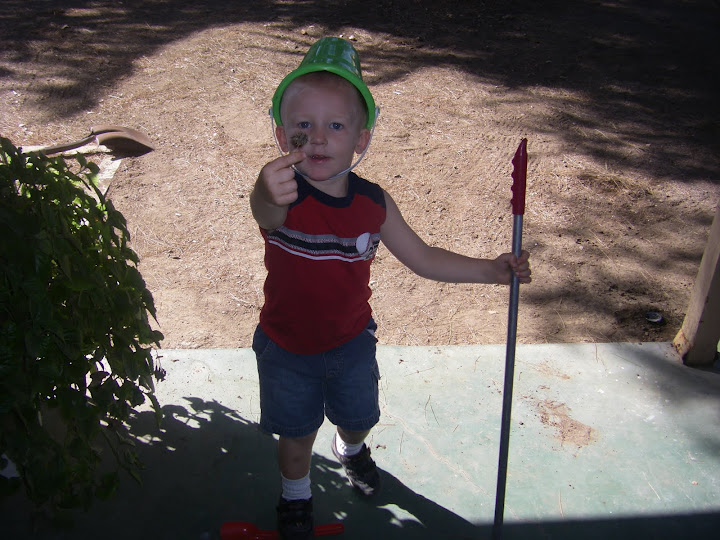
 Give yourself a break; decide that you’re just fine exactly as you are. My two-year old grandson knows he is perfect just the way he is and every time he greets me he says, Hi, I’m me! I say, you are you! He says, I am me!  Can you say Hi, I am me and mean it like he does?

Is Over Commitment Your Middle Name?

Is over commitment your middle name? Do you hate to turn anyone down? Do you say yes before thinking? If overcommitment is making you run behind schedule, here are ten ways to say, “Thanks, but no thanks.”

  • “I’d love to, but this isn’t a good time for me to make  that kind of commitment.”
  • “My plate’s pretty full at the moment; I’m going to have to say no.”
  • “Not this time.”
  • “I’m going to have to pass.”
  • “I can’t be involved at this time. But I can suggest someone who might be willing to help. Have you considered asking——?”
  • “I wish I could say yes, but my schedule at the moment is filled ot the brim.”
  • “It would be a mistake for me to take on the project now because I don’t have the time available to do the best job.”
  • “Thanks, but no thanks.”
  • “I can not, in good conscience, make another commitment now.”
  • “No”

Boundaries and the word “no” are your friends however there are some people who see a structured system of principles and boundaries too confining. Not enough freedom, Some folks say this is about religion. Some even say it is about marriage. And yet, the truth is that boundaries don’t eclipse freedom; they enable freedom.

Seriously, it’s true. Boundaries and knowing when to say no are the very foundation upon which freedom and zestful, joyous living are built. Seems paradoxical, doesn’t it? 

And yet when people ignore healthy, commonsense boundaries today, they are very often narrowing their options for tomorrow. Learning when to say thanks but no thanks and setting healthy boundaries reduces stress.

Lost In The World Of Disney

Today’s children live in a world filled with adventure, mental stimulation, topical issues, and personal challenges. The values they learn now, between the ages of 5 and 8, will shape the rest of their lives.

 When I was about six years old, I had an adventure that shaped me for the rest of my life. I went to Disneyland with my cousins one week-end and had a wonderful day full of excitement.

Little did I know that the real excitement wasn’t to begin until that night while we watched the fireworks and I began to get an urge to go to the ice cream parlor, but I didn’t want to miss the show. Then I over heard my cousins talking to my aunt, and I got closer to them to hear what they were talking about. “Mom, we’re going to get an ice cream cone.

“Okay,” my aunt replied, “but stay together I don’t want any of you getting lost.” The second I saw my cousins leaving, I didn’t think twice before running off after them without telling my aunt. As I followed them through the huge crowd of people, I started to lose sight of them. I began to panic as I scanned the crowd for them crazy thoughts ran through my head like, what if I never see my family again?

I gave up trying to find my cousins and tried to get back to my family, but I was completely mixed up. After searching for what seemed like forever, I couldn’t hold back the tears, and I started crying like I had never cried before. “Mommy!” I cried out. But everyone around me was too caught up by the fireworks to pay attention to me.

I tried to stop the scary thoughts that were going through my head and started running as fast as I could… anywhere and everywhere. I was going crazy. I’m only six, and I’ve gotten lost. What have I done? How could I have been so dumb to run off  without telling anyone? I thought.

With my face wet from tears, I kept running, pulling at people’s pants and crying, “Mommy!” I was hoping and wishing, that one of those adults would be one of my parents. Luckily, I tugged at a lady who worked at Disneyland, and she asked me, “Are you lost?” “Yeeesss!” I cried.

She picked me up and carried me through the crowd as she kept asking me where my parents had been standing. As I began to feel safe in the Lady’s arms, I calmed down and thought for a few minutes I remembered we had leaned against a wooden fence. She carried me around the wooden fence, asking random people, “Is this your child?” “No. Sorry,” everyone kept saying. You’re sorry?  Look at me. I’m looking for my mommy. I thought.

Then I began to cry uncontrollably because it hit me that my parents didn’t live together any more and I wondered if they could stop loving each other could they stop loving me too? Did this mean I really wasn’t anybody’s child any more?

Finally, through the crowd of people, I recognized a face. I was so happy. “Daddy!” I shouted as I pointed toward him and the lady carried me to him. When the lady put me down, I ran to my daddy and gave him a huge hug. I couldn’t let go of him. I didn’t want to lose him again. As I cried in my daddy’s arms, my aunt and cousins thanked the nice lady for everything she had done for me.

For the rest of the evening and the entire next day I was more concerned with making sure that my daddy and the rest of his family were within my sight at all times, than I was with seeing the sights at Disneyland. My daddy called my mommy on the phone and they both told me how much they loved me. I asked them even if they didn’t love each other any more did they still love me? They said yes and I never doubted that they loved me again.

I look back on these memories and laugh at myself but to this day, I always make sure to tell someone where I am going before I run off to get ice cream especially at Disneyland.

Ways To Tame The Frenzy

Organize your mind organize your life and train your brain to get more done in less time. Does this sound to good to be true? Have you ever lost your keys, missed an appointment, or been distracted by a frivolous email?

 The key to a less hectic, less stressful life is not in simply organizing your desk, but organizing your mind. The latest neuroscience research studies at Harvard Medical School shows that our brain’s have an extraordinary built-in system of organization that translates the science into solutions.

 You can learn how to use the innate organizational power of your brain to make your life less stressful, more productive and rewarding. According to their findings you can regain control of your frenzy, embrace effective uni-tasking, fluidly shift from one task to another and use your creativity to connect the dots.

How organized are you? 

  A. Very organized. My desk is neat, I never miss an appointment or a deadline, my friends are amazed, my co-workers are jealous and boss loves me.

B. Moderately organized. I manage to stay on top of things pretty well, but sometimes I feel overwhelmed, not sure wha to do first, and I must admit that I’m a little jealous of my colleagues and my boss who seem more organized.

C. Completely disorganized. In fact, I’ll be lucky if I can remember where I parked my car. That’s assuming I  don’t get a text or a phone call in the next two minutes, which will completely throw me off and … what was the question again?

If you answered A, B or C, you will glade to know that there are amazing new insights gleaned about the way our brain works to organize our thoughts, actions, and emotions, through high-tech brain scans, or neuroimaging, we can now “see” the response of the brain to various situations. Affiliates of Havard Medical School have helped tens of thousands of clients through important and positive changes in their health, work and personal lives.

  Subjects in the Harvard study were shown a series of pleasant, unpleasant and neutral pictures while they were attempting the difficult task of keeping in check their emotional reactions. Through the use of high-tech imaging or neuroimageing, researches were able to observe the “thinking” regions of the subjects’ brains(including areas called the prefrontal cortex and the anterior cingulate cortex) managing the “emotion“generating parts of the brain.

It’s an intriguing new study that sheds light into the brain’s own built-in system of organization and regulation-one  that strives for order, one that can “tamp down”(suppress) our emotions when necessary. Here’s the most exciting part the features in the brain’s magnificent self-regulation system come  “preloaded” in every functioning human mind; these features can be accessed, initialized and used to allow you to become better organized and to feel more on top of things. You just have to know how to do it.

Six Tips For Organizing Your Brain and Taming The Frenzy

1. Tame the Frenzy: Organized, efficient people who are able to acknowledge and manage their emotions. Unlike many who let their emotions get the better of them, these folks have the ability to put the frustrations and anger aside, almost literally, and get down to focused work. The sooner the emotional frenzy welling within you is tamed, the sooner the work is done and the better you feel.

2. Sustain Attention: Sustained focus or attention is a fundamental building block of organization, You need to be able to maintain your focus and successfully ignore the many distractions around you, in order to plan and coördinate behaviors, to be organized and to accomplish something.

3. Apply the Brakes: The organized brain must be able to inhibit or stop an action or a thought, just as surely as a good pair of brakes brings your car to a halt at a stoplight or when someone cuts suddenly into your lane. people who don’t do this well will continue to act or think in a certain way despite information to the contrary.

4. Mold information: Your brain has the remarkable ability to hold information it has focused upon, analyze it, process it and use it to guide a future behavior, even after the information is completely out of visual sight. It is capitalizing on working memory, a kind of mental workspace.

5. Shift Sets: The organized brain is ever ready for the news flash; the timely opportunity or last-minute change in plans. You need to be focused but also able to process and with the relative importance of competing stimuli and to be flexible, nimble and ready to move from one task to another, form one thought to another. This cognitive flexibility and adaptability is known as set shifting.

6. Connect the Dots: The organized and efficient individual pulls together the things we’ve already talked about; the ability to quiet the inner frenzy, to develop consistent and sustained focus, to develop cognitive control, to flexibly adapt to new stimuli and to mold information. The organized and efficient individual synthesizes these qualities-much as the various part of the brain are brought together to perform task or help solve problems and brings these abilities to bear on the problem or opportunity at hand.

When you organize your mind you organize your Life making it possible to stay mindful of your self-care priorities while navigating the challenging stresses of everyday life this can be helpful to any one who wants to tame their frenzy.

When Childhood Is Tea Parties and Chasing Butterflies

Childhood is hanging your pictures on the refrigerator, and tea parties you always cater.

Childhood is chasing butterflies and picking flowers, playing with blocks and making towers.

Childhood is hating nap time, and thinking everything is MINE.

Childhood is crayons and coloring books, playing hide and go seek in all the right nooks.  Childhood is falling asleep to your favorite lullaby. Childhood is wishing you had wings so you could soar into the sky. Childhood is only crying over a scrapped knee, or being stung by a Bumble Bee.

Childhood is collecting seashells, building sand castles, swimming and roasting marshmallows down by the seashore without a care in the world.

Childhood is thinking boys have cooties, or your mom making you wear itchy booties.
Childhood is ruining mommy’s new rocking chair, and making friends and keeping them forever.

Childhood is a time when we are innocent, when our world seems to be fair and when our universe is around out toys.

Childhood is a time when we live in dreams, when everyone seems selfless, when everyone appears to be a friend.

Childhood is the time when our life is full of colours, when sorrow never knocks on our door and when a smile is a gift presented to everyone.

Childhood is a time when love is pure, when there are no obligations and when tenderness prevails.

Childhood is a time which is long gone for many of us but smiles flow from our faces and our eyes sparkle when we revisit our childhood. Our childhood will never come back but the child within us will always be able to dream of catering tea parties and chasing butterflies.

The Care And Feeding Of Big Dreams

If you have big dreams, you have already reaped big benefits, regardless of whether or not your dream materializes into reality.

I’ll bet you didn’t know that Albert Einstein once said:”imagination is more important than knowledge.” Dreaming stretches our imaginations and is a worthwhile endeavor for that reason alone. Using our imagination leads to knowledge and wisdom which makes for great dreams and goals. And if dreams are good , dreams that come true are even better. For the best chance of seeing some of your dreams come true, consider these suggestions:

  • Divide and conquer. The movie What about Bob starring Bill Murray is about Bills zany character Bob who  becomes the overzealous fan of a psychologist who writes a book encouraging “baby steps” toward mental health. Of course, the goal of the movie was to make viewers laugh, not provide a commentary on achieving our dreams. It accomplished both because Bob wrote a best seller book and found true love. His dreams came true because he did everything in moderation or as he called it “Baby Steps.” Dividing a big dream into a series of baby steps can take something that once seemed unattainable and put it very much in our reach. Writing a 200-page book, for example, may seem formidable. Writing a single page, however, is well within our reach. Repeat that same baby step five days a week for one year and your book is done. Think about some of your goals. Can you break a major goal into a series of tiny ones? If so, you’re halfway there.
  • Redefine failure and success. Sandra Glahn writes about a ten-year struggle with infertility n her book. When Empty Arms Become a Heavy Burden. ( Broadman and Holman, 1997). Eventually Sandra and her husband conceived and gave birth to daughter Alexandra. But by then , Sandra had learned how to look at “success and failure” in a whole new light. She writes: “God defines success not in terms of what we allow. He defines it in terms of the transformation we allow His word to make in our lives. I am a success if I can get through my experience with a greater love for God and my spouse that when I started. I am a success on some days if in spite of my lack of ‘success’ I manage to drag myself out of bed, get dressed, and find reasons to be thankful for one more day.” Don’t limit yourself by viewing success and failure as single, narrow path. Ask God to show you his perspective when it comes to your dreams and goals.
  • Embrace risk. Yes, yes, I know what I just wrote about baby steps. But now and then, making a dream come true means taking a gigantic leap. If a rare opportunity presents itself weigh the cost, then consider going for it. Of course pray and pray some more about all the risks involved and seek wise counsel. Notice I said, “weigh the cost,” not  “weigh the odds.” Even if the odds are against you, if the cost in dollars, time, or emotional and physical energy is one you are willing to pay, then don’t let the slim odds deter you. That’s why it’s called “risk.”
  • Admit who you are. “Stop thinking of yourself as a wanna-be. Begin today telling yourself and others who you are.” When I was in high school my friend Elizabeth wrote many articles and a poems for a magazine for Girl Scouts. Elizabeth still has the first five dollar bill she received framed in a glass shadow box hanging on the wall behind her desk in her office. For many years Elizabeth thought of herself as a wanna-be writer and would not submit her articles and short stories for publication.Then one day she suddenly started thinking of herself as a bona fide writer, it became easier to do the things real writers do, like be consistent in sending queries and honing her skills. Elizabeth is a published writer as a result of her changing how she saw herself.
  • Mingle with cheerleaders. The truth is, some people bring doom and gloom wherever they go. They are “killjoy’s.” Their negative attitudes could depress a roomful of monkeys on a caffeine high. I’d wager even Norman Vincent Peale would have a hard time harnessing the power of positive thinking in their presence. When my friend Elizabeth began writing short stories for magazines she made the mistake of showing her first story to a friend who spent twenty minutes giving unsolicited advice. Elizabeth is not particularly thin-skinned about her work, but the comments were about her work. They were quite personal in nature. Elizabeth didn’t think her friend was trying to be harsh but her friend wasn’t being careful, and Elizabeth came away from the encounter crushed. It took her six weeks to brush herself off and begin writing again. In order to survive and thrive, our dreams need TLC. Of course, there’s nothing wrong with constructive criticism, but make a habit of surrounding yourself with friends who are, by nature, encourager’s rather than pessimist.
  • Bond with a mentor. Do you know someone who has traveled a little father down the road you are pursuing? If you do, there’s a chance she would enjoy sharing with you her secrets of success. Be sensitive, however: If you sense that she is evasive, or might be feeling threatened by your pending success, then find another mentor. Look for someone who has experienced the dream you would like to claim for your own, someone who talks freely about her own journey and is willing to help you on yours. Inspire yourself with “can-do” stories and people. Don’t you just love stories where someone beats the odds to make a dream come true? These kinds of Rocky Balboa stories are everywhere we find them in biographies, autobiographies, movies, on-line news stories, and very likely among your own friends. If you are trying to pursue a dream or if your dreams have died and you wish you could rekindle the old sparks again. Build up your heart and soul by watching and reading”can do” stories that celebrate the strength inherent in the human spirit.
  • Give yourself a mental picture to follow. They say a picture is worth a thousand words. So give yourself a picture of what your dream might look like in real life. Start a scrapbook and begin filling it with images that say something to about your dream. Want to run the Boston Marathon? Look for images of runners and other athletes, well as articles about people who have achieved impressive athletic fets. You will, quite literally, be providing your mind with a blueprint you can follow as you continue working toward your goal. 

Once again, here are the steps: Divide and conquer. Redefine failure and success. Embrace risk. Admit who you are. Mingle with cheerleaders. Bond with a mentor. Inspire yourself with “can do” stories. Give yourself a mental picture to follow.

The unfortunate fact is that, despite our best efforts, our dreams don’t always come true. Indeed, we can experience great pain when a beloved dream crashes and burns.  And yet, even as we sift through the ashes of one dream, we often find the stirrings of hope for another. That’s the beauty of the human spirit. In fact, the capacity to dream can be a key indicator of mental and emotional health. After all, a dream is little more than a kind of passionate hope, and without hope, we die. It’s as simple as that. Take stock of your dreams. If necessary, look back through the years and resurrect some of the dreams from your childhood. Nature your dreams, and they will nurture you in return. 

Fight The Good Fight

No relationship is without conflict and differences of opinions, preference, and even direction and a relationship is only as good as the conflict it can contain.

 This means that a relationship has vitality only to the degree that it can endure the stresses of each difference and resolve them through healthy conflict, so that the relationship and the individuals in it can move toward greater authenticity.

Then notion of the totally tranquil, we-never-fight relationship as the paragon of love is a dangerous fallacy. All too often the persons in such a situation are scared to death of testing the resilience of their relationship by airing their real differences, or have so suppressed their individual selves that their differences seem invisible.

Many couples are scared of conflict because they don’t know how to fight. They are afraid their own anger will run away with them, that they’ll lose control and become vicious, vituperative, or even physically destructive. They maybe afraid of the other person’s anger. They wonder will he or she yell, throw things, slam the door, or maybe walk out?

These behaviors can sometimes occur and can even be a real danger, especially for people who have been abused with anger themselves. But even they can learn to express anger in a constructive way.The sign of a good fight is that it makes you both feel you have discovered something, that you know one another better.

Even if you fight again and again about the same issues (and most people do), a good fight gives you hope about the future because you have gained a measure of insight about something that previously baffled or frustrated you. Here’s some help:

1. Try to see what you’re upset about. This is usually something very specific:”That he or she didn’t call you” not “Because life is miserable.”

2. State your feelings and why you feel that way: “I’m upset that you didn’t call because it makes me feel unloved.”

3. Say what you need in recompense: ” I need you to apologize.”

4. After your mate has given the apology, ask yourself and him or her if you feel totally resolved.

5. Kiss and make up.

For example: “I’m upset with you for yelling at me about burning the tea kettle. You embarrassed me in front of Jane. It made me feel belittled to have to have her hear you talk to me like that. I need you to apologize.” I’m sorry, honey. I was in such a rush this morning and was anxious about that big meeting. I was out of line. I don’t want to make you feel that way. Please forgive me.”  


This kind of fight could win the  “Academy Awards for the Most Civilized Fight”. There are many people who agree to disagree about an offense and make it a point to resolve it in a timely manner.

They never go to bed upset with each other. Yes! They do deserve an award for being the kind of people that we all should aspire to be like. Don’t they?

You can learn to be gracious when someone offends you. To start with try to remember.

1. A good fight isn’t a free for all. Don’t say everything you feel like saying even though you may have a legitimate gripe. Remember that words can wound, and after the fight you don’t want a battered mate.

2. Be specific with your complaints. Don’t throw in all your grievances since time began.

3. Let the other person’s words sink in before you take up your cudgel. Remember, you’re having this fight to learn something, to arrive at some new insight as well as an immediate resolution.

4. Go easy on yourself and your honey when you don’t do it perfectly.