Language Can Create Reality

Language is a very powerful instrument. What we utter is what we believe or expect, and if we say it enough, in time what we speak becomes true. What we say, and what we hear others say, has the power to sculp our experience, our view of ourselves.

 One form of emotional healing comes form the precise use of language, words you speak and words that are spoken to you. Because of this, an intimate relationship and the verbal exchange intrinsic to it have a greater capacity than almost anything else in the world to heal us of deep emotional wounds.

Words spoken to us by our loved ones truly have the capacity to heal our memories and deeply imprinted pains and to recreate our sense of ourselves and of the world. This means that the negative words that shape your early consciousness and/ or your perception of yourself. “Your Ugly”; You can’t have that; we’re too poor”; ” You never pay attention”; “Why can’t you keep your mouth shout”?  Can actually be revised, corrected, and dispelled through the careful use of language.

Brad had been endlessly yelled at for how he behaved at school, told what a mess he made of his school work, punished for being late, and criticized for getting Cs. No body had ever bothered to note his intuitive genius, the extraordinary function of his mind. Years of ravaged self-esteem began to be healed for Brad the day his sweetheart first told him he was intelligent.

You’re brilliant, she said. I just love the way your mind works. The minute she said that something inside me started to shift, he told me later. I began to believe I wasn’t stupid. The more she said it, the more I was able to believe her. The more she said it, the more I noticed that other people sometimes said similar things. In time, her words changed how I felt about myself entirely.” Brad considered himself a lucky man to marry a gal who really valued his mind and always had a kind word to say.

Brads story shows us that language does have the power to change reality. Therefore, treat  your words as the mighty instruments they are. Use them to heal, to bring into being, to remove, as if by magic, the terrible violations of childhood, to nurture, to cherish, to bless, to forgive, to create from your heart, true love.

A Season Of Life

Positive minds produce positive lives. Negative minds produce negative lives. Positive thoughts are always full of faith and hope. Negative thoughts are always full of fear and doubt.

Some people are afraid to hope because they have been hurt so much in life. They have had so many disappointments, they don’t think they can face the pain of another one. Therefore, they refuse to hope so they would not be disappointed.

This avoidance of hope is a type of protection against being hurt. Disappointment hurts! So rather than be hurt again, many people simply refuse to hope or to believe that anything good will ever happen to them. This type of behavior set up a negative lifestyle. Remember “For as he thinks in his heart, so is he.”

Do you know someone who is extremely negative?  They might say to you, that if they have two positive thoughts in a row that their mind would get a cramp? Their whole philosophy is this: “If you don’t expect anything good to happen, then you won’t be disappointed when it doesn’t.” After spending time getting to know them, you learn that they have encountered many disappointments in life, leaving them afraid to believe that anything good might happen to them again. It becomes obvious to you that since their thoughts are all negative, so are the words they speak; therefore, so is their life. You try to  stay positive and wish you could get into their head and replace their negative thoughts with positive ones. Wouldn’t that be helpful?   I have friends who are negative, and I find it interesting that words they speak came to pass in their lives.

 I  also have friends who are positive, and are always finding the good in the many situations they are in life. It doesn’t mean that people who are positive thinkers don’t have doubt and feel sad, but it  does means they don’t stay stuck in their negative thoughts. It means that remain hopeful.

 Sometimes a season of life might be so devastating that the only positive thought we can have for a while is I’m breathing. I was in a season of life with a friend a few years ago. All we could say to each other was, “Your breathing aren’t you?”  Then that makes this a good day doesn’t it?  Now when I want to complain about my current season of life, I remind myself that I’m not only breathing but, I’m happy again. Life is good. Isn’t it?

Wouldn’t life be perfect if we never had to endure the devastating seasons of it?  

A few years ago I went through a devastating season of life. It was when people I loved passed away unexpectedly, and all I could do was breath because I was numb. 

 Now, I’m in a season of a life, and looking forward to the birth of my granddaughter. I have learned that life really does work in seasons, and some can be cold like winter, while others can be sunny and warm like summer.

Life And Difficulties

Most of us don’t enjoy the process of over coming difficulty, but we know it is a part of life.

Imagine for a moment, a wrestler who never wrestled against a live opponent, who never lifted weights or trained to increase his strength, and who never bothered to learn any defensive or offensive wrestling techniques.

Perhaps an appropriate name for this unfortunate person would be ” Mr. Wimpy.” The same scenario applies to would-be Olympic weight lifters who never increase the amount of weight they lift; to figure skaters who never graduate from the simple figure-eight routine; and the would-be physicists or theoretical mathematicians who avoid any difficult problems involving numbers and abstract concepts.

It seems that pressure, applied stress and systematic movement against resistance, over distance, around obstacles, or through barriers is necessary . How many times have you looked into the sky in times of crisis or struggle and said, Why me? Why now? Why here?  Everyone tends to reach a point in their season of suffering when they will have some questions about what is happening. It may be a situation that they face at the moment ( or one they faced in the past) in which things just don’t make sense.

It’s in the tought times of life that we find out what we’re really made of.” For some reason, people regard enthusiasm as an abnormal state in a normal life. Oddly enough, enthusiasm is highly regarded among bosses, businesses, and industries dependent on a steady supply of high-quality, high motivated leaders.

 Some people go through life constantly demanding their rights. One of the strangest rights  that they claim is the right to be sour and negative. They say, “Hey, I was born this way, I’ve always been this way, and I will always be this way. Now leave me alone.” Much of our comedy is focused around people who respond to life’s hard situations with cynical, biting comments about others and themselves. One of the milder jokes along this line goes, “If I didn’t have bad luck, I would have no luck at all!” 

 Are there any benefits from being unhappy?  Which do you think is more difficult for people, living with a positive outlook or a negative one?  It’s been said, that no matter what happens in life, we can choose how we respond to circumstances. Don’t just restrict your smile-time to ice cream times and those seasons when life seems sweet and creamy. 

Mom Mania

There is one thing that all mothers can agree on no matter what their job title, income, number of children, education, religion, or location: They want to raise kids who are happy, confident , and self-reliant through childhood to adulthood.

Sometimes stress and quilt brought on by the need to be the “Sacifical Mom” can end up interfering with their ability to achieve this goal. There’s good news for the “Sacifical Mom” she can get back on track by learning and applying these twelve steps. They are proven to help create kids who will live a happily ever after lives as adults.

Look at your child and try to picture him or her in twenty-five years as a grow-up. What do you see? Does your son or daughter have these twelve essential qualities:

  1. Is he happy, optimistic, and secure?  Does he have authentic self-esteem?
  2. Is she in a healthy, loving relationships? Does she have good friends and loyal allies?
  3. Does he have a strong moral compass? Does he have good values and strong character?
  4. Does she have empathy and compassion for all people?  Is she kind, unselfish, and humane?
  5. Does he have self-control and patience? Can he delay gratification?
  6. Is she able to make good decisions on her own?
  7. Is he self-reliant?
  8. Is she responsible and internally motivated? Does she have a good work ethic?
  9. Is he practical and resourceful in handling day-to-day living?
  10. Is she resilient? If life throws her a curve, can she bounce back?
  11. Is he confident and positive about his identity and strengths?
  12. Does she have fun? does she laugh? Is her life balanced between work and love, self and others? 

Don’t forget to take into consideration that kids are born with a certain temperament and genetic predisposition. Certainly there are some things about children’s development that are not under their parents control but many are. Mothers can say good-by to their need to be on  the “Sacrificial Motherhood Mania” bandwagon and be the real mothers they know they are, and raise kids who will not only survive but thrive without her. Remember you can’t teach what you don’t know!

Chose Your Own Grandparenting Style

 The Power of Myths reminds me of the classic children’s storyLittle Red Riding Hood” it has almost all the main features of one stereotyped image of a grandparent.
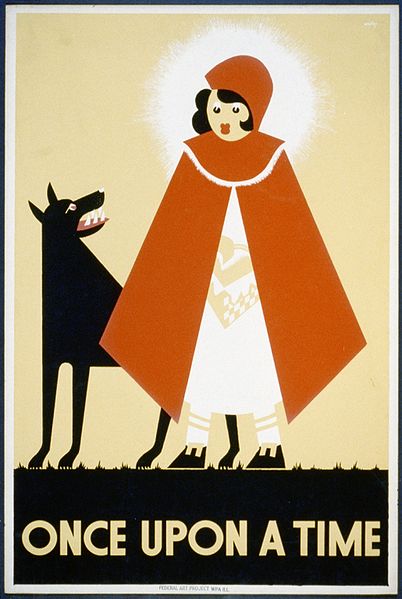
Once upon a time, at the edge of a large forest there stood a tiny cottage almost hidden by the trees. In it a little girl lived with her mother. The little girl could often be seen in her hood and red  cape flitting among the tall trees. Her grandmother had made the hood and cape for her and because the little girl always wore them, she was called Little Red Ridding Hood.

Red Riding Hood’s grandmother is old and feeble, caring and gift-giving, and lives within convenient walking distance (wolves not with standing) of her granddaughter. There are probably some grandparents who fit this image. There are probably even more who wish they matched some parts of it. But in today’s world, many grandparents are neither old nor feeble.

They don’t eat chocolate cake or drink creamy milk especially when they’re sick. Their lives are not focused on their grandchildren but on their jobs, friends and social activities. Oh! We can’t forget that some of us can end up spending all day trying to figure out how to use our latest techie devices.

 Often they don’t live on the other side of the woods but on the other side of the country, on another continent, or at least somewhere where the winters are milder and the weather is sunnier. However grandparents are enjoying their beach cottages and mountain cabins. Aren’t they?

 One morning Little Red Riding Hood’s mother packed a basket full of homemade  goodies that included a chocolate cake, a jar of strawberry jam and a bottle of creamy milk. She told Little Red Ridding Hood to take this basket to your grandmother because she was sick in bed and this food will do her good and it will make her happy. I would’ve preferred a cup of tea and a piece of toast myself. 

My friends and I didn’t realize how powerful myths could be until we became a grandparents. We have discovered that when it comes to the topic of family life how surprised we were to see how many people are still clinging to idealized images from the past.

There’s certainly nothing wrong with having romantic and nostalgic ideas but if we walk around feeling that our lives are only second best because things were once better it can sap all our strength. And if we invest our energy trying to live the way we imagine people used to live we’re bound to be disappointed.

Grandparents are living longer that in the first half of the century, the grandparenting phase might last two or three decades or more.

 In short, grandparenting has developed as an independent role in the family cycle and often extends as long or longer than parenting.

Here are a few questions grandparents can ask themselves when choosing their grandparenting style.

What kinds of things to you enjoy doing? What special skills do you have?  How much time do you have available and how much do I want to spend grandparenting? What are your children’s and grandchildren’s needs? What religious and ethnic traditions do you want to pass on to your grandchildren? 

Keep in mind there is still no set definitions of what makes you a good grandparent any more that whats makes a good grandchild. The consensus about what makes us good grandparents makes it easier for each of us to reinvent grandparenting in own style and enjoy our roles.

Play Your Song

Remember your song? The one the band played at your wedding? Or on the car radio blasting on your way to the beach? or the violinist who serenaded you with at your favorite Italian restaurant?

Of all the sounds that fill the air piercing through the cacophony of life, this tune provides the two of you with the most joyous noise of all. 

 If love requires occasional quiet to prosper it can also thrive surrounded by some joyous noise. Don’t allow your song to disappear use it to communicate the love you have for each other maybe even play it everyday. Perhaps you could use it to wake up to every morning or listen to it right before you go to bed or use it as the background sound on your voicemail. Sometimes you can whistle it while you’re preparing dinner.

Others may share your song but when you set the music playing for that moment it’s all yours, not just for one of you but for both of you. The song can help tie you closer together and the more you play it the tighter the ties will be. 

 While the music is to be heard it can also be written on a romantic note card and displayed in a place to surprise your lover. There’s a women in New York who makes romantic cards just for lovers with the words to their song in it.  Whether it’s on a romantic card or in another form like stationary, you can show your love for your song by displaying it on note cards in many places where sounds are out-of-place. If you can’t do any of that send them a text with the first lines of your love song to them or make it your ring tones on your phones.

If you have children you might have to wait a few years to get started on connecting through your love songs but there is a lot of fun kid songs to choose. 

Regardless if you have kids or not play music, dance, and sing as a way of saying ” I Love You.”

Nana’s Hands

If we can be generous with our hearts, ourselves, we have no idea of the depth and breadth of love’s reach. Our Nana was a generous woman with a big heart not just to her family but to all kinds of people, even people she didn’t know.

 She did nice things without expecting anything back. Nana was especially good at baking and she made the best chocolate chipcookies in the world.

One of the best things about Nana was that she loved people and they loved her back. Friends and family knew they could stop by and see her anytime and Nana would always welcome them. Everyone in her family depended on Nana to keep them up with the latest birth or who got married in the neighborhood (in the old neighborhood) as my dad use to say. They grew up in Massachusetts and Rhode Island. 

Now Nana’s not here to tell us what’s going on, or to bake those favorite things she was so good at making. Nana passed away a few years and my cousin found this poem and we realized that it describes how we felt about our Nana. It’s called “Nana’s Hands.”

Nana’s Hands used to touch us with. Nana’s hands would scold us and sit us down in a chair. Nana’s hands would applaud us when we did something good. Nana’s hands would hold us every chance they could. Nana’s hands would aid us when we fell down. Nana”s hands, Yes I miss them, they were the best hands around. Nana’s hands would spank us and she would say, “Now, Baby, you act right.” Nana’s hands would stroke us and tuck us in at night. Nana’s hands would pray for us, they would pray for everyone she knew. Nana’s hands would rise in the air as in God she put her trust. Nana’s hands were special; they were the very best. Nana’s hands got tired, and now they are at rest.

We thought a lot about the last line of that poem it taught us that it can be hard to lose people we love but it can sometimes be for the better too. When Nana got sick we felt bad for her when we realized she couldn’t do things she loved anymore and she was in pain. At least we knew that she didn’t hurt anymore.

 We also realized that we never thought about how things would change once Nana was gone. Losing someone you love can definitely help us appreciate the people who are special to us while we still have them in our lives.

Generational Changes For Women

If you were to ask my grandmother if she was full filled she would shrug her shoulders and tell you that of course she was full filled.

 My grandmother was not like most of the women of her generation she was a working woman with four children.

However she did have some advantages she only worked while her children were in school and her husband helped with the kids home work and after school activities. He also enjoyed cooking.

My grandparents worked as a team and shared the household chores and the demands that came with raising four children. Wow! they were way a head of their generation.Weren’t they?  Other than grandma’s co-workers, her friends were stay at home moms and homemakers. When I asked her if she felt that her friends resented her or looked down on her for working. She said, Oh Know! Why would they? However they did think that your grandpa was a bit odd for taking care of the kids too but that was it. She said that she resented working and getting paid less than the male school teachers. Sound familiar?

We who are the granddaughters of that generation were taught to believe that kitchen is a confining word. To our contemporaries the words “occupation Housewife” are verboten and we are not permitted to be full or filled with the sounds and smells of the household. This is a generation that came of age during the women’s movement and has had to cope with the greatest sociological changes since man began recording history.

We are the generation that carved a new definition of woman a definition that gave us some excellent middle-management jobs and a strong taste of prejudice, discrimination, and anger. Executives found that women were very good in our jobs, and what made us even better was the fact that women were all willing to do more for less. It was those very virtues that made us the enemy of the working man.

Women helped this low-cost employment force (women began to look like the Far East American help) gain credibility because through our magazines and speeches and leaders, we condoned society that frowned on women who didn’t work and assumed that any dummy (like our mothers) could raise a terrific kid. We looked of equality, and what we got was a new definition of equality: it said that woman was equal to doing man’s work– and her own — and at the same time. We created a beautiful myth about the woman who have it all. She could be thin and rich and powerful. We encouraged our daughters to enroll in women’s study courses, and we talked about their futures and the way they would run their homes in th future.

And then lo and behold our daughters got married and they wondered what we were talking about. They were so tiered they couldn’t even call us to complain. They were so busy running from work to the house that they were each willing—-personally–to march across Helen Gurley Brown‘s desk and tell her that she was full of beans.  

During those years we found ourselves saying that all women who were now thirty-five would want to switch 180 degrees in ten years. That is, we reported to anyone who would listen , all women who are 35 and in the work force on an upwardly mobile path would like to be home with children in ten years, and all women now at home with children in ten years, like to be on an upwardly mobile career path.

The other day my friend Elizabeth made a mistake of saying in front of her daughter you’re wrong she said quickly. All children I have learned are quick to say, you’re wrong, slower to say, you’re right.

She went on to explain,”My friends–except for me — don’t expect to go back to work. They like staying home. They like playing with their children, and some even like cooking and entertaining. They never want to work again.” Her sister agreed (she’s a mother of three boys). “The women in the park where she takes her children don’t want to go back to work. You know, she confided,”it’s not great working when our children are young.  

I would like to think that this generation of women appreciate what the earlier generations women accomplished. It’s possible for women today to be Betty Crocker‘s or Rosie the riveters if you want to work or not. The women of earlier generations helped pioneer the way I wonder what this generation of mothers will be pioneering for their daughters? 

The Golden Princess

Baby Boomers are cruising to places like Alaska, the Caribbean, New Zealand, Australia, and Italy and where ever the cruise ships will take them.

My friend Ruby‘s nick name is the “Golden Princess.” Ruby announced to her family and friends that she has decided to go on a Princess cruise instead of going to a nursing home. When we asked her why? She quickly answered, “It’s better than a nursing home and cheaper too!

She went on to explain to me that a nursing home costs about 200 dollars per day. The cost aboard a Princess cruise? About 145 dollars per day(with senior-citizen discounts). Add 10 dollars per day for gratuitous, and you’re still ahead! Make that 15 dollars and the staff will be begging to treat you like a queen!

She considered these amenities:

1. Ten great meals a day (the last one at midnight even has an ice sculpture!). If you can’t make it to one of the great dinning rooms, you can order room service and have breakfast in bed every day of the week.

2. Free toothpaste, razors, soap, and shampoo.

3. TV repaired, lightbulbs changed, mattress replaced. Energetic young men and women will fix anything and everything and apologize for your inconvenience.

4. Free sheets and towels every day without asking.

5. Free housekeeping and friendly folks come in each day to clean the bathroom, make the bed, and vacuüm.

6. Three swimming pools, a work out room, free washers and dryers, all without maintenance fees or other costs.

7. Floor shows and other entertainment available every night.

8. The opportunity to meet new and interesting people every seven to fourteen days.

9. Treated like a customer, and not a patient. “Yes, ma’am! “Of course, ma’am!” Will there be anything else, ma’am?”

10.The opportunity to travel the seas and visit exotic places.

Like most baby boomers I’ve given serious thought about the golden years. I have decided that becoming a “Golden Princess” on a cruise ship is the most appealing way to go. 

Time Is Marching On

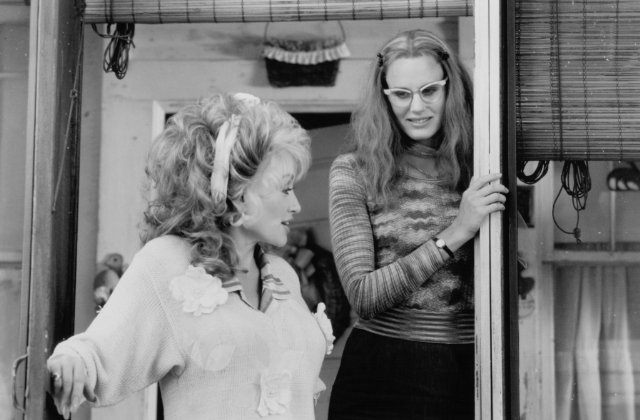
One of my favorite cinematic scenes is in the movie Steele Magnolias.  

Truvy Jones (played by Dolly Parton) is standing on the porch of beauty salon talking with young  Annette ( played by Daryl Hannah “Honey”  Truvy says, ” Time is marching on-and it is marching all over my face.”  

No words were truer than this time is marching on and not only is it marching all over my face but it has taken over my whole body. As I recognize this phenomenon of aging I’m reminded that I’ve earned every wrinkle. Every year their numbers increase. We’ve been together so long, that we are becoming good friends. But not such good friends, that I wouldn’t agree to have them  removed. Like un-friending a friend on Facebook.

I’ve  always wondered if wrinkles could talk what they might say? Perhaps the lines on my forehead would say?  I waited up for my children when they missed their curfew, started driving or went out on their first dates.

 However, there is another way to look at these characteristic indention. Maybe the lines on my forehead show how much time I’ve spent thinking about those I love or studying the world around me and finding it good. The lines around my mouth might come from the many times I ‘ve stood in awe and smiled at a beautiful sunset over the ocean.  Or smiled at a flower as it began to bloom as I walked through the rose garden in Balboa Park in San Diego and smiled at how wonderful creation is. I’m sure that some of the lines around my mouth and eyes are from the gift of laughter. Anyone who knows me knows I laugh a lot.

Perhaps the lines around my eyes are laugh lines memory boards that hold the experiences of my life that I have enjoyed and participated in the most.  Occasionally my girlfriends and I would get together. We use to laugh and joke with each other about ageing.

 Now many decades later we wish that the beauty secrets in ” Grandma’s Little Beauty” remedy books would do the trick. But the reality is it takes money, money, money, to remove all our lines. What is a girl to do these days with all the choices we have?

When Hearts Are Like A Deck Of Cards

 Kenny Rogers, performs a song called The Gambler  and the lyrics can be used as a metaphor for life. The song is full of words of discernment and choices, the message is universal.

Whether you have a pair or a full house, our job is to learn to live with cards we are dealt. Our world would do well to emulate Kenny Rogers’ wisdom. We collect many cards and if you check closely surely there are some winners in there somewhere. It’s not too late to reshuffle the deck or is it?  Somehow we must find a way to discard the unused cards and deal with the cards we are dealt.

In the song Kenny Rogers explains to us in order to play the game you got to know when to let go, when to hold them and when to fold ’em that doesn’t just apply to playing cards it applies to many different situations in life doesn’t it?

You got to know when to let go. You’ve got to know when to hold ’em, know when to fold ’em, Know when to walk away, know when to run.  You never count your money when you’re sittin’ at the table. There’ll be time enough for countin’, when the dealin’s done. Every gambler knows the secret to survivin,’ is knowin’ what to throw away, knowin’ what to keep. Cause every hand’s a winner, and every hand’s a loser.

Pulling out an Ace at the proper time makes us all winners. We have to learn when to hold ’em, when to deal ’em, when to fold, and when to go for a full house.

 Wouldn’t it be awesome if we could just hit a reshuffle button called the deck of life? What if every time we ran from a dream, relationship, or an unwanted issue in life you could hit a reshuffle button? What if like magic the cards would fall the way we wanted them to? Wouldn’t it be awesome if we knew the secret to surviving? Wouldn’t it be awesome if there was reshuffle button?

We do have a reshuffle button it’s in the belief of yourself it allows you to follow your heart and your dreams. You like everyone else will make mistakes but as long as you are true to the strength within your own heart you can never go wrong. In some ways our hearts are like a deck of cards and every once in a while it needs to be reshuffled.

When You’re Young At Heart…

Fairy Tales, can come true, it can happen to you. If you’re young at heart. For it’s hard, you will find, to be narrow of mind. If you’re young at heart. When you can go to extremes, with impossible schemes. You can laugh, when your dreams fall apart, at the seams. And life, gets more exciting with each passing day. And love is either in your heart, or on its way.  Don’t you know that it’s worth every treasure on earth?  To be young at heart.

And if you survive to 105. Look at all you’ll derive out of being alive! And here is the best part, you have a head start. If you are among the very young at heart.

In a striking turnaround, science now sees optimism and pessimism not as good or bad outlooks you’re born with. But as mind-sets to adopt as situations demand.  Sure, you could look at life purely rationally, but without optimism or pessimism, you might not do much.

I loved it when my children were young. I’ve never been so tired, or had as much fun. Like all women it didn’t matter what I did .Women, never seemed to agree on what made for a “Happy Mom”. I wonder if there was a recipe called “Happy Moms.” What would the ingredients be?   It seems like “Moms” have a million expectations to live up to. Don’t they?  

It doesn’t seem to matter what age we are there are constant reminders of the choices we have to make or have made. When we are young, time seems to pass by slowly. We thought, we had all the answers. Didn’t we? It seems to me. That I knew more at the age of twenty-two, than I do now.

 When we were young it was all about the “when’s.” When they learn to crawl,walk and run. When they start school. When they get a job. When they fall in love. And just wait until they have their own children. Oh! yes, when we were young, it was all  about the future. And it seemed like we have all the time in the world. Didn’t it?  

Then we became grandmothers and the years just seemed like the flew by.  Suddenly the “when s” return. When they learn to crawl, stand, walk and run.  Along with the when’s, the fun and excitement returns. Doesn’t it?  I’m sure that my grandkids feel, that I’m bit odd.

Sometimes it seems like occasionally I catch them giving me a sarcastic glance that seems to say, “Really”  you’re doing that?  And other times their glances seem to say, ” She’s old” we must be the patient with her. Their little legs walk as slowly as my old legs. And their fresh eyes see things, that I have ignored for years.

It’s been said, That being young at heart, is not about your age but it’s a state of mind. I find that’s true. I hope you do too. The recipe for what makes for a “Happy Mom” is still being written. Or did “Betty Crocker” write it?  Maybe! Mom’s get to pretend to be like “Betty” and create their own “Mom” recipe?. Like the lyrics say,  Fairy Tales can come true. It can happen to you!


When Life Is Like A Roller Coaster Ride

I often wonder what would happen if our children really knew our stories really knew our lives would they be surprised by our choices? 

 Would they grieve our mistakes? Might our struggles, dreams, our failures and successes, somehow help heal some of the disappointments in their own lives?  Would they or Could they learn from our mistakes?  Some of my friends and family relate to their life stories as portrayed in films such as Parenthood, Terms of EndearmentIn Her Shoes,  The Notebook  or  Message in a Bottle.  As I consider the deep love, commitment, faithfulness, romance, infidelity, life decisions, and healing of relationships that are depicted in these movies, I cry but then when my family and some friends want to laugh at family life we watch a movie called Parenthood and once again the movie takes us back to those, messy, zany, experiences that we had as younger mothers and parenthood doesn’t seem so serious for a while.

Much of the film is based on the family and parenting experiences of the screenwriters and producer Brian Granz, who have 14 children among the four of them. There’s one cinematic scene that is my favorite. It takes place between Steve Martin‘s character  as Gil Buckman and Mary Steenburgen‘s character as Karen Buckman. They are married to each other in the movies and have three children. He’s a neurotic sales executive, trying to balance family life in suburban St. Louis and his career.

When he finds out that his son has emotional problems and the school psychologist tells them that their son needs therapy. Gil begins to blame himself, and deeply questions his abilities as a father. In addition, he’s dealing with his wife telling she is pregnant with their fourth child, he is unsure if he can handle the wonderful news.

 While Gil and Karen are talking about the issues of having a fourth child. Gil’s Grandma comes into the room. She tells them a story about when she was nineteen, and went on a roller coaster ride with Gil’s grandpa. His Grandma describes how much she liked the roller coaster ride.

She tells them, how much fun it was to ride on the roller coaster. It wasn’t boring, like  ridding on the Merry Go Round. The Roller Coaster, went up and down and up and down, and all around. The Merry Go Round just went around. Then Gil’s wife said, Your grandmother’s a smart woman. His replied. If she’s so smart why is she sitting in the neighbors car?

I agree with Gil’s grandmother I preferred the Roller Coaster Ride called parenthood, family and grandparent-hood. How about you do you prefer the Merry Go Round or The Roller Coaster Ride or both?