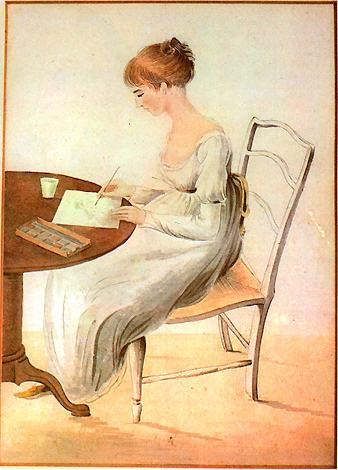

Teachable Moments

Ever since I read about “Teachable Moments” I’ve believed they’re the easiest and most enjoyable way to teach a child anything. And grandparents, have more teachable moments with their grandchildren, than even their parents do, because they have the time and the desire to pass on snippets of information.

Grandparents like to take advantage of every opportunity to explain something to your grandchildren it might be an idea, how something works, why something is important, how we do things, and answer to a question, pointing out something interesting a new word, a new sensation, a new feeling.

A teachable moment arises out of an ordinary everyday activity or situation where you feel that there’s an opportunity to explain something. Unsurprisingly children love those moments. The setting is informal, it doesn’t feel like teaching, and best of all its piecemeal, which is how children learn anyway. It’s appealing to a chid because a teachable moment has it own logic. Here are some teachable moments that I’ve experienced with my children when they were growing up or even more recently with my grandchildren.

  • You’re “Gardening” together and you see a worm. You can talk about how worms aerate the soil and turn it over (as worm casts), and how a worm  has no eyes because it’s always in the dark.
  • You’re crossing a street with traffic lights. Hers’s a good opportunity to talk about the light sequence and how RED means STOP and Green means Go. Extend this to talking about how you should look left, then right, then left again, then cross.
  • It’s bath time, and as your grandchild gets into the bath the water rises, then when she stands up, the level drops. You explain why and you could mention Archimedes and “Eureka”. You explain how some things float and some things sink.
  • You use a word that might be difficult for a toddler or young child to understand, for instance, words such as recognize, reflection (in the mirror), camouflage and immediately explain what it means and give examples of how to use it.
  • Use every opportunity to explain a concept this is hard, but this is soft; a cat meows but a dog barks; birds fly and so do airplanes.

You are an expert as a grandparent, because of your experiences, the life you’ve led, and your range of interests and hobbies, you can stimulate your grandchild in a way that a parent can’t. Your grandchildren will learn very easily from you, and I’m sure that. like me, you will get huge satisfaction from the hours you spend playing and learning together.

You have a caring interest in him or her, which they can sense because it makes them feel special, the perfect setting for new games and skills. You have the time to play until your grandchildren get bored. You take obvious delight in their tiniest achievement and make them feel confident. Nothing is too much trouble for you so games can extend his concentration and foster his curiosity.

You are endlessly patient and show him how to try, try, try again until he succeeds, and then praise them. You love him them enough to let them fail on their way to their success’. Remember to let your children and grandchildren fail instead of trying to rescue them from failure all the time.

Take a moment and think about a time that you failed and turned that failure into a success. Would you have conquered it if your parents, teachers, mentors, or grandparents had rescued you out of it? I remember when my son was learning to ride a bike I can’t tell you how many times he fell down and we just ignored him and he got right back up on that bike and finally mastered riding it. Later in life when he learned to drive a motorcycle there was no room for failing.  He had to do it right the first time and he did.

I remember when I started playing baseball at first I couldn’t hit the ball and my teams mates were not happy about that. But I can tell you no one told the couch to rescue me or even how to handle it. All my mom said, was you’ll figure it out just pay more attention to the way you are holding the bat. I kept trying and then one day I hit a home run. It’s good thing too because girls didn’t play baseball back then. Enjoy all those teachable moments and let the kids learn to turn their failures into success’.
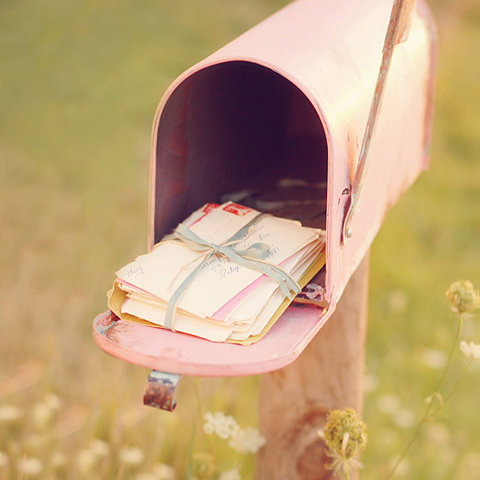

Grandma’s Common Sense

Letters are among the most significant memorial a person can leave behind them.  Johann Wolfgang Von Goethe~

Sometimes a grandmother’s common sense can teach their grandchildren that life’s simple pleasures can bring them the most happiness, and that they cannot buy it with money. Like going on walks and showing them the beauty in nature.

I preferred my grandmothers homemade toys, which she created with her own hands, over the expensive toys my parents bought me. From the age of five, I can remember her writing letters to me. She introduced me to world-famous classics and the library. By the time I was six I was able to read classics like Oliver Twist and Great Expectations because my dad had read them to me over and over. I’m not sure if I read them or if I memorised them.

My grandmother lived far away and would come to visit us and when she arrived I was glade to see her and sad when she had to leave. She felt the same. I missed her right away. But then, one week after she left, a letter would arrive.

Dear Granddaughter, I miss you a lot and remember absence makes hearts grow fonder? Write to me when you feel low or bored. So I started writing to her and I poured out all my problems into those letters. One of my favorite letters that I wrote to her was when I was in second grade and I explained to her that an older girl was being mean to me at school and called me a brat.

 I wrote to my grandma: Grandma, I’m being treated unkindly at school and I feel hurt. She wrote back: Dear Granddaughter, Just follow my instructions when the older mean girl says something that is hurtful to you. Tell her that you are hard of hearing and ask her to repeat what she said again and again. She will repeat it. Keep telling her that you can’t hear her, and she will get fed up and leave you alone. I followed grandma’s advice and it worked.

Then in my first year of high school we were having our annual health fitness week. I was good at sports but not at rope climbing and gymnastics. All my class mates were stronger in the upper parts of their bodies than me. I couldn’t complete rope climbing or any of the gymnastic part of the testing.

I wrote to Grandma: Grandma, I’m not good in sports, and Mom is making me sign up  for sport. She says sports and rope climbing are two different categories. She wrote back: Dear Granddaughter, I heard a song recently that had a wonderful message. There may be mountain peaks you have to climb on, there may be rivers fast and wide you may have to ride on. Unless you dream, unless you try, how will you know how far you can fly? Remember these words and believe in yourself. It turned out that because of my mom and grandmother I continued to pursue sports. I was good at sports. However I never did climb a rope.

Letters passed between us every week and she often sent quotes by great people from newspapers and magazines. All of them, in one way or another, told me the same thing:” Believe in yourself, then you can reach even the farthest star.” I kept all of Grandma’s letters in a file. When I felt low and sad, I would read them one by one. They lifted my spirits, and I came back to my self again. The lessons my grandma taught in her letters will forever remain the most valuable and treasured ones.

Grandma never owned a computer and she didn’t foresee in the future that her granddaughter would be passing on some of her advice on a website. I wonder how will our granddaughters be passing on their grandmother’s advice in the future? What is going to replace computers?

Grandparents Can Bring Back Letter Writing

In this age of cell phones, Email, faxes, letter writing is an all but forgotten practice and most young children have never written a letter.

 Now days we talk to our friends on our cell phones it rarely occurs to us to write a letter. When was the last time your received a nice long juicy letter?  Having grandchildren is an excellent opportunity to revive an old custom.

One of the most important things to remember about letters is that they are both a form of communications for the present and a record for the future. Ask your grandchildren to keep a copy of your letters, but to be on the safe side, keep a copy yourself. When I was a young girl my grandmother and I wrote letters. I would read her letters ( and my replies) they were full of grandmotherly advice. I still have a few of the letters she sent, and I treasure them dearly, even though they are more than forty years old. I only wish they contained more details.

Even if your grandchildren don’t appreciate the letters now they will in the future. Letter writing is only one way of fulfilling your role of family historian. Don’t limit yourself to writing standard letters. Even your youngest grandchildren can look at pictures and if you have the skill of drawing you can send one of your drawing to them. 

As they get older you can send them picture letters where the message is conveyed by a few pictures or drawings about things they are interested in. If there’s a cartoon or comic strip you think your grand-daughter would appreciate send it to her. As they get older you can send them a disposable camera with an addressed and stamped mailing envelope and ask them to take pictures of anything they want and send them to you. And don’t forget to send pictures and postcards when you travel!

Once children get used to the idea that there may be letters arriving containing news, pictures, stories and other treats intended especially for them, they will come to look forward to them. Despite all our technological advances, most people I know feel a little rush of anticipation when they open their mail and hidden in among the bills, solicitations, and magazines is a personal letter or a post card.

Twentieth-century technology has vastly changed out ability to communicate over distance. Although it hardly seems believable today, at the end of World War Two only half of American homes had a telephone. Even in the late 1950s as many as a quarter of households had no telephone. Our grandchildren will probably find it just as hard to imagine that in 1990 only 27th percent of U.S. households had a computer!

 For hundreds of years or at least since pens and paper became commonplace and people who wanted to get in touch with other people separated by distance had only one way to do it. They wrote letters it was the only means of long-distance communication, at least until the telegraph was invented in the 19th century. 

Today the schools are considering replacing cursive writing with texting and key boarding. Grandparents can start hand writing letters and have their grandchildren write back to them. There are hundreds of fun subjects to write about while creating letters that in the future will become keepsakes.