 If you’re a cup cake baker extraordinaire like I am? Then you will enjoy reading about the history of cup cakes. When my daughter was three years old we started going to a french bakery. The Baker would come over and say, “Bonjour” to her and she would say “Bonjour” back to him. It’s always so sweet when little girls say “Bonjour” isn’t it? Then he would offer her a taste of one of his scrumptious desserts but she would shake her head as to say “no” and ask him for a cup cake please! As time went by she had tasted every kind of cup cake the baker could think to make. If she liked it he would make it the cup cake of the week. As a result he came up with many creative ways to decorate the cup cakes and his cup cake sales increased by fifty percent.
I became inspired and learned how bake and decorate cup cakes like the ones he baked at the bakery. I can honestly say that If there’s a way to decorate a cup cake I have tried it. Sometimes they turned out perfect and other times they ended up in the trash but it didn’t matter because I always had one fan who didn’t care if the cup cakes turned out the way I wanted them to or not she would eat them. If you are a cup cake extraordinaire or just enjoy eating cup cakes.
“The History of Cup Cakes“
A cupcake (also British English: Fairy Cake; Australian English: Patty cake or Cup Cake is a small cake designed to serve one person, often baked in a small, thin paper or aluminum cup. As with larger cakes, frosting and other cake decorations, such as sprinkles, are common on cupcakes.
Although their origin is unknown, recipes for cupcakes have been printed since at least the late 12th century. The first mention of the cupcake can be traced as far back as 1796, when a recipe notation of “a cake baked in small cups” was written in American Cookery by Amelia Simms. The earliest documentation of the term cupcakes was in ” Seventy-five Receipts for Pastry , Cakes and Sweetmeats” in 1828 in Eliza Receipts cookbook.
In the early 19th century, there were two different uses for the name cup cake or cupcake. In previous centuries, before muffin tins were widely available, the cakes were often baked in individual pottery cups, ramekins, or mold and took their name from the cups they were baked in. This is the use of the name that has persisted, and the name of “cupcake” is now giving to any small cake that is about the size of a teacup.
The name “Fairy Cake” is a fanciful description of its size, which would be appropriate for a party of diminutive fairies to share. While English fairy cakes vary in size more than American cupcakes, they are traditionally smaller and are rarely topped with elaborate icing.
The other kind of “cup cake” referred to a cake whose ingredients were measured by volume, using a standard-sized cup could also be baked in cups; however, they were commonly baked in tins as layers or loaves. In later years, when the use of volume measurements was firmly established in home kitchens, these recipes became known as 1, 2, 3, 4 cakes or quarter cakes so-called because they are made of four ingredients: one cup of butter, two cups of sugar, three cups of flour, and four eggs. They are plain yellow cakes, somewhat less rich and less expensive than pound cake, due to using about half as much butter and eggs compared to pound cakes. The names of these two major classes of cakes were intended to signal the method to the baker; “Cup Cake” uses a volume measurement, and “Pound Cake” uses a volume measurement , and “Pound Cake” uses a weight measurement.
In the early 21st century, a trend for cupcake shops was reported in the United States, playing off of the sense of nostalgia evoked by the cakes. In New York, cupcake shops like Magnolia Bakery gained publicity in their appearances on poplar television shows. In 2010 television presenter Martha Stewart published a cook book dedicated to cup cakes.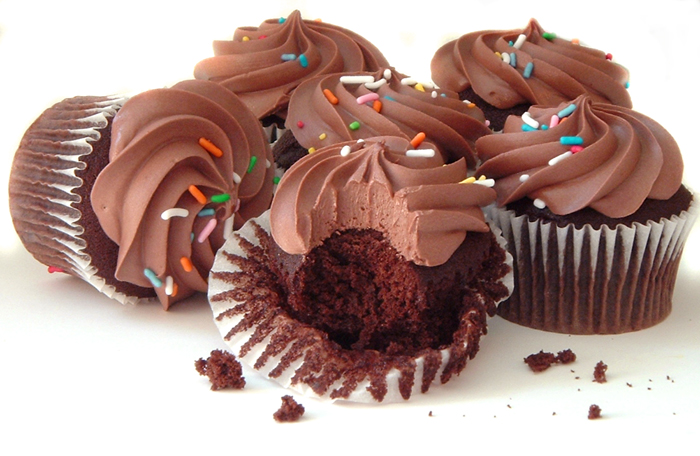
Cupcakes have become more than a trend over the years; they’ve become an industry. Rachel Kramer Bussel, who has blogged about cupcakes since 2004 at Cupcakes Take the Cake, said that in the last two years or so cupcakes have become popular nationwide.
A “cake in a mug” is a variant that gained popularity on many internet cooking forums and mailing lists. The technique uses a mug as its cooking vessel and can be done in a microwave oven. The recipe often takes fewer than five minutes to prepare. 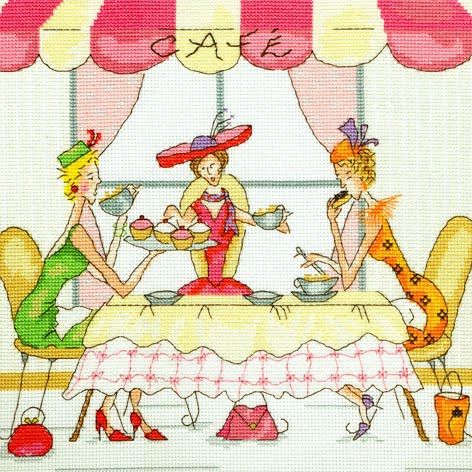
After I read the history of cup cakes I wonder did I miss my calling? Should I have become a cup cake extraordinaire baker? No! I don’t think so. I was happy to just bake cup cakes for my family. However I am looking forward to eating cup cakes with my grandchildren in the future.

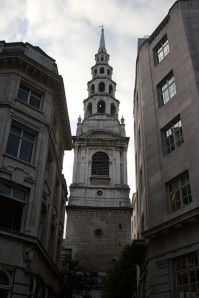 The modern wedding cake was first inspired by this church steeple in London and it’s far from being a the modern wedding cake paste frosting used on many wedding cakes was invented in 1888. In 1902 the pillars used to support the tiers of the layer cake were developed.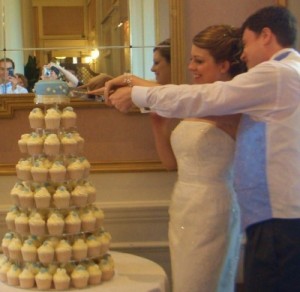
 LOVE IN BLOOM BLOG