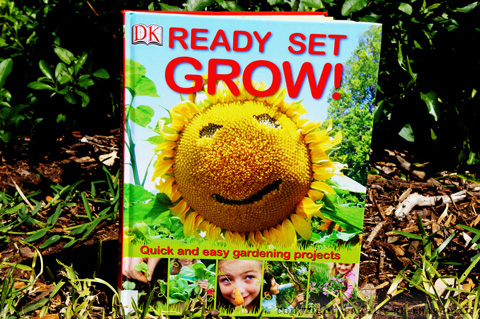
Ready Set Grow

Every grandparent enjoys a unique position in their grandchildren‘s lives. You don’t have to strive to be special. You’re special by definition. You can come into your own as a grandparent, if you put your own distinctive stamp on your role by being inimitably who you are. If you do, you’ll find you have a devoted fan in your grandchildren. Start sharing an activity that you enjoy (gardening) or a hobby  (bird watching) or you may have a particular skill (perhaps drawing, knotting, needlework, or playing tennis), which you can share with your grandchildren. This can provide an opportunity for them to go with you into a world all of your own, one that only you can introduce them to.

The great thing is that you will have boundless enthusiasm for the activity. That’s infectious, and your enthusiasm will rub off on to your grandchildren.You will communicate that energy to your grandchildren so that it becomes a thrilling journey you take together, with you as benevolent teacher and your grandchildren as willing students.

If you enjoy activities together when your grandchildren are very young, they’ll grow up thinking of you as an exciting companion, someone special who shares special pleasures with them. Children are very sensitive to this act of joyful discovery and, as soon as they’re able, they start to bring little gifts of that same kind to you.

 You form your own virtuous circle, where you respect what each can teach the other, and it will probably last for life. In my experiences I’m constantly surprised and delighted by the way my grandchildren push my interests further than I could have taken them on my own. Right now it’s The Cat In The Hat… Go Go Go on an adventure with my grandson’s Jeremy and Jesse!

And of course you open up your grandchildren’s world in a way that’s special to you. It can be anything, from finding out about insects to stamp collecting or jewelry making. The possibilities are endless. Aren’t they?

Encourage your grandchildren in all sorts of different activities. It’ the doing it together that counts.Grandchildren enjoy putting a plant seed in a used yogurt container, or a small plastic tray is fine for planting seeds together. You can teach your grandchildren what plants need to grow.

They can help you water them and you can show them where the perfect place is for the seeds to get the right amount of sun, soil, and you can track the seeds’ growth at each visit. Choose seeds that grow quickly and dramatically, like purple flowering morning glory’s.

 Even better collect the seeds from seed heads in your garden and plant them. Then your grandchildren can get the idea of the circle of life in a very simple way. When the seeds turn into flowers you can let the flowers dry out and use a flower press and turn them into a dry flower collage for the whole family to admire.

 Grandchildren also enjoy looking at things under a microscope. Dead insects and spiders that they find are a particular favorite. But so are plants.The underside of the leaf of a fern with all the rows of seeds is very exciting when seen in up close. Even newsprint looks thrilling through a microscope. The things grandparents do out of love! There is no one else except my grandson’s that could get me to look at dead insects much less spiders under a microscope. Oh! That’s just gross isn’t it?
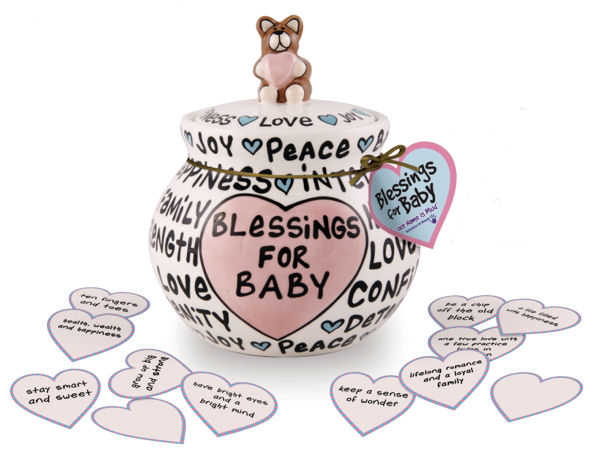

It’s Time To Celebrate Out Of The Box

What is more appropriate than birth for our beginning? A new child in the world offers a rich opportunity to honor the baby, the parents, the space where they will live, the already-existing siblings, the grandparents and extended family and friends.

 The actual birth process itself as well as preparation for it already creates special moments. As we grow to understand our role in adding more meaning  to our lives, this birth time is opportunity knocking with a loud beat. I can’t tell you how many unusual ways my girl friends and I created something out of the ordinary into a unordinary way to celebrate an impending childbirth celebration. We wanted to do something for each other, but not necessarily a traditional shower.

The gals and I grew up together, we married within weeks of each other and our  babies were born with in weeks of each other. As time went by they had two or three children with in weeks of each other. Then there was me the odd duck out I didn’t have my second baby until seven years later. Hey! It’s better late than never. Right!

This story is a bit unusual, as it talks about preparing the place where the baby will live. The gals and I designed the event, and this is what we did for our friends Linda and Dave. 

My friends Dave and Linda’s first baby was due near the holidays. I wanted to do something for them, but not necessarily a traditional shower. The birth time was getting close and we needed to move into action if anything was going to be done. I called Linda, saying that I wanted to offer to plan something for her and Dave. I asked her what would she like? Very quickly she said, she was dreaming of a time with close friends to prepare the living space for the baby.

She went on to explain to me that she didn’t mean a physical sense of painting and remodeling, but of welcoming the child into the world even before she arrived. I was thrilled with this idea and excited to be part of making it happen.

Linda and I started putting it together. Linda was very clear about who she and Dave wanted to attend–those folks who would understand and support the idea of a pre-birth housewarming. I called the guest on the phone, as it was short notice. This was before email and texting. It was in the 1970’s. The parents wanted the gathering place to take place in the location where the baby would be living.

The intention was to prepare a community nest for the baby. The nest would be made of stories, poetry, wisdom, favorite children’s books, lullabies and handmade items. The offering of the event would come from the heart of each guest. We trusted that each person knew what this new being needed to smooth the transition into the world, help her be comfortable and accepted before her actual arrival.

When the evening arrived, we gathered men and women in a circle n the living room of the home where the child would be living. A candle was lit in honor of the baby. We passed around a rattle to use as a talking piece.

A friend acted as host/facilitator. The offerings included prayers, live music presentations, the start of the child’s own library, special Christmas ornaments, wisdom for parenting, and stories from childhood. Best of all there was the overwhelming sense of how wanted and special this child was, even before she entered the world. Blessings  on this living home and caring parents were offered. Afterwards we ate, laughed and celebrated new life.

The actual birth came a few days later and turned out to be a little difficult for Linda, one of the things that helped her stay focused was remembering the support of those who had assisted in preparing the home for her child.

Because Linda had a clear vision, I was able to help make it happen. In this situation, I was less the creator and more an enabler. I didn’t need to agonized on what to do, as Linda knew what she wanted and I could act as the helper.

Linda designed her own evening. This celebration honored the parents and welcomed their first child into our lives. The circle of friends were ready to receive Linda and Dave’s new baby. As a thank you gift Linda and Dave gave each of us a photo frame with our names engraved randomly around the frame with a picture of their beautiful new baby girl. 

Celebrating beginnings helps us connect with family and friends in wonderful new ways. Even small beginnings, transitions can be explored and filled with wonder. The idea is not to have a “celebration in a box” solution, but spur your creative imagination. You’ll find inspiration to design an event unique to you will give meaning and love to all that participate. Celebrating out of the box is a way to connect with heart and meaning.

Fight The Good Fight

No relationship is without conflict and differences of opinions, preference, and even direction and a relationship is only as good as the conflict it can contain.

 This means that a relationship has vitality only to the degree that it can endure the stresses of each difference and resolve them through healthy conflict, so that the relationship and the individuals in it can move toward greater authenticity.

Then notion of the totally tranquil, we-never-fight relationship as the paragon of love is a dangerous fallacy. All too often the persons in such a situation are scared to death of testing the resilience of their relationship by airing their real differences, or have so suppressed their individual selves that their differences seem invisible.

Many couples are scared of conflict because they don’t know how to fight. They are afraid their own anger will run away with them, that they’ll lose control and become vicious, vituperative, or even physically destructive. They maybe afraid of the other person’s anger. They wonder will he or she yell, throw things, slam the door, or maybe walk out?

These behaviors can sometimes occur and can even be a real danger, especially for people who have been abused with anger themselves. But even they can learn to express anger in a constructive way.The sign of a good fight is that it makes you both feel you have discovered something, that you know one another better.

Even if you fight again and again about the same issues (and most people do), a good fight gives you hope about the future because you have gained a measure of insight about something that previously baffled or frustrated you. Here’s some help:

1. Try to see what you’re upset about. This is usually something very specific:”That he or she didn’t call you” not “Because life is miserable.”

2. State your feelings and why you feel that way: “I’m upset that you didn’t call because it makes me feel unloved.”

3. Say what you need in recompense: ” I need you to apologize.”

4. After your mate has given the apology, ask yourself and him or her if you feel totally resolved.

5. Kiss and make up.

For example: “I’m upset with you for yelling at me about burning the tea kettle. You embarrassed me in front of Jane. It made me feel belittled to have to have her hear you talk to me like that. I need you to apologize.” I’m sorry, honey. I was in such a rush this morning and was anxious about that big meeting. I was out of line. I don’t want to make you feel that way. Please forgive me.”  


This kind of fight could win the  “Academy Awards for the Most Civilized Fight”. There are many people who agree to disagree about an offense and make it a point to resolve it in a timely manner.

They never go to bed upset with each other. Yes! They do deserve an award for being the kind of people that we all should aspire to be like. Don’t they?

You can learn to be gracious when someone offends you. To start with try to remember.

1. A good fight isn’t a free for all. Don’t say everything you feel like saying even though you may have a legitimate gripe. Remember that words can wound, and after the fight you don’t want a battered mate.

2. Be specific with your complaints. Don’t throw in all your grievances since time began.

3. Let the other person’s words sink in before you take up your cudgel. Remember, you’re having this fight to learn something, to arrive at some new insight as well as an immediate resolution.

4. Go easy on yourself and your honey when you don’t do it perfectly.

Grandpa’s Fishing Buddies

The perfect gift is not always a material one. Our grandchildren do not need nor do they want what we can buy them; they need and want us. The best gift you can give them is you. Your faith, wisdom, stories, morals, life lessons, and philosophy,not to mention your time and presence.

I am most impressed with the many grandmothers whom I know who do special things and make special gifts for their grandchildren. Made by their own hands, these gifts of love are attached to forever memories.

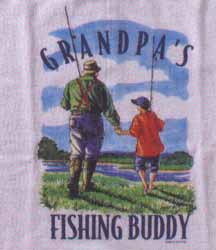
My friend Jane hand-made matching outfits with matching hats for her grandchildren and their grandpa to wear when they went fishing together. They out grew the out fits years ago but when they go fishing with their grandpa they make sure that they all wear the hats that went to their matching out fits. They enjoy talking about the all the times they went fishing with their grandpa and are in awe of their grandmothers sewing skills.

Their fishing hats have become a physical reminder of the love and care she feels for them. Recently for their grandpa’s birthday they made a scrapbook for each family member. They included their memories and lots of photos of them fishing with him. Each photo told a story. What a treasure for them to have! They surprised their grandparents with a throw pillow made of the same print that their childhood fishing out fits were made of. Their grandparents were just thrilled in fact they seemed more impressed with the throw pillow that the scrapbook.

Many invisible gifts were given to Jane’s grandchildren while they were fishing with their grandpa. He introduced them nature, lakes, ponds, the ocean, sea creatures. He shared with them stories about fishing with his father and brother and all the antics that took place between them as he was growing up. He was able to enjoy sharing his past with his grandchildren and they got to learn things about him that if they hadn’t spent the time fishing with him they might not of ever learned about him. Those moments were the invisible gifts from one generation to the next.

Grandparents are in the perfect position to give gifts that unlock life. These gifts may be invisible to others, but they are always visible to their grandchildren. What a perfect opportunity to breathe life upon a grandchild. The invisible gift. I’ll take it. Wrap up lots of them for me and make that to go! The joy will be priceless.

Make Every Day You’re In Love Memorable

When you’re in love, every day should be considered, memorable. Every good-morning kiss, every hug, every caress, every cuddle. As the years of your couplehood fly by, you accumulate a house full of furniture, an attic full of old clothes, a heart full of children, a garage full of treasured junk, and one mind, shared by two people full of golden memories. You’re not conscious of making memories. A walk down the aisle, a period of tropical bliss, a toddler’s first steps, and a family vacation may stand out, but the majority of your precious minutes together on earth are not so easily held onto.

 Can you possibly remember every shared moment? Of course not. But while so many thousands of events can’t possibly  stick out in your mind, it doesn’t mean that you shouldn’t act like they will. Even if you can’t remember every time you do something together, by putting more of yourself into each and every shared moment, they’ll mean so much more to you when they’re occurring.

 For instance don’t just kiss perfunctorily. Put more energy in your hugs. Look your partner in the eyes, and it when you say “I love you.” At the end of the day, your memory banks may not be any fuller, but your love will be a lot richer.

In The Kitchen With Grandkids

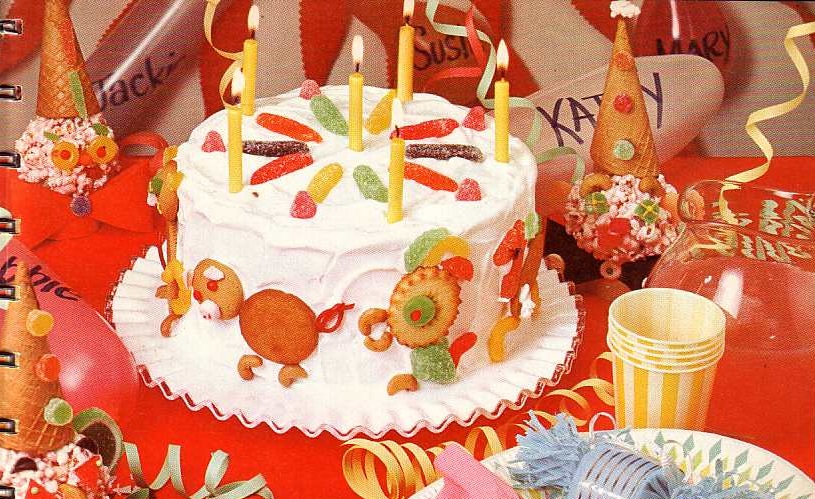
 You don’t have to teach your grandchildren how to bake a cake like the one in this picture of a Betty Crocker birthday circus cake. All you need to do is teach them a few simply things about cooking and how your kitchen gadgets work.

Here are few suggestions to help you to think about what you and your grandchildren might like to do in your kitchen. I hope you have as much fun as I have had with my friends and family in our kitchens.

  • Let your grandchildren sit next to you while you prepare food and explain what you’re doing and why.
  • Sink Play, wrap your grandchildren in an apron or dish towel and provide lots of utensils. Then stand them safely on a chair and play water games.
  • Inviting your grandchildren to cook with you is a great way to introduce them to a verity of foods even vegetables. Ask them to hold the containers for you and let them help you pour the vegetable into a pan or crock pot. Sometime they get so excited they even eat the vegetables. Isn’t that awesome?
  • Let them make what my friend Jane’s grandchildren call “stuff” they all love mixing the most unlikely ingredients together into a big bowel to make stuff; this is a great way of exercising their creativity.
  • Ask them to clean up the mess with a paper towel
  • Let them wipe the low surfaces with a damp cloth to clean up and be helpful
  • This is one of my favorite suggestions wash paintbrushes in the sink to make rainbow water.
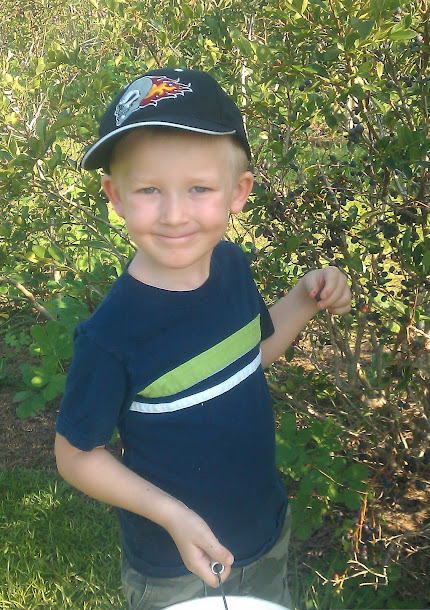
  • Invite  your grandchildren to go to a Strawberry or Blue Berry Farm with you.  Don’t forget to bring along personalized buckets for them.

Let them cook! Encouraging a child to help in the kitchen has benefits for everyone. You’re teaching them about cooking and being independent. When they are old enough they can cook a meal for you!

Teachable Moments

Ever since I read about “Teachable Moments” I’ve believed they’re the easiest and most enjoyable way to teach a child anything. And grandparents, have more teachable moments with their grandchildren, than even their parents do, because they have the time and the desire to pass on snippets of information.

Grandparents like to take advantage of every opportunity to explain something to your grandchildren it might be an idea, how something works, why something is important, how we do things, and answer to a question, pointing out something interesting a new word, a new sensation, a new feeling.

A teachable moment arises out of an ordinary everyday activity or situation where you feel that there’s an opportunity to explain something. Unsurprisingly children love those moments. The setting is informal, it doesn’t feel like teaching, and best of all its piecemeal, which is how children learn anyway. It’s appealing to a chid because a teachable moment has it own logic. Here are some teachable moments that I’ve experienced with my children when they were growing up or even more recently with my grandchildren.

  • You’re “Gardening” together and you see a worm. You can talk about how worms aerate the soil and turn it over (as worm casts), and how a worm  has no eyes because it’s always in the dark.
  • You’re crossing a street with traffic lights. Hers’s a good opportunity to talk about the light sequence and how RED means STOP and Green means Go. Extend this to talking about how you should look left, then right, then left again, then cross.
  • It’s bath time, and as your grandchild gets into the bath the water rises, then when she stands up, the level drops. You explain why and you could mention Archimedes and “Eureka”. You explain how some things float and some things sink.
  • You use a word that might be difficult for a toddler or young child to understand, for instance, words such as recognize, reflection (in the mirror), camouflage and immediately explain what it means and give examples of how to use it.
  • Use every opportunity to explain a concept this is hard, but this is soft; a cat meows but a dog barks; birds fly and so do airplanes.

You are an expert as a grandparent, because of your experiences, the life you’ve led, and your range of interests and hobbies, you can stimulate your grandchild in a way that a parent can’t. Your grandchildren will learn very easily from you, and I’m sure that. like me, you will get huge satisfaction from the hours you spend playing and learning together.

You have a caring interest in him or her, which they can sense because it makes them feel special, the perfect setting for new games and skills. You have the time to play until your grandchildren get bored. You take obvious delight in their tiniest achievement and make them feel confident. Nothing is too much trouble for you so games can extend his concentration and foster his curiosity.

You are endlessly patient and show him how to try, try, try again until he succeeds, and then praise them. You love him them enough to let them fail on their way to their success’. Remember to let your children and grandchildren fail instead of trying to rescue them from failure all the time.

Take a moment and think about a time that you failed and turned that failure into a success. Would you have conquered it if your parents, teachers, mentors, or grandparents had rescued you out of it? I remember when my son was learning to ride a bike I can’t tell you how many times he fell down and we just ignored him and he got right back up on that bike and finally mastered riding it. Later in life when he learned to drive a motorcycle there was no room for failing.  He had to do it right the first time and he did.

I remember when I started playing baseball at first I couldn’t hit the ball and my teams mates were not happy about that. But I can tell you no one told the couch to rescue me or even how to handle it. All my mom said, was you’ll figure it out just pay more attention to the way you are holding the bat. I kept trying and then one day I hit a home run. It’s good thing too because girls didn’t play baseball back then. Enjoy all those teachable moments and let the kids learn to turn their failures into success’.

Everybody Has A Story To Tell

When we’ve been connected for a long time to someone, we think we know each other. We do, of course, know a whole array of things about one another, but it’s really only when we tell our stories.

Those touching vignettes that embody our struggles, sweet moments, disappointments, or wild hopes and dreams, that our most real, most vulnerable selves are revealed. Indeed, if we don’t tell each other our stories, we’re all one-dimensional, blank screens on which we project our assumptions about one another.

Everybody has a story, and because we all do, when we hear each other’s stories, we feel suddenly connected. Story is the great river that runs though the human landscape, and our stories are the little creeks that flow through us all to join the river at its source. When you tell your story, however you open yourself to the level of fragility that, as human beings, we all share; for no matter how different our stories, at the bottom of them all is the well of pain from which we have each dipped a drought.

Tell him or her your story, tell them the most exciting moment, the greatest regret of your adult life, the most painful event in your childhood and you will discover, in-depth, a self you never knew. That’s because between the sentences of our stories the gist of things slips out, not merely the facts, but the feelings that have shaped us, the point, in anyone’s journey, from which there was no return.

For example, although you may be aware of your husband’s  fascination with architecture, you may not understand why he never pursued it, until you hear the story about the night their father got so angry at him for staying up late drawing that he broke all his drafting pencils, threw them in the trash, and raved, “Since you’re waiting time like that, you’re never going to get a cent to go to college.” or, you may know about your wife’s interest in the big dipper but not know where it came from, until she tells you the story about how when she was a little girl and she heard her parents downstairs arguing at night, she would lie in bed looking up at the Big Dipper until it seemed like the stars beamed their white light right into her room so she could finally go to sleep.

When you tell your personal tale, spinning and spinning, telling, retelling, the tight thread with which you have wrapped up your pain will gradually start loosening. and when you listen to her or his story, he or she will become, in the process of your listening, a fully formed human being. So tell each other your stories. They’re more than entertainment for the dinner table or a long ride in the car. They are your true selves, spelled out and spoken, brought forth in time and in your own language, a loving gift you give to each other.

Rediscover Harmony And Belonging

Belonging is the spiritual beauty of any intimate relationship. It is elegant coexistence, peaceful compatibility, a similarity of frequency. It’s knowing that you share the same view of the world, that what you want out of life runs along parallel lines. It’s looking at your beloved and being able to say to yourself, “We stand for the same things, don’t we? We may encounter some rough spots, but at heart we both share the same values and we always find our way back to harmony.” In relationship, belonging and harmony is a gift of the spirit. It is a mystic similarity of essence that allows you to operate both separately and together from the comfortable wellspring of knowing that between you there is a sacred resonance. In a sense, it’s the very reason you chose each other in the first place. If there weren’t a certain degree of belonging and harmony between you, you wouldn’t have thrown you lot in together and established a relationship.

When there’s belonging and harmony, you can feel it; it will add grace to all your undertakings, the rearing of your children, the way you conduct the actions of your daily life, the way you handle conflict, and what you perceive to be the underlying deep direction of your life.

Unfortunately to many demands can undermine the pleasant ground of any union’s harmoniousness and we can lose sight of our belonging feelings. Schedules, children, unexpected little assaults from others can make all us feel at times as if there’s no harmony or belonging between us.

Conversely, harmony is nurtured and restored by being lovingly remembered. So if the harmony is out of balance in your relationship, ask yourselves the following questions:
After all the fuss and fray, when the kids are in bed, when the disagreement is over, is the stream of our life together most of the time good? In general, can I give thanks for his or her presence in my life? Do I still know that I still belong to her or him?

In what ways are we at the core a complement, a mirror, a balance for one another? What things still give us pleasure together? What is the higher purpose of our relationship and what is our common undertaking?

If you have a hard time finding answers to these questions, take a good look at what’s compromising the harmony and feeling of belonging in your relationship. Is it something you can change? Is it circumstantial, your husband has been on the road for a month or is it an emotional issue that needs to be dealt with? What is the one thing you could do or say that would be a first step toward restoring harmony and the feelings of belonging?

Harmony and creating the feelings of belonging is the spiritual balance in any good relationship. So give thanks for the harmony you have, develop the harmony that’s missing, and nurture the harmony that ensures the feeling of belonging to your love.

New Love Needs Time To Grow

It’s great to reach for the stars. Just don’t be disappointed if you only get as far as the moon. Love that detonates like an exploding star can disappear into the cosmos just as quickly. Love that grows slowly may never burn quite as brightly as a supernova, but it may deliver more energy over the long run. Remember it only takes a spark to start a raging fire. Many people are out there searching for their perfect soul mates. They may not know exactly what a soul mate is, but they think they’ll recognize the right person when he or she comes along.

Perfection is a wonderful goal. Always settling for second-best can lead to a lifetime of disappointment. But since nobody is perfect, you could spend a lifetime searching and wind up getting nowhere.

So you find a partner. Maybe he or she isn’t perfect or the one you pictured as your “Soul Mate,” but there is definitely some chemical reaction going on between you or you wouldn’t be together. Could it bubble or boil more strongly? Perhaps. Would that chemical reaction be stronger with someone else?  Maybe. But don’t be too quick to abandon a relationship because your partner doesn’t fit the definition of “Soul Mate.”

The French call that feeling of instantaneous love Le coup de foudre, the lightning bolt. Luckily, the odds of being hit by real lightning are small unless you live in Alabama.  Maybe unluckily, the odds of being hit by le coup de foudre are also small, but at least it’s not the only way to find true love.

We live in a world of instant gratification, and that often means we end up being less satisfied. Fast food doesn’t compare to a meal that took hours to prepare. Ready-to-wear clothes never fit as well as those that are hand tailored. So just because a relationship takes some work on the parts of both people to come together, it doesn’t mean that it’s filled with any less passion that one that sparked at a first glance. In the long run, it may actually provide a lot more heat than a relationship that starts off quickly but then peters out as fast as it began. Don’t expect to find an instant soul mate. New love needs time to grow, but when both people work at it, the rewards can be incredible.

Veggie Tales

God is Bigger Than the Boogie Man” is one of my grandson’s favorite songs to sing. It’s a catchy little tune isn’t it?  When we sing it over and over and over we laugh a hardy laugh. You try it, say it over and over and see how you feel afterwards. Wasn’t that fun?  Doesn’t God have a great sense of humor?  Talking Veggies! Veggie Tales is an American series of children’s animated films featuring anthropomorphic vegetables in stories conveying moral themes based  on Christianity. They frequently retell Biblical stories, sometimes anachronistically reframe, and include humours references to pop culture in many different ears by putting Veggies spins on them. Big Idea has also published Veggie Tales books and music CDs and branded items such as toys, clothing, and garden seeds for vegetables and flowers. I for one love the name “Big Idea Productions.”  for the name of the publishing company. That’s a God thing. Isn’t it?

Their aim was to produce children’s videos which conveyed Christian moral themes and taught Biblical values and lessons. The animated featured involved stories told by a group of recurring vegetable characters wh lived on a kitchen countertop. The first 30-mintue program called   “Where’s God When I’m S-Scared?”  They also released two feature-length movies in 1993 “Jonah” A Veggie Tales Movie and “The Pirates Who Don’t Do Anything.” 

VeggieTales has a continuous back story that all the cartoons are actually teleplays, performed by various vegetables and fruit that live together on the same kitchen countertop. Some of these characters have “real names,” and take on various roles in the teleplays, although they will also often appear as themselves. Most of these “regulars” were established in the very earliest videos, while some have been added more recently. 

Don’t forget!  God Is Bigger Than The Boogie Man,  God Is Bigger Than The Boogie Man. Did I tell you that God Is Bigger Than The Boogie Man? I don’t think that Veggie Tales is just for kids. It’s for parents and grandparents too. Remember God Is For You!


Fifteen Ways To Kiss Your Love

The days of true romance and passion are back. Kissing your love no longer needs to be a routine event bordering on the tedious.  Put some fire  back into your romance with a different kind of kiss.

 Whatever the mood or the time, there is a kiss to fit the  moment.

You and your love can continually discover new and exciting ways to kiss in unique ways. Here is a list of fifteen fun ways to kiss your love.

  1. The Great Expectation Kiss: Inform your love one morning that he or she will soon receive a fabulous kiss. Later, call your love with a reminder. Then the next you see your love, pull out the stops and plant a long, hot passionate kiss.
  2. Goodbye Surprise Kiss: Send off your love in the morning with a quick kiss. As your love turns to leave, pull him or her back for a second, more passionate kiss.
  3. The Full Moon Kiss: The next time there is a full moon take your love someplace where the two of you can smooch by moonlight. A full moon can be very romantic.
  4. The forewarned Kiss: Leave your love a note alerting him or her about where you will be kissing him or her later. When you two meet next… watch out!
  5.   The S.W.A.K. Kiss: Write a love letter and seal it with a kiss.
  6. The Rose and Violet Kiss: Place a rose and a violet on your love’s pillow with the note: “Roses are Red, Violets are Blue.” I may be at work, but my thoughts are of kissing you.”
  7. The Answering Machine Kiss: After the beep, leave a long, sloppy kissing sound and the message, “There’s more where that came from!”
  8. Eventful Kiss: Tell your love that for a kiss, you will provide a big surprise. Upon receipt, present your love with a pair of tickets to his or her favorite event (e.g. Football, Opera, Theater). Whether you like it or not, agree to go with your love.
  9. The Car Door Kiss: Just before you or your love opens the car door, give them an unexpected kiss.
  10. Welcome Home KissGreet your love at the door with a big warm kiss and a cheerful “Glade you’re home.” Take his or her baggage, direct to a comfortable chair, remove shoes, and hand him or her the remote control and their favorite dessert.
  11. The Network Kiss: Is your love a subscriber to one of the personal computer networks? If so, send him or her kisses through the electronic mail function. If not, just post a note for all to read espousing your love’s puckering prowess.
  12. The Couch Cornering Kiss: In 1936 author Hugh Morris proclaimed the best way to kiss your love was to first corner him or her against the arm of a sofa. “First flatter them, then grab hold and finally move in for the kiss.”
  13. The Blow Kiss: This one is funny. The two of you puff out your cheeks with air. Now, zero in for a kiss, keeping your eyes open and trying not to laugh.
  14. The Vow Kiss: Think of a vow you would like to share with your love and memorize it. Then, standing a few feet apart, face your love hand-in-hand, and recite your vow. Afterward, both close your eyes and lean forward until your lips meet in a kiss.
  15. The Reconcile Kiss: Hate reconciling your checking account? Make a deal with your love to be kissed any way they want if the check book is successfully balanced.

 I hope you and your love continually discover new and exciting ways to kiss each other for many more years to come.

Find A Mentor

A mentor is a trusted friend, counselor or teacher, usually a more experienced person. Some professions have “mentoring programs” in which newcomers are paired with more experienced people, who advise them and serve as examples as they advance.

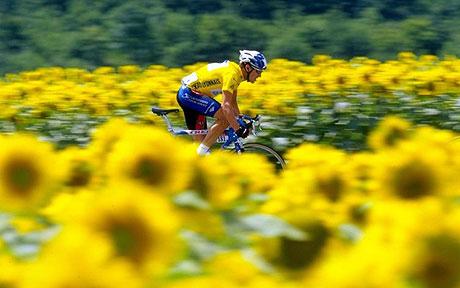
Schools sometimes offer mentoring programs to new students having difficulties. Today’s mentors provide expertise to less experienced individuals to help them advance their careers, enhance their education, and build their networks. In many different arenas people have benefited from being part of a mentoring relationship, including: Athletes Eddy Merckx (five-time Tour de France winner) mentored Lance Armstrong (seven-time Tour de France winner). Bobby Chariton mentored David Beckman.

Mentorship refers to a personal developmental relationship in which a more experienced or more knowledgeable person helps a less experienced or less knowledgeable person. The person in receipt of mentorship may be referred to as a protegé’ (male), a  protegée (female), an apprentice or, in recent years, a mentee. “Mentoring” is a process that always involves communication and is relationship based, but its precise definition is elusive.

Think about the things you have learned over the course of your life. Many of those skills and bits of wisdom have stuck with you because of how you felt about the person you learned them from. When a coworker, friend, parent or even a casual acquaintance asks you if you can help them succeed.

 If you are a parent or a grandparent you are a mentor and its an honor; however, if you are feeling a little wary, here is a good reason to cast off your fear, its to experience the joy and satisfaction that comes from teaching your children, grandchildren and others in its purest form.  If you want a life that is larger than life be a mentor or find one.


To Console Is To Comfort

To console is to comfort with your words, with your hands, with your heart, and with your prayers.  To console is to mourn with one another and thereby divide the power of the loss. In consoling you make yourself and the person you care about less alone.

You listen from the innermost place in her or his soul, respond from the most generous part of yourself to the neediest part of him or her. More, perhaps, than we would like to acknowledge, life is infused with tragedy. Everybody is given burdens of heart that are almost too much to bear; we all have sorrows and heartaches that bring into landscapes of pain that at times seem untraversable.

 There are times when we feel that what we are experiencing will utterly devour or destroy us. To be aware of this is to know how immense the need for consolation is. Faced with midst, we can do nothing but attempt to extend the healing gift even if we feel totally unequipped to offer it.

For no matter how inadequate our unpracticed gestures may seem, they will surely reach into the place that is aching for solace. Consolation is a spiritual undertaking. It begins with the state of grace that gives us wisdom and is one of our highest callings to abide there a while with one another.

We all need to be willing to act as physicians of the spirit for one another during the painful times. For it is when we are assaulted by the visitation of life’s sorrows that we most need to feel the presence of love. It’s when we are broken-hearted that we need to be ministered to, when we are in grief that is when we need to be taken into the presence of God’s grace and love.

The Notion Of Love As Service

Most of the time we think of love in terms of what love can do for us, imagining that when we “fall in love,” all our dreams will come true.

We want so badly to have our own feelings recognized, our own needs met, our own insecurities handled, and our own desires fulfilled that the notion of love as service is almost inconceivable to us. We can get so caught up (or bogged down) in the notion of love as a what will I get out of the experience that the idea of serving another is extremely distasteful.  At a deeper level, we’re afraid that by serving we might lose the sense of our selves we’ve worked so hard to attain.  But in its purest state, love is service,  a wholehearted offering so satisfying that it doesn’t feel like service at all, but rather self-fulfilment of the highest order.

Most of us still need practice for this particular outreach of love. We’re not sure how to serve or what our true service might be, and we haven’t  practiced serving  to such a degree that it feels second nature, graceful, or effortless to us.  The truth is that we’re all already serving in one form or another. If you’re a parent, you’re serving your children.  If you’ve cared for an invalid neighbor or an aging parent, you have also served in love. If you’ve bandaged the wing of a wounded bird, given a homeless person a dollar, saved a stranger from drowning, given up your set on the bus, then you too have served in love. These are the seedings of service , the places where our hearts have started to open, but should you choose to have your service grow into a huge and sheltering tree, you will be given many opportunities to mature your gift  of true service.

Begin by asking yourself the following questions: What does it mean to serve? What would my true service be? How can I develop my service so it can truly become a gift of love?  Service in love is temporarily sitting aside your own needs, wants, and priorities and allowing the needs, want and priorities and allowing the needs of another human being to become radiant, so vivid, and so pertinent that, for a moment, your own are dissolved. This gracious moment is love, and the more we live in the practice of service, the more we create this love. For when we serve one another, we also serve the great cause of Love with grace.