Moms and Dads Are Raising Great Kids!

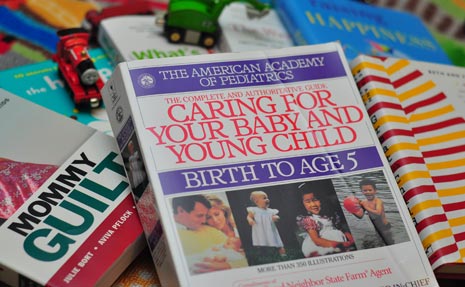
Do moms really read parenting books?  Of course they do they’ve probably read dozens especially when their first baby was born. Have those books been helpful? Yes. In some cases the information about childcare development and medical health issues is very practical and often comforting.

But frankly, reading book after book hasn’t reduced the amount of guilt, stress, and mania among mothers around us. In fact it may have increased it.

There have been just too many parenting books by too many authors who call themselves experts. The net result has been confusion, and mothers who still doubt themselves and worry that their children aren’t thriving.

When researching parenting books make sure that the author has children and is actively involved in their children’s day-to-day lives. It’s not too much to ask of authors of books on parenting to have hands on experience and education about parenting. That is the best. Isn’t it?  There are some solid parenting principles that have been around for decades but all to often forgotten. There are parenting books that simply remind us all the basics. What has always been natural, instinctive, and intuitive for real mothering. Unfortunately, these core principles have been obliterated by the frenzy and mania of commercialized parenting. But now it’s time to get back, get real, and restore the simple truth about mothering: That its foundation is the powerful and unconditional love and connection that ultimately lasts for always. 

  So trust yourself and those maternal instincts no one knows your child better that you. Don’t forget to relax, enjoy the moment, and remember to laugh. I know! You’re thinking that’s easer said than done. Yes, it is but it works!

Antiques and Keepsakes

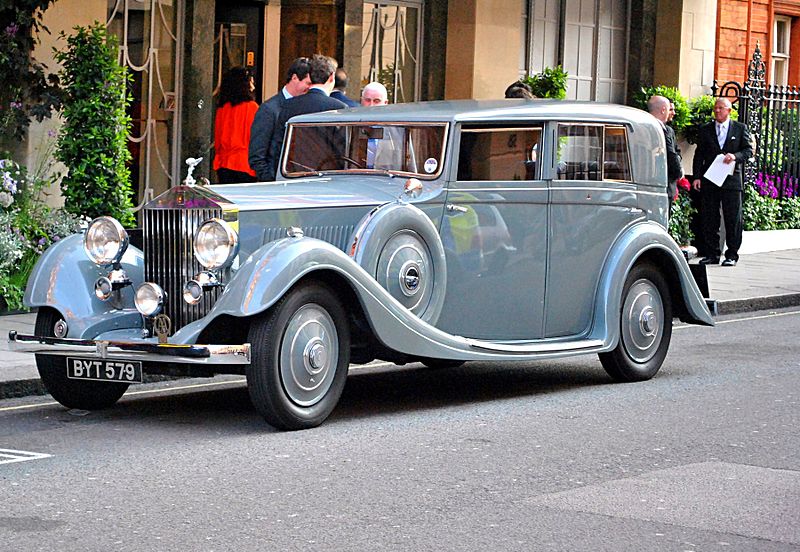
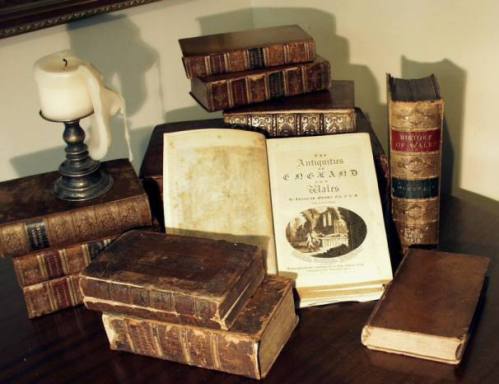
The definition of antique varies from source to source, product to product, and year to year. The only known exceptions to the “100 year rule” would be cars. Since the definition of the term antique requires an item to be at least 100 years, or older, and the items in question must be in its original and unaltered condition to be an ‘antique’ if they are roughly 75 years old, or more (some cars can be registered as “classic” when  25 years old, such as muscle cars and luxury vehicles such as a ( Rolls-Royce and Bentley). Further, this is not n universally accepted concern, but rather a consideration made almost strictly by car collectors and enthusiasts.

In the United States, the 1930 Smoot-Hawley Act defined an antique as “works (except rugs and carpets made after the year 1700), collections in illustrations of the progress of the arts, works in bronze, marble,terra-cotta, Parian, pottery or porcelain, artistic antiquities and objects of ornamental character or educational value produced prior to the year 1830. 1830 was roughly the beginning of mass productions in the US and 100 years older than Smoot-Hawley Tariff Act. These definitions allow people to make a distinction between genuine antique pieces, vintage items, and collectible objects. The term antiquarian refers to a person interested in antiquities, or things of the past.

The definition of a keepsake is some object given by a person and retained in memory of something or someone; something kept for sentimental or nostalgic reasons. She gave him a lock of her hair as a keepsake of their time together. Historical specifically, a type of literary album popular in the nineteeth-century, containing scraps of poetry and pose, and engravings. Keepsakes can be called mementos, souvenir, and memorabilia retained in memory of something, someone or a special occasion. Life is full of keepsakes. Every person has them. Every person keeps them. We find them in closets, in scrapbooks, under beds, in attics and in garages. Keepsakes are forever.

 The other day I stopped in at an estate sale the house was bulging at the seams with antiques and keepsakes.  Everything from Vintage jewelry to first edition books signed by the authors. The owners also had beautifully crafted figurines inspired by artist Muriel Joseph George. It got me thinking. What is a keepsake? The thesaurus gives synonyms for keepsakes: mementos, memorial, remembrance, souvenir, symbol, token, trophy. But I’m not sure these words adequately describe a keepsake.

To me, a keepsake is something that when I look at it, my mind becomes flooded with the taste, smell, sound, and memory of an event. It’s something that I don’t have to write an explanation for in the scrapbook. When I glance at a program from a day at the “Ice Capades” all my sense’s come alive. Once again I can pretend that I’m a famous Ice Skater like the one’s in the Ice Capdes that day. Our keepsakes are like a life long friend, who reminds us of the all those special occasions we have experienced in life.

Working Women

Elizabeth and Julie have a lot in common they work in the same office, have the same duties and earn the same salary.

They both like movies and meet every friday night at the movie theater. So how can you tell which one is the grandmother?

Easy! The one who goes to the store on her lunch hour, calls to see if the baby vomited, and rushes to take a peanut butter and jelly sandwich to her son because he forgot his lunch. She’s the mother.

The one in the darling little dress with matching accessories and is perfectly manicured, the one who sits and orders a salad and a glass of wine while unfolding those endless pictures of adorable kids, she’s the grandmother.

 Can you see how nothing separates the generations like lunch?  Mothers are the ones gobbling down their food, while checking their bank balance on their cell phones. They are the ones using their techie gadgets to keep track of all their responsibilities. Grandmothers are the ones who wait in line at the best restaurants for the best tables.

They care about staying away from fattening foods and sometimes they’ll order off the low-calorie menu or ask the chef to leave this and that off their plate. But on other days when they go for it, on days when they say, Why not? Let’s live a little,” and have things like crème brûlée for dessert with a liqueur. On those days they just breathe a little deeper and rush off to fancy gyms, where for the price of nursery school tuition, they roll back into shape with the help of their personal trainers.

Mothers on the other hand after splurging on a double helping of chocolate chipcookies get back in shape by following exercise videos at home. Grandmothers at lunch discuss the accomplishments of their children and what to buy their grandchildren. A mother’s idea of a relaxing lunch is to turn their cell phone off, drive through and order fast food and enjoy their me time. Elizabeth and Julie have a lot in common except for how they spend their lunch hour. However Julie the grandmother, remembers how she spent her lunch hour when she was a young mom. She enjoys providing a listening ear for Elizabeth, just not at lunch.

A Season Of Life

Positive minds produce positive lives. Negative minds produce negative lives. Positive thoughts are always full of faith and hope. Negative thoughts are always full of fear and doubt.

Some people are afraid to hope because they have been hurt so much in life. They have had so many disappointments, they don’t think they can face the pain of another one. Therefore, they refuse to hope so they would not be disappointed.

This avoidance of hope is a type of protection against being hurt. Disappointment hurts! So rather than be hurt again, many people simply refuse to hope or to believe that anything good will ever happen to them. This type of behavior set up a negative lifestyle. Remember “For as he thinks in his heart, so is he.”

Do you know someone who is extremely negative?  They might say to you, that if they have two positive thoughts in a row that their mind would get a cramp? Their whole philosophy is this: “If you don’t expect anything good to happen, then you won’t be disappointed when it doesn’t.” After spending time getting to know them, you learn that they have encountered many disappointments in life, leaving them afraid to believe that anything good might happen to them again. It becomes obvious to you that since their thoughts are all negative, so are the words they speak; therefore, so is their life. You try to  stay positive and wish you could get into their head and replace their negative thoughts with positive ones. Wouldn’t that be helpful?   I have friends who are negative, and I find it interesting that words they speak came to pass in their lives.

 I  also have friends who are positive, and are always finding the good in the many situations they are in life. It doesn’t mean that people who are positive thinkers don’t have doubt and feel sad, but it  does means they don’t stay stuck in their negative thoughts. It means that remain hopeful.

 Sometimes a season of life might be so devastating that the only positive thought we can have for a while is I’m breathing. I was in a season of life with a friend a few years ago. All we could say to each other was, “Your breathing aren’t you?”  Then that makes this a good day doesn’t it?  Now when I want to complain about my current season of life, I remind myself that I’m not only breathing but, I’m happy again. Life is good. Isn’t it?

Wouldn’t life be perfect if we never had to endure the devastating seasons of it?  

A few years ago I went through a devastating season of life. It was when people I loved passed away unexpectedly, and all I could do was breath because I was numb. 

 Now, I’m in a season of a life, and looking forward to the birth of my granddaughter. I have learned that life really does work in seasons, and some can be cold like winter, while others can be sunny and warm like summer.

Grandma’s Common Sense

Letters are among the most significant memorial a person can leave behind them.  Johann Wolfgang Von Goethe~

Sometimes a grandmother’s common sense can teach their grandchildren that life’s simple pleasures can bring them the most happiness, and that they cannot buy it with money. Like going on walks and showing them the beauty in nature.

I preferred my grandmothers homemade toys, which she created with her own hands, over the expensive toys my parents bought me. From the age of five, I can remember her writing letters to me. She introduced me to world-famous classics and the library. By the time I was six I was able to read classics like Oliver Twist and Great Expectations because my dad had read them to me over and over. I’m not sure if I read them or if I memorised them.

My grandmother lived far away and would come to visit us and when she arrived I was glade to see her and sad when she had to leave. She felt the same. I missed her right away. But then, one week after she left, a letter would arrive.

Dear Granddaughter, I miss you a lot and remember absence makes hearts grow fonder? Write to me when you feel low or bored. So I started writing to her and I poured out all my problems into those letters. One of my favorite letters that I wrote to her was when I was in second grade and I explained to her that an older girl was being mean to me at school and called me a brat.

 I wrote to my grandma: Grandma, I’m being treated unkindly at school and I feel hurt. She wrote back: Dear Granddaughter, Just follow my instructions when the older mean girl says something that is hurtful to you. Tell her that you are hard of hearing and ask her to repeat what she said again and again. She will repeat it. Keep telling her that you can’t hear her, and she will get fed up and leave you alone. I followed grandma’s advice and it worked.

Then in my first year of high school we were having our annual health fitness week. I was good at sports but not at rope climbing and gymnastics. All my class mates were stronger in the upper parts of their bodies than me. I couldn’t complete rope climbing or any of the gymnastic part of the testing.

I wrote to Grandma: Grandma, I’m not good in sports, and Mom is making me sign up  for sport. She says sports and rope climbing are two different categories. She wrote back: Dear Granddaughter, I heard a song recently that had a wonderful message. There may be mountain peaks you have to climb on, there may be rivers fast and wide you may have to ride on. Unless you dream, unless you try, how will you know how far you can fly? Remember these words and believe in yourself. It turned out that because of my mom and grandmother I continued to pursue sports. I was good at sports. However I never did climb a rope.

Letters passed between us every week and she often sent quotes by great people from newspapers and magazines. All of them, in one way or another, told me the same thing:” Believe in yourself, then you can reach even the farthest star.” I kept all of Grandma’s letters in a file. When I felt low and sad, I would read them one by one. They lifted my spirits, and I came back to my self again. The lessons my grandma taught in her letters will forever remain the most valuable and treasured ones.

Grandma never owned a computer and she didn’t foresee in the future that her granddaughter would be passing on some of her advice on a website. I wonder how will our granddaughters be passing on their grandmother’s advice in the future? What is going to replace computers?

Chose Your Own Grandparenting Style

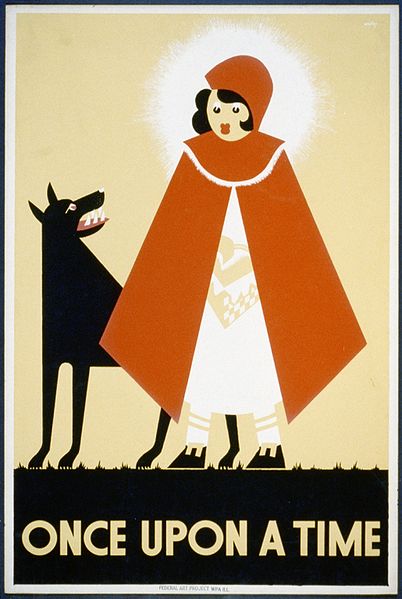
 The Power of Myths reminds me of the classic children’s storyLittle Red Riding Hood” it has almost all the main features of one stereotyped image of a grandparent.

Once upon a time, at the edge of a large forest there stood a tiny cottage almost hidden by the trees. In it a little girl lived with her mother. The little girl could often be seen in her hood and red  cape flitting among the tall trees. Her grandmother had made the hood and cape for her and because the little girl always wore them, she was called Little Red Ridding Hood.

Red Riding Hood’s grandmother is old and feeble, caring and gift-giving, and lives within convenient walking distance (wolves not with standing) of her granddaughter. There are probably some grandparents who fit this image. There are probably even more who wish they matched some parts of it. But in today’s world, many grandparents are neither old nor feeble.

They don’t eat chocolate cake or drink creamy milk especially when they’re sick. Their lives are not focused on their grandchildren but on their jobs, friends and social activities. Oh! We can’t forget that some of us can end up spending all day trying to figure out how to use our latest techie devices.

 Often they don’t live on the other side of the woods but on the other side of the country, on another continent, or at least somewhere where the winters are milder and the weather is sunnier. However grandparents are enjoying their beach cottages and mountain cabins. Aren’t they?

 One morning Little Red Riding Hood’s mother packed a basket full of homemade  goodies that included a chocolate cake, a jar of strawberry jam and a bottle of creamy milk. She told Little Red Ridding Hood to take this basket to your grandmother because she was sick in bed and this food will do her good and it will make her happy. I would’ve preferred a cup of tea and a piece of toast myself. 

My friends and I didn’t realize how powerful myths could be until we became a grandparents. We have discovered that when it comes to the topic of family life how surprised we were to see how many people are still clinging to idealized images from the past.

There’s certainly nothing wrong with having romantic and nostalgic ideas but if we walk around feeling that our lives are only second best because things were once better it can sap all our strength. And if we invest our energy trying to live the way we imagine people used to live we’re bound to be disappointed.

Grandparents are living longer that in the first half of the century, the grandparenting phase might last two or three decades or more.

 In short, grandparenting has developed as an independent role in the family cycle and often extends as long or longer than parenting.

Here are a few questions grandparents can ask themselves when choosing their grandparenting style.

What kinds of things to you enjoy doing? What special skills do you have?  How much time do you have available and how much do I want to spend grandparenting? What are your children’s and grandchildren’s needs? What religious and ethnic traditions do you want to pass on to your grandchildren? 

Keep in mind there is still no set definitions of what makes you a good grandparent any more that whats makes a good grandchild. The consensus about what makes us good grandparents makes it easier for each of us to reinvent grandparenting in own style and enjoy our roles.

A Slice Of Life

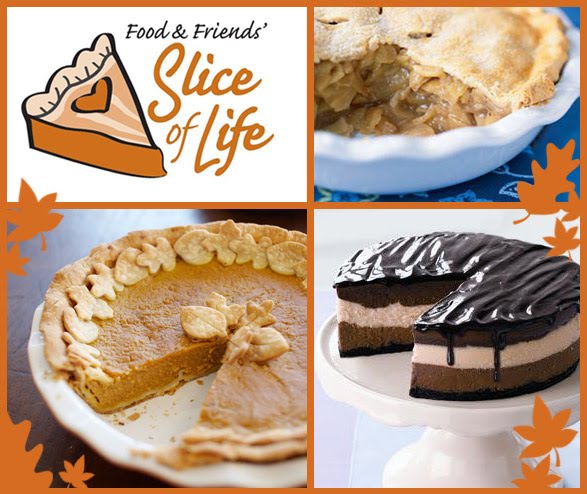
Having fun with our kids is like a slice of pie. Think about a pie not as a fruit pie, but as a pie of life with slices that define different, slices of family life. One slice is childhood, the next slice is the parenting years, followed by the early adult slice and the largest slice is the empty nest years.

 If we live out our average life expectancy, we will spend twice as many years as adults together with our children, than when they were living at home with us. When a group of my friends got together we talked about our relationships with our parents. Some of us got along well with them, others did not. When we probed the reasons, it had a lot to do with parenting patterns developed during childhood.

 In other words, how we parent our young kids might shape our relationship with them when they grow upWe figured out that the ones who wanted to be friends as adults and spend time together, not out of obligation but, because they enjoyed each other and had moms who included fun as one of their family values. They seemed to be the moms who adult children wanted to spend time with for all the right reasons.

You might be asking yourself what does fun look like?  Just look around you and watch other fun families. You’ll notice they can have fun and be fun even in unlikely places. Like the grocery store or waiting in line at the DMV. Fun is an attitude as much as an activity. And to have fun, we have to be fun, which means lightening up.

Throughout the years, the activities changed. We went from having fun with preschoolers which was fairly simple. They loved to play and loved the attention they got when we did almost anything together. When our kids got older, their fun included their friends, which meant stretching the family circle to make those friends feel welcome in our homes. We agreed that parenting includes the responsibility to shape appropriate fun as kids grow up, which was easier when their friends gathered at our houses.

 The best advice offered was to learn to let go of our own expectations and stop trying to  Besides, our best and most humorous family memories often came out of those unexpected out comes. Friendships with our adult children evolve as slowly as our parenting bumped and bounced from controlling to influencing to simply encouraging and enjoying.

The fun we have along the way is not so much about doing things, as about being in relationships that allowed for growth and embraced our differences. It’s been said, that being friends and having fun with our adult children is the best slice of the pie of life!


Nana’s Hands

If we can be generous with our hearts, ourselves, we have no idea of the depth and breadth of love’s reach. Our Nana was a generous woman with a big heart not just to her family but to all kinds of people, even people she didn’t know.

 She did nice things without expecting anything back. Nana was especially good at baking and she made the best chocolate chipcookies in the world.

One of the best things about Nana was that she loved people and they loved her back. Friends and family knew they could stop by and see her anytime and Nana would always welcome them. Everyone in her family depended on Nana to keep them up with the latest birth or who got married in the neighborhood (in the old neighborhood) as my dad use to say. They grew up in Massachusetts and Rhode Island. 

Now Nana’s not here to tell us what’s going on, or to bake those favorite things she was so good at making. Nana passed away a few years and my cousin found this poem and we realized that it describes how we felt about our Nana. It’s called “Nana’s Hands.”

Nana’s Hands used to touch us with. Nana’s hands would scold us and sit us down in a chair. Nana’s hands would applaud us when we did something good. Nana’s hands would hold us every chance they could. Nana’s hands would aid us when we fell down. Nana”s hands, Yes I miss them, they were the best hands around. Nana’s hands would spank us and she would say, “Now, Baby, you act right.” Nana’s hands would stroke us and tuck us in at night. Nana’s hands would pray for us, they would pray for everyone she knew. Nana’s hands would rise in the air as in God she put her trust. Nana’s hands were special; they were the very best. Nana’s hands got tired, and now they are at rest.

We thought a lot about the last line of that poem it taught us that it can be hard to lose people we love but it can sometimes be for the better too. When Nana got sick we felt bad for her when we realized she couldn’t do things she loved anymore and she was in pain. At least we knew that she didn’t hurt anymore.

 We also realized that we never thought about how things would change once Nana was gone. Losing someone you love can definitely help us appreciate the people who are special to us while we still have them in our lives.

Rosie The Riveter

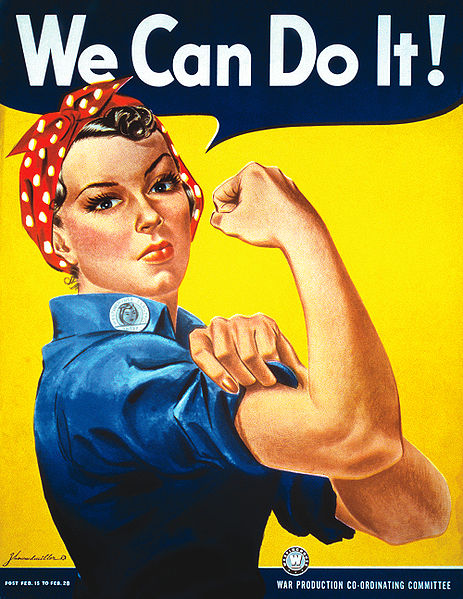
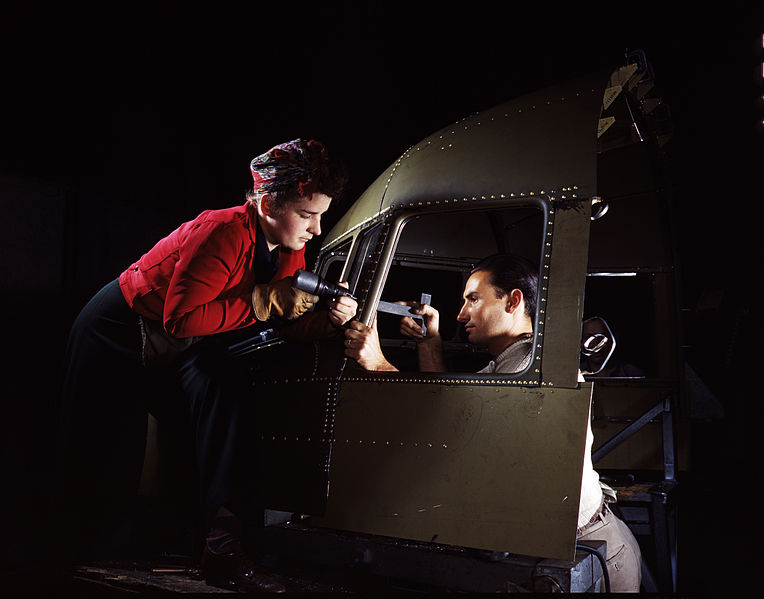
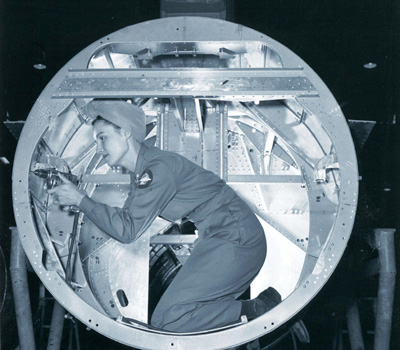
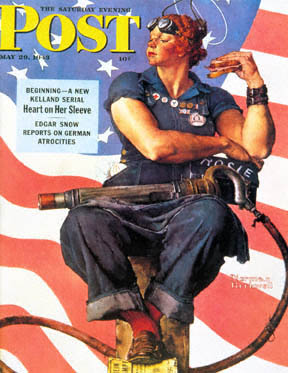
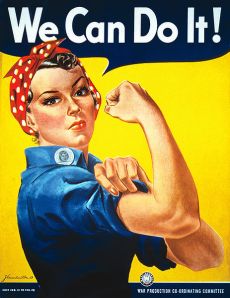
Rosie the Riveter is a cultural icon of the United States, representing the American women who worked in factories during World War Two, many of whom produced munitions and war supplies.

 These women sometimes took entirely new jobs replacing the male workers who were in the military. Rosie the Riveter is commonly used as symbol of feminism and women’s economic power.

The term “Rosie the Riveter” was first used in 1942 in a song of the same name written by Redd Evans and John Loeb. The song was recorded by many artists, including the popular big band leader Kay Kyser, and became a national hit.

 The song portrays ” Rosie” as a tireless assembly line worker, doing her part to help American war effort. The words of the song are: All the day long. Whether rain or shine, She’s part of the assembly line. She’s making history. Working for victory, Rosie the Riveter.
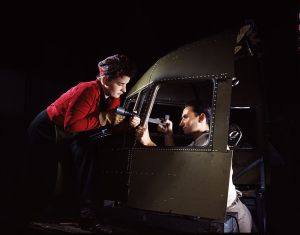
Although women took on male dominated trades during World War two, they were expected to return to their everyday housework once men returned from the war. Government campaigns targeting women were addressed solely at housewives, perhaps because already employed women would move up to the higher-paid essential jobs on their own, perhaps because it was assumed that most would be housewives. One government advertisement asked women “Can you use an electric mixer? If so, you can learn to use a drill.

 Propaganda was also directed at their husbands, many of whom were unwilling to support such jobs. Later, many women returned to traditional work such as clerical or administration positions, despite their reluctance to re-enter the lower paying fields. However, some of these women continued working in the factories.
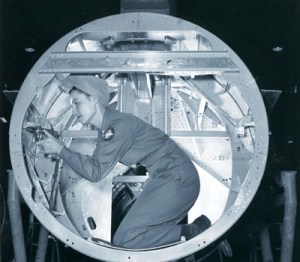
Rosie the Riveter became most closely associated with another real women, Rosie Will Monroe. She worked as a riveter at the Willow Run Aircaft Factory in Michigan, building B-29 and B-24 bombers for the U. S. Army Air Forces.

Monroe achieved her dream of piloting a plane when she was in her 50s and her love of flying resulted in an accident that contributed to her death 19 years later. Monroe was asked to star in a promotional film about the war effort at home. The song Rosie the Riveter” was popular at the time and Monroe happened to match the woman depicted in the song.

Rosie went on to become perhaps the most widely recognized icon of the era. The films and posters she appeared in were used to encourage women to go to work in support of the war effort.

According to the Encyclopedia of American Economic History, “Rosie the Riveter” inspired a social movement that increased the number of working American women to 20 million by 1944, a 57% increase from 1940. By 1944 only 1.7 million unmarried men between the ages of 20 and 34 worked in the defense industry,while 4.1 million unmarried between those ages did so. What unified the experiences of these women was that they proved to themselves and the country that they could a “man’s job” and could do it well. The average man working in a wartime plant was paid $54.65 per week, while women were paid about $31.50 per week.
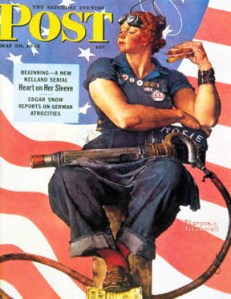
Some claim that she forever opened the work force for women, while others dispute that point, noting that many women were discharged after the war and their jobs were given to returning servicemen.

These critics claim that when peace returned few women returned to their wartime positions and instead resumed domestic vocations or transferred into sex-type occupations such as clerical and service work.

Some historians emphasize that the changes were temporary and that immediately after the war was over women were expected to return to traditional roles of wives and mothers. Finally for the first time the working woman dominated the public image and women were riveting housewives in slacks, not mother domestic beings, or civilizers.”

On October 14,200, the Rosie the Riveter/ World War Two Home Front National historical Park was opened. In Richmond, California, site of the four Kaiser shipyards, where thousands of “Rosie’s” from around the country worked. Although ships at the Kaiser shipyards were not riveted, but rather welded. Over 200 former Rosie’s attended the ceremony.

 Most recently Christina Aguilera, emulates the famous Andrews Sisters vocal harmonies of the WW-Two Era. While wearing a red bandanna and shot with the era’s vintage Technicolor processing scheme, Christina gives the famous “Rosie” pose, with fist-up, and right hand on biceps. What is it about “Rosie the Riveter” that we just can’t seem to get enough of?

Generational Changes For Women

If you were to ask my grandmother if she was full filled she would shrug her shoulders and tell you that of course she was full filled.

 My grandmother was not like most of the women of her generation she was a working woman with four children.

However she did have some advantages she only worked while her children were in school and her husband helped with the kids home work and after school activities. He also enjoyed cooking.

My grandparents worked as a team and shared the household chores and the demands that came with raising four children. Wow! they were way a head of their generation.Weren’t they?  Other than grandma’s co-workers, her friends were stay at home moms and homemakers. When I asked her if she felt that her friends resented her or looked down on her for working. She said, Oh Know! Why would they? However they did think that your grandpa was a bit odd for taking care of the kids too but that was it. She said that she resented working and getting paid less than the male school teachers. Sound familiar?

We who are the granddaughters of that generation were taught to believe that kitchen is a confining word. To our contemporaries the words “occupation Housewife” are verboten and we are not permitted to be full or filled with the sounds and smells of the household. This is a generation that came of age during the women’s movement and has had to cope with the greatest sociological changes since man began recording history.

We are the generation that carved a new definition of woman a definition that gave us some excellent middle-management jobs and a strong taste of prejudice, discrimination, and anger. Executives found that women were very good in our jobs, and what made us even better was the fact that women were all willing to do more for less. It was those very virtues that made us the enemy of the working man.

Women helped this low-cost employment force (women began to look like the Far East American help) gain credibility because through our magazines and speeches and leaders, we condoned society that frowned on women who didn’t work and assumed that any dummy (like our mothers) could raise a terrific kid. We looked of equality, and what we got was a new definition of equality: it said that woman was equal to doing man’s work– and her own — and at the same time. We created a beautiful myth about the woman who have it all. She could be thin and rich and powerful. We encouraged our daughters to enroll in women’s study courses, and we talked about their futures and the way they would run their homes in th future.

And then lo and behold our daughters got married and they wondered what we were talking about. They were so tiered they couldn’t even call us to complain. They were so busy running from work to the house that they were each willing—-personally–to march across Helen Gurley Brown‘s desk and tell her that she was full of beans.  

During those years we found ourselves saying that all women who were now thirty-five would want to switch 180 degrees in ten years. That is, we reported to anyone who would listen , all women who are 35 and in the work force on an upwardly mobile path would like to be home with children in ten years, and all women now at home with children in ten years, like to be on an upwardly mobile career path.

The other day my friend Elizabeth made a mistake of saying in front of her daughter you’re wrong she said quickly. All children I have learned are quick to say, you’re wrong, slower to say, you’re right.

She went on to explain,”My friends–except for me — don’t expect to go back to work. They like staying home. They like playing with their children, and some even like cooking and entertaining. They never want to work again.” Her sister agreed (she’s a mother of three boys). “The women in the park where she takes her children don’t want to go back to work. You know, she confided,”it’s not great working when our children are young.  

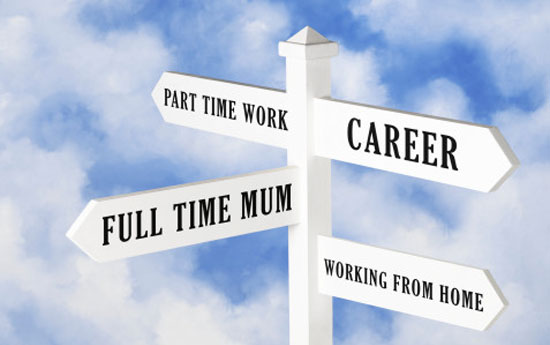
I would like to think that this generation of women appreciate what the earlier generations women accomplished. It’s possible for women today to be Betty Crocker‘s or Rosie the riveters if you want to work or not. The women of earlier generations helped pioneer the way I wonder what this generation of mothers will be pioneering for their daughters? 

The Golden Princess

Baby Boomers are cruising to places like Alaska, the Caribbean, New Zealand, Australia, and Italy and where ever the cruise ships will take them.

My friend Ruby‘s nick name is the “Golden Princess.” Ruby announced to her family and friends that she has decided to go on a Princess cruise instead of going to a nursing home. When we asked her why? She quickly answered, “It’s better than a nursing home and cheaper too!

She went on to explain to me that a nursing home costs about 200 dollars per day. The cost aboard a Princess cruise? About 145 dollars per day(with senior-citizen discounts). Add 10 dollars per day for gratuitous, and you’re still ahead! Make that 15 dollars and the staff will be begging to treat you like a queen!

She considered these amenities:

1. Ten great meals a day (the last one at midnight even has an ice sculpture!). If you can’t make it to one of the great dinning rooms, you can order room service and have breakfast in bed every day of the week.

2. Free toothpaste, razors, soap, and shampoo.

3. TV repaired, lightbulbs changed, mattress replaced. Energetic young men and women will fix anything and everything and apologize for your inconvenience.

4. Free sheets and towels every day without asking.

5. Free housekeeping and friendly folks come in each day to clean the bathroom, make the bed, and vacuüm.

6. Three swimming pools, a work out room, free washers and dryers, all without maintenance fees or other costs.

7. Floor shows and other entertainment available every night.

8. The opportunity to meet new and interesting people every seven to fourteen days.

9. Treated like a customer, and not a patient. “Yes, ma’am! “Of course, ma’am!” Will there be anything else, ma’am?”

10.The opportunity to travel the seas and visit exotic places.

Like most baby boomers I’ve given serious thought about the golden years. I have decided that becoming a “Golden Princess” on a cruise ship is the most appealing way to go. 

Grandparents Can Bring Back Letter Writing

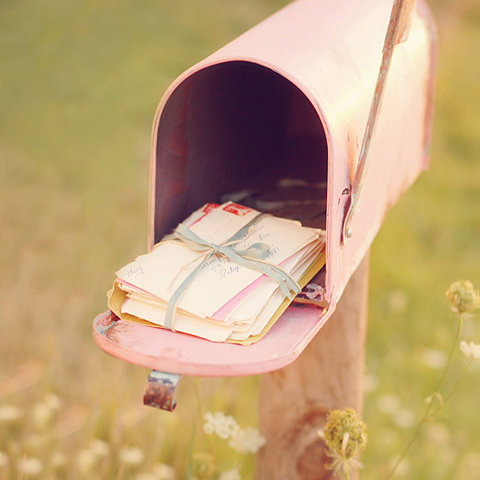
In this age of cell phones, Email, faxes, letter writing is an all but forgotten practice and most young children have never written a letter.

 Now days we talk to our friends on our cell phones it rarely occurs to us to write a letter. When was the last time your received a nice long juicy letter?  Having grandchildren is an excellent opportunity to revive an old custom.

One of the most important things to remember about letters is that they are both a form of communications for the present and a record for the future. Ask your grandchildren to keep a copy of your letters, but to be on the safe side, keep a copy yourself. When I was a young girl my grandmother and I wrote letters. I would read her letters ( and my replies) they were full of grandmotherly advice. I still have a few of the letters she sent, and I treasure them dearly, even though they are more than forty years old. I only wish they contained more details.

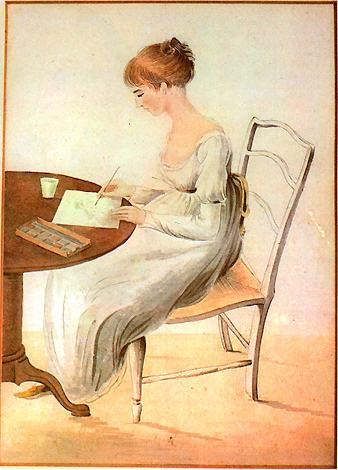
Even if your grandchildren don’t appreciate the letters now they will in the future. Letter writing is only one way of fulfilling your role of family historian. Don’t limit yourself to writing standard letters. Even your youngest grandchildren can look at pictures and if you have the skill of drawing you can send one of your drawing to them. 

As they get older you can send them picture letters where the message is conveyed by a few pictures or drawings about things they are interested in. If there’s a cartoon or comic strip you think your grand-daughter would appreciate send it to her. As they get older you can send them a disposable camera with an addressed and stamped mailing envelope and ask them to take pictures of anything they want and send them to you. And don’t forget to send pictures and postcards when you travel!

Once children get used to the idea that there may be letters arriving containing news, pictures, stories and other treats intended especially for them, they will come to look forward to them. Despite all our technological advances, most people I know feel a little rush of anticipation when they open their mail and hidden in among the bills, solicitations, and magazines is a personal letter or a post card.

Twentieth-century technology has vastly changed out ability to communicate over distance. Although it hardly seems believable today, at the end of World War Two only half of American homes had a telephone. Even in the late 1950s as many as a quarter of households had no telephone. Our grandchildren will probably find it just as hard to imagine that in 1990 only 27th percent of U.S. households had a computer!

 For hundreds of years or at least since pens and paper became commonplace and people who wanted to get in touch with other people separated by distance had only one way to do it. They wrote letters it was the only means of long-distance communication, at least until the telegraph was invented in the 19th century. 

Today the schools are considering replacing cursive writing with texting and key boarding. Grandparents can start hand writing letters and have their grandchildren write back to them. There are hundreds of fun subjects to write about while creating letters that in the future will become keepsakes.

Time Is Marching On

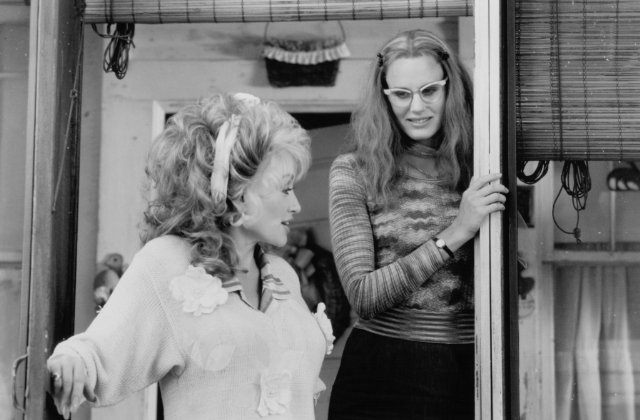
One of my favorite cinematic scenes is in the movie Steele Magnolias.  

Truvy Jones (played by Dolly Parton) is standing on the porch of beauty salon talking with young  Annette ( played by Daryl Hannah “Honey”  Truvy says, ” Time is marching on-and it is marching all over my face.”  

No words were truer than this time is marching on and not only is it marching all over my face but it has taken over my whole body. As I recognize this phenomenon of aging I’m reminded that I’ve earned every wrinkle. Every year their numbers increase. We’ve been together so long, that we are becoming good friends. But not such good friends, that I wouldn’t agree to have them  removed. Like un-friending a friend on Facebook.

I’ve  always wondered if wrinkles could talk what they might say? Perhaps the lines on my forehead would say?  I waited up for my children when they missed their curfew, started driving or went out on their first dates.

 However, there is another way to look at these characteristic indention. Maybe the lines on my forehead show how much time I’ve spent thinking about those I love or studying the world around me and finding it good. The lines around my mouth might come from the many times I ‘ve stood in awe and smiled at a beautiful sunset over the ocean.  Or smiled at a flower as it began to bloom as I walked through the rose garden in Balboa Park in San Diego and smiled at how wonderful creation is. I’m sure that some of the lines around my mouth and eyes are from the gift of laughter. Anyone who knows me knows I laugh a lot.

Perhaps the lines around my eyes are laugh lines memory boards that hold the experiences of my life that I have enjoyed and participated in the most.  Occasionally my girlfriends and I would get together. We use to laugh and joke with each other about ageing.

 Now many decades later we wish that the beauty secrets in ” Grandma’s Little Beauty” remedy books would do the trick. But the reality is it takes money, money, money, to remove all our lines. What is a girl to do these days with all the choices we have?

When You’re Young At Heart…

Fairy Tales, can come true, it can happen to you. If you’re young at heart. For it’s hard, you will find, to be narrow of mind. If you’re young at heart. When you can go to extremes, with impossible schemes. You can laugh, when your dreams fall apart, at the seams. And life, gets more exciting with each passing day. And love is either in your heart, or on its way.  Don’t you know that it’s worth every treasure on earth?  To be young at heart.

And if you survive to 105. Look at all you’ll derive out of being alive! And here is the best part, you have a head start. If you are among the very young at heart.

In a striking turnaround, science now sees optimism and pessimism not as good or bad outlooks you’re born with. But as mind-sets to adopt as situations demand.  Sure, you could look at life purely rationally, but without optimism or pessimism, you might not do much.

I loved it when my children were young. I’ve never been so tired, or had as much fun. Like all women it didn’t matter what I did .Women, never seemed to agree on what made for a “Happy Mom”. I wonder if there was a recipe called “Happy Moms.” What would the ingredients be?   It seems like “Moms” have a million expectations to live up to. Don’t they?  

It doesn’t seem to matter what age we are there are constant reminders of the choices we have to make or have made. When we are young, time seems to pass by slowly. We thought, we had all the answers. Didn’t we? It seems to me. That I knew more at the age of twenty-two, than I do now.

 When we were young it was all about the “when’s.” When they learn to crawl,walk and run. When they start school. When they get a job. When they fall in love. And just wait until they have their own children. Oh! yes, when we were young, it was all  about the future. And it seemed like we have all the time in the world. Didn’t it?  

Then we became grandmothers and the years just seemed like the flew by.  Suddenly the “when s” return. When they learn to crawl, stand, walk and run.  Along with the when’s, the fun and excitement returns. Doesn’t it?  I’m sure that my grandkids feel, that I’m bit odd.

Sometimes it seems like occasionally I catch them giving me a sarcastic glance that seems to say, “Really”  you’re doing that?  And other times their glances seem to say, ” She’s old” we must be the patient with her. Their little legs walk as slowly as my old legs. And their fresh eyes see things, that I have ignored for years.

It’s been said, That being young at heart, is not about your age but it’s a state of mind. I find that’s true. I hope you do too. The recipe for what makes for a “Happy Mom” is still being written. Or did “Betty Crocker” write it?  Maybe! Mom’s get to pretend to be like “Betty” and create their own “Mom” recipe?. Like the lyrics say,  Fairy Tales can come true. It can happen to you!


Women Aren’t Perfect…

 It’s a new day twenty-century grandmothers are a new kind of breed. I know – I am one. Look around you and you will see that Baby Boomers are changing the face of grandparents. Many have discretionary income and are shrewd in the ways of the world.

Yes, Baby Boomers have a lot of experience and wisdom to share. To state the obvious we are rich in years. Years of love, laughter, joy, sadness, trails, and temptations many years, many lessons.

We’ve seen a lot, from the invention of the television to the landing on the moon, from laptops to smart phones.  Baby Boomers are empowered by the fact that we have become the single largest economic group in the United States today. We are educated and increasingly well-preserved. Our social cultural and economic impact on our country has been unprecedented in history.

They can afford spending money on life’s little luxuries. Don’t be surprised when you see Baby Boomer’s hop on their motorcycles to take a road trip or find them spending an evening in front of their fifty inch flat screen T.V. home theater system or booking a trip to Paris. I am convinced Baby Boomers are at the early stages of what promises to be a long-term  and lucrative love affair with life. They aren’t just writing a new chapter of their lives they’re writing brand new books.

If you’re a first time grandmother, beloved veteran, or a grandma in waiting, you have at one time or another felt the impact, of being part of the  Baby Boomer generation. Like me you might have realised that it doesn’t matter how well-educated you are, how many children you have raised, or how many books you have read about parenting, that in some ways you feel like you are a sham.

Oh! I don’t mean to offend anyone, but do you just find yourself shaking your head and wondering how you did it all?  I sure do! Do you agree that some women just can’t admit they didn’t do it all? I think that the reason some Nana’s are a sham is because they never admitted that they didn’t have it all together when they were young mothers. And they are not about to admit they don’t have it all together as grandmothers either. I can’t help but wonder if this commercial had something to do with the perfect mother and grandmother syndrome.

Do you remember the retro commercial Enjoli ? ” I’m a Woman” it was popular in the 1980’s. It goes something like this: I can put the wash on the line, feed the kids, get dressed and hand out the kiss’ and get to work  nine to five cause I’m a woman. Enjoli the new eight-hour perfume for the twenty-four hour woman.  I can bring home the bacon and fry it up in a pan and never, never let you forget you’re a man.

So as young mothers if we were all that, then being a grandmother should be like a walk in the park. Or is all just a sham?  I wonder! Maybe we can’t do it all, and it would be better to admit it. It’s hard for women, to allow the  people in our lives to lend a helping hand. I wonder! How much of a role does the media play in our lives?