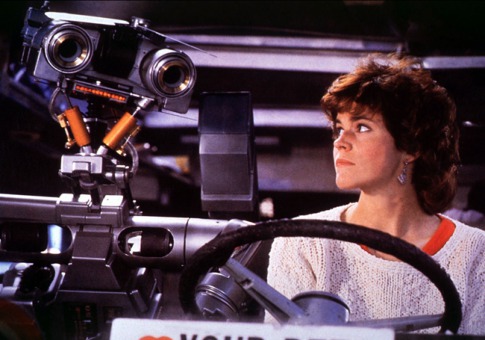
Input

Several years ago a pair of movies hit the big screen featuring a loveable, wise cracking robot as the central star and hero figure.

One word seems to define this robot in the mind of many who remember the movie and that is input.

This mechanical marvel with a human personality was starved for “input” to feed its vast memory banks and satisfy its craving for knowledge. Our minds surpasses the complexity of the finest computer systems man can make.

It is the greatest multitasker and creative interpreter of data, working around the clock from its earliest moments of existence until its final function at death. The continuous service life of the human computer may span as much as one hundred years or more. At least two things are significantly different about your brain. You decide what input goes in and when and where to focus your virtually unlimited thinking power. Some people focus the potential of their incredible brains on advanced theories of astrophysics, while others prefer to memorize endless columns of sports statistics.

 A few study the intricacies of human languages while entire generations prefer to focus on the latest fashions, street slang, and social trends. Our society seems to be addicted to the “blame game.”  People seem to want to blame instead of accepting responsibility for their own choices. There are times in life when we can become negative, discouraged and then we make it worse when we chose to water it, nurture it, coddle it, and help the negative grow.

My mother use to tell me that nobody can make you depressed. She also said, if you’re not happy, nobody is forcing you to be unhappy. If you’re negative and you have a bad attitude, nobody is forcing you to be unhappy. if you’re negative and you have an attitude, nobody’s coercing you to be bored, uncooperative, sarcastic or sullen. She taught me that it wasn’t the circumstances that had me down, it was my thoughts about the circumstances that had me down. She would also remind me to take time, and think about what I was thinking about.

Obviously we can’t ignore problems and live in denial, pretending that nothing bad ever happens to us. That’s unrealistic. Is it?  My mother was a list maker and she encouraged me to make lists too. We called them our “Ben Franklin” lists.  

Every now and then we would make a thought list and list the thoughts that were dominated in our thinking, those that only crossed our minds occasionally, and those that never seem to find their way into our minds. She said, that negativity, cynicism, scorn and pessimism are viruses and diseases to the human soul.

 They can eat away at our personality and faith like runaway cancerous growths. If your attitude is dominated by negativity it’s possible to change your attitude but it doesn’t happen instantly.

People can do it thought by thought, word by word, and decision by decision. This transformation process involves changing all those negative thoughts for positive ones. Like the lovable robot  said, it’s all about “Input.” 

 

Neverland

The clock struck twelve and my third-grade class-mates and I ran from our desks and out the door. It was recess the best part of the day that we all looked forward to.

 My friend Billy and I hit the playground, we ran to the farthest part of the play ground because no one played there.  If they wanted to play basketball or kickball they would play in the area close to the drinking fountain. When we weren’t playing on the courts we could be found on the swings or monkey bars.

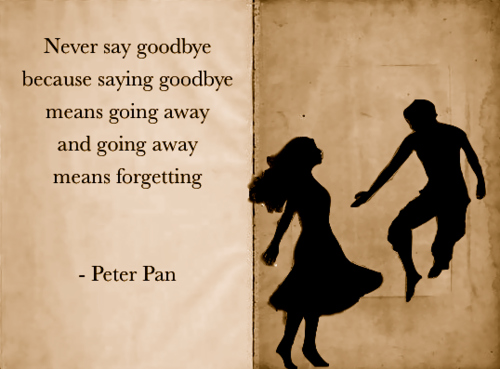
Billy and I pretended that we were in different places, like the Jungle, the Desert, or in the Ocean. One day we decided to play Peter Pan. “All right, here is where “Wendy” lives,” I said, pointing to a four-square section of the court. “And Peter Pan will live near that basketball hoop.” Billy liked my idea and we started to make up our game.

“Peter will be in trouble, so Wendy has to come in the middle of the night and save him,” Billy told me. “That sounds good… I think I’m going to be Tinkerbell.” I said, Suddenly Billy looked at me. ” But I want to be Tinkerbell today.  He complained. I told him that I had thought of the idea first, he still whined. “Come on, Billy you can be Tinkerbell tomorrow,” I said, hoping he would drop it. “No! I’m going to be Tinker Bell today. It’s only fair”, he yelled. “How fair is that?” I asked. “It just is!” I sighed. This fight was going nowhere. “Okay,” I said,” either I get to be Tinkerbell, or we won’t play this game at all.”

 Billy yelled at me that’s a stupid idea I guess that’s how girls with portuguese names are then he walked away. I stared at him as he walk toward the swings. I wondered what happened?  What does me being portuguese have to do with the both of us wanting to be Tinkerbell?  Up to that point I thought I was like everyone else. I knew that it really didn’t mean anything but it still wasn’t right or a nice thing to say. Just then the teachers blew their whistles, and recess was over. I told the teacher that Billy and I had gotten into a fight and she let us talk outside the classroom.

 Talking to him didn’t seem to make a difference he didn’t seem to care that he had hurt my feelings. I didn’t know how much it had hurt until I realized I was yelling at him. I stopped and told him I was sorry. “It’s okay. What I said was rude and I shouldn’t have said it. I guess I’m the one that’s sorry,” he said. “Thank you, I whispered. “No problem. And I promise never to make fun of your last name again. Do you forgive me?” he asked. “Of course, I forgive you! I laughed as we held hands while walking back into the classroom.

Once a year Billy and I would go to Disneyland with his family. Billy and I continued to pretended he was Peter Pan and I was Tinkerbell even if we were to old to. Billy and I stayed best friends until high school then we went to different schools and eventually drifted apart. 

I never forgot him or that he never insulted me again just as he promised. I always wondered who told Billy that I my last name was a portuguese name and that made me different from him? It’s obvious that an eight year old boy wouldn’t know something like that? Isn’t it? How did I know it was wrong of him or anyone to make fun of my name?

Toddler or Seuss Landing?

Sometimes living with a toddler can seem like you are living in Seuss LandingWe all know how exhausting a toddler can be for both parents and grandparents. One of the best things you can do for your children is pinch hit when they need it and your schedule permits. Of course, you’ll also have to be in pretty good shape to hold your own with an active child. Don’t be discouraged if your grandchild balks initially at being separated from her parents. Sometimes this will happen even if you are a regular visitor.

 One of the most important lessons that your grandchild learns during this period is autonomy. She becomes aware of herself as a separate person who want to do things for herself. The toddler demonstrates her autonomy and her desire for more of it by mastering her own body, including walking, climbing, jumping and grabbing things and letting them go. She learns to control her bodily functions. 

 Toilet training is another of those areas that can drive parents nuts. Unfortunately, there always seem to be good reasons for parents to begin toilet training that have nothing to do with the child. In the nineteenth and early twentieth century, toilet training wa begun very early, not only because there were no washing machines or disposable diapers, but also because it was believed that regularity was important to good health. In 1914, The U. S. Children’s Bureau recommended that toilet training begin at three months or earlier!  Though hardly anyone would suggest starting this early today, more and more parents feel pressured because they are sending their kids to day-care facilities that only accept children who are already out of diapers.

Remember to maintain some perspective and a good sense of humor. Also remember that everyone seems to get the hang of toilet training by the time they move on to other challenges, such as getting a driver’s license, taking college entrance exams, or getting married!

The toddler’s search for autonomy is enshrined in the fold wisdom concept of the terrible twos. Unlike the infant who expresses her discomfort by crying, the toddle makes her feeling felt far more directly. Since the child is now  verbal, she can object with a resounding “NO” to your suggestions. Since she is mobile, she can walk or run away when you call her or tell her to do something. For example, you may be trying to get home by a certain hour and you want her to sit in her stroller so you can  get there as quickly as possible. She wants to walk and tells you so. You try to put her in her stroller and she tries to wiggle out as you try to buckle her in. It can just drive you crazy!

Although such behavior can try the patience of the most saintly mother or grandmother, it is important to appreciate such words and behavior for what they are: natural assertions of your childs or grandchild autonomy. And they do pass! Don’t worry they move up to preschooler status. One of the most important things we can do with our grandchildren during the preschool years is play. Play does not begin with the preschooler, of course; it starts earlier, and ideally it should be a lifelong activity. But there ar a few reasons for giving it special attention at this point in the child’s development. In earlier generations going to college was a significant achievement and getting into a good school was an important part of children’s high school experiences, today parents want to be sure that their children get into the right preschool, kindergarten, or elementary school.

 Toy and game manufacturers have been quick to capitalize on this enthusiasm by developing specifically educational toys and slapping the label “educational” on almost anything they produce in the hope it will attract more buyers. It is certainly not my intention to criticise products or activities that prepare children for school. I am an enthusiastic supporter of any program that promotes education by strengthening families and increasing the involvement of parents in their children’s lives.

However, it seems that parents and grandparents can get so involved in preparing children for formal school that they often forget just how valuable play is in this preparation.

 More than once I’ve been introduced to someone’s precocious child or grandchild who has already been taught to read or do math or who has memorized the state capitals. Whether we’re talking about formal games with specific rules to be learned and followed, competitive games with winners and losers, or just fooling around by dressing up and pretending, never underestimate the importance of play!

Grandma’s Common Sense

Letters are among the most significant memorial a person can leave behind them.  Johann Wolfgang Von Goethe~

Sometimes a grandmother’s common sense can teach their grandchildren that life’s simple pleasures can bring them the most happiness, and that they cannot buy it with money. Like going on walks and showing them the beauty in nature.

I preferred my grandmothers homemade toys, which she created with her own hands, over the expensive toys my parents bought me. From the age of five, I can remember her writing letters to me. She introduced me to world-famous classics and the library. By the time I was six I was able to read classics like Oliver Twist and Great Expectations because my dad had read them to me over and over. I’m not sure if I read them or if I memorised them.

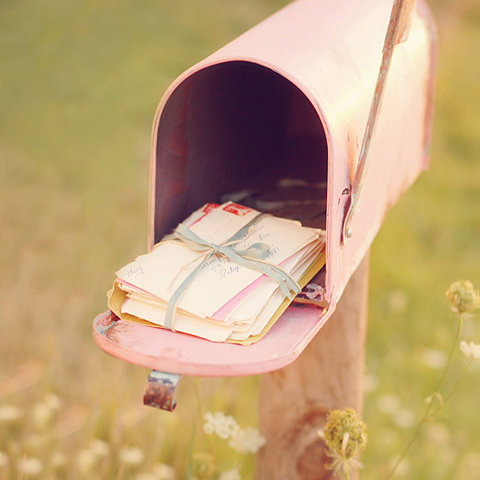
My grandmother lived far away and would come to visit us and when she arrived I was glade to see her and sad when she had to leave. She felt the same. I missed her right away. But then, one week after she left, a letter would arrive.

Dear Granddaughter, I miss you a lot and remember absence makes hearts grow fonder? Write to me when you feel low or bored. So I started writing to her and I poured out all my problems into those letters. One of my favorite letters that I wrote to her was when I was in second grade and I explained to her that an older girl was being mean to me at school and called me a brat.

 I wrote to my grandma: Grandma, I’m being treated unkindly at school and I feel hurt. She wrote back: Dear Granddaughter, Just follow my instructions when the older mean girl says something that is hurtful to you. Tell her that you are hard of hearing and ask her to repeat what she said again and again. She will repeat it. Keep telling her that you can’t hear her, and she will get fed up and leave you alone. I followed grandma’s advice and it worked.

Then in my first year of high school we were having our annual health fitness week. I was good at sports but not at rope climbing and gymnastics. All my class mates were stronger in the upper parts of their bodies than me. I couldn’t complete rope climbing or any of the gymnastic part of the testing.

I wrote to Grandma: Grandma, I’m not good in sports, and Mom is making me sign up  for sport. She says sports and rope climbing are two different categories. She wrote back: Dear Granddaughter, I heard a song recently that had a wonderful message. There may be mountain peaks you have to climb on, there may be rivers fast and wide you may have to ride on. Unless you dream, unless you try, how will you know how far you can fly? Remember these words and believe in yourself. It turned out that because of my mom and grandmother I continued to pursue sports. I was good at sports. However I never did climb a rope.

Letters passed between us every week and she often sent quotes by great people from newspapers and magazines. All of them, in one way or another, told me the same thing:” Believe in yourself, then you can reach even the farthest star.” I kept all of Grandma’s letters in a file. When I felt low and sad, I would read them one by one. They lifted my spirits, and I came back to my self again. The lessons my grandma taught in her letters will forever remain the most valuable and treasured ones.

Grandma never owned a computer and she didn’t foresee in the future that her granddaughter would be passing on some of her advice on a website. I wonder how will our granddaughters be passing on their grandmother’s advice in the future? What is going to replace computers?

It’s The Little Things That Count

It’s the little things you do each day that will keep your love strong. Grand gestures are fun. They can make the heart soar. But if they only happen once or twice a year, What’s the fun in that? Little gestures are not as splashy. They may even go unnoticed. But if it weren’t for the raindrops, the oceans would soon be empty. So let your drops of love rain down. When people lose a partner whom they’ve loved dearly, it’s not the grand gestures that they miss, it’s  the little things. It’s the nightly cup of tea. It’s checking that the front door is locked. It’s flowers in the vase. It’s drying the dishes. It’s holding hands.

The little things are like the nails that hold a house together. You don’t see them, but they’re doing their work. And like nails, the little things don’t insert themselves without some help. Each one may not take a lot of energy, but if put enough energy into the little things, over time you’ll build a great big love. You’ve been taught to say “Thank You” for presents, but do you acknowledge the little presents your spouse gives you every day? You can never say “Thank You” too many times, though most people don’t say it enough. Do they?

Every Day Is Memorable

Make every day you’re in love memorable. When you’re in love every day should be considered memorable: every good morning kiss, every hug, every caress, every cuddle.

As the years of your couplehood fly by, you accumulate a full house of furniture, an attic full of old clothes, a garage full of treasured junk, and one mind. Shared by two people, full of golden memories. You’re not conscious of making memories. A walk down the aisle, a period of tropical bliss, a toddler’s first steps, and a family vacation may stand out, but the majority of your precious minutes together on earth are not so easily held on to. Can you possibly remember every shared moment? Of course not.

But while so many thousands of events can’t possibly stick out in your mind, it doesn’t mean that you shouldn’t act like they will. Even if you can’t remember every time you do something together, by putting more of yourself into each and every shared moment, they’ll mean so much more to you as they’re occurring.

 Don’t kiss perfunctorily put some love in it. Put more energy in your hugs and hold on to the ones you love a little longer. Look your partner in the eyes, and mean it when you say “I love you,” At the end of the day, your memory banks may not be any fuller, but your love will be a lot richer. Regardless if you are in love or not remember to treat the people in your life, with kindness, respect, and love.

Mom Mania

There is one thing that all mothers can agree on no matter what their job title, income, number of children, education, religion, or location: They want to raise kids who are happy, confident , and self-reliant through childhood to adulthood.

Sometimes stress and quilt brought on by the need to be the “Sacifical Mom” can end up interfering with their ability to achieve this goal. There’s good news for the “Sacifical Mom” she can get back on track by learning and applying these twelve steps. They are proven to help create kids who will live a happily ever after lives as adults.

Look at your child and try to picture him or her in twenty-five years as a grow-up. What do you see? Does your son or daughter have these twelve essential qualities:

  1. Is he happy, optimistic, and secure?  Does he have authentic self-esteem?
  2. Is she in a healthy, loving relationships? Does she have good friends and loyal allies?
  3. Does he have a strong moral compass? Does he have good values and strong character?
  4. Does she have empathy and compassion for all people?  Is she kind, unselfish, and humane?
  5. Does he have self-control and patience? Can he delay gratification?
  6. Is she able to make good decisions on her own?
  7. Is he self-reliant?
  8. Is she responsible and internally motivated? Does she have a good work ethic?
  9. Is he practical and resourceful in handling day-to-day living?
  10. Is she resilient? If life throws her a curve, can she bounce back?
  11. Is he confident and positive about his identity and strengths?
  12. Does she have fun? does she laugh? Is her life balanced between work and love, self and others? 

Don’t forget to take into consideration that kids are born with a certain temperament and genetic predisposition. Certainly there are some things about children’s development that are not under their parents control but many are. Mothers can say good-by to their need to be on  the “Sacrificial Motherhood Mania” bandwagon and be the real mothers they know they are, and raise kids who will not only survive but thrive without her. Remember you can’t teach what you don’t know!

People Are Like Turtles

Nothing can happen to a turtle when it’s inside its protective shell but a turtle can not stay put forever eventually it must stick out its neck to search for food and a mate.

 We all have a bit of the turtle in us wanting to stay safe and warm inside our shell. But if we’re going to get anywhere we must be like the turtle and dare to stick out our necks. Humans may not have physical shells to hide in but we can put up psychological barriers that are just as impervious.  At times it may seem easier to hide from life at least for a moment.

Just as a mature turtle’s shell doesn’t change a person’s psychological shell also hardens over time. As years go by it can become more and more difficult to let the real person shine through. At first they may only want their shell to shield them form the outside world but over time the ones who love them can start to feel excluded.

And if they stay in their shell their mate might leave them behind. When people are in turtle mode they need to remember to make others feel free to snuggle up in their shell occasionally but also make it a point of getting outside with them everyday. So be like a turtle and stick your neck out now and then.

Chose Your Own Grandparenting Style

 The Power of Myths reminds me of the classic children’s storyLittle Red Riding Hood” it has almost all the main features of one stereotyped image of a grandparent.
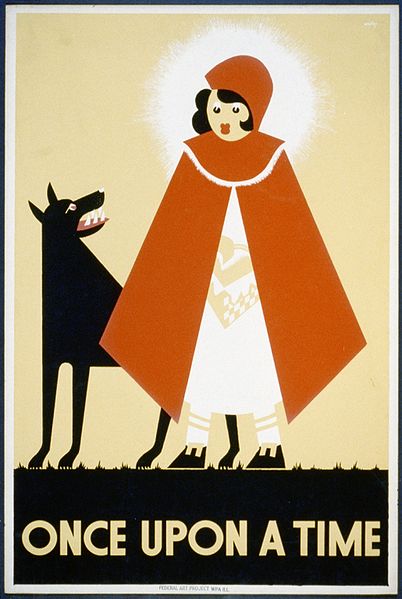
Once upon a time, at the edge of a large forest there stood a tiny cottage almost hidden by the trees. In it a little girl lived with her mother. The little girl could often be seen in her hood and red  cape flitting among the tall trees. Her grandmother had made the hood and cape for her and because the little girl always wore them, she was called Little Red Ridding Hood.

Red Riding Hood’s grandmother is old and feeble, caring and gift-giving, and lives within convenient walking distance (wolves not with standing) of her granddaughter. There are probably some grandparents who fit this image. There are probably even more who wish they matched some parts of it. But in today’s world, many grandparents are neither old nor feeble.

They don’t eat chocolate cake or drink creamy milk especially when they’re sick. Their lives are not focused on their grandchildren but on their jobs, friends and social activities. Oh! We can’t forget that some of us can end up spending all day trying to figure out how to use our latest techie devices.

 Often they don’t live on the other side of the woods but on the other side of the country, on another continent, or at least somewhere where the winters are milder and the weather is sunnier. However grandparents are enjoying their beach cottages and mountain cabins. Aren’t they?

 One morning Little Red Riding Hood’s mother packed a basket full of homemade  goodies that included a chocolate cake, a jar of strawberry jam and a bottle of creamy milk. She told Little Red Ridding Hood to take this basket to your grandmother because she was sick in bed and this food will do her good and it will make her happy. I would’ve preferred a cup of tea and a piece of toast myself. 

My friends and I didn’t realize how powerful myths could be until we became a grandparents. We have discovered that when it comes to the topic of family life how surprised we were to see how many people are still clinging to idealized images from the past.

There’s certainly nothing wrong with having romantic and nostalgic ideas but if we walk around feeling that our lives are only second best because things were once better it can sap all our strength. And if we invest our energy trying to live the way we imagine people used to live we’re bound to be disappointed.

Grandparents are living longer that in the first half of the century, the grandparenting phase might last two or three decades or more.

 In short, grandparenting has developed as an independent role in the family cycle and often extends as long or longer than parenting.

Here are a few questions grandparents can ask themselves when choosing their grandparenting style.

What kinds of things to you enjoy doing? What special skills do you have?  How much time do you have available and how much do I want to spend grandparenting? What are your children’s and grandchildren’s needs? What religious and ethnic traditions do you want to pass on to your grandchildren? 

Keep in mind there is still no set definitions of what makes you a good grandparent any more that whats makes a good grandchild. The consensus about what makes us good grandparents makes it easier for each of us to reinvent grandparenting in own style and enjoy our roles.

Nana’s Hands

If we can be generous with our hearts, ourselves, we have no idea of the depth and breadth of love’s reach. Our Nana was a generous woman with a big heart not just to her family but to all kinds of people, even people she didn’t know.

 She did nice things without expecting anything back. Nana was especially good at baking and she made the best chocolate chipcookies in the world.

One of the best things about Nana was that she loved people and they loved her back. Friends and family knew they could stop by and see her anytime and Nana would always welcome them. Everyone in her family depended on Nana to keep them up with the latest birth or who got married in the neighborhood (in the old neighborhood) as my dad use to say. They grew up in Massachusetts and Rhode Island. 

Now Nana’s not here to tell us what’s going on, or to bake those favorite things she was so good at making. Nana passed away a few years and my cousin found this poem and we realized that it describes how we felt about our Nana. It’s called “Nana’s Hands.”

Nana’s Hands used to touch us with. Nana’s hands would scold us and sit us down in a chair. Nana’s hands would applaud us when we did something good. Nana’s hands would hold us every chance they could. Nana’s hands would aid us when we fell down. Nana”s hands, Yes I miss them, they were the best hands around. Nana’s hands would spank us and she would say, “Now, Baby, you act right.” Nana’s hands would stroke us and tuck us in at night. Nana’s hands would pray for us, they would pray for everyone she knew. Nana’s hands would rise in the air as in God she put her trust. Nana’s hands were special; they were the very best. Nana’s hands got tired, and now they are at rest.

We thought a lot about the last line of that poem it taught us that it can be hard to lose people we love but it can sometimes be for the better too. When Nana got sick we felt bad for her when we realized she couldn’t do things she loved anymore and she was in pain. At least we knew that she didn’t hurt anymore.

 We also realized that we never thought about how things would change once Nana was gone. Losing someone you love can definitely help us appreciate the people who are special to us while we still have them in our lives.

Rosie The Riveter

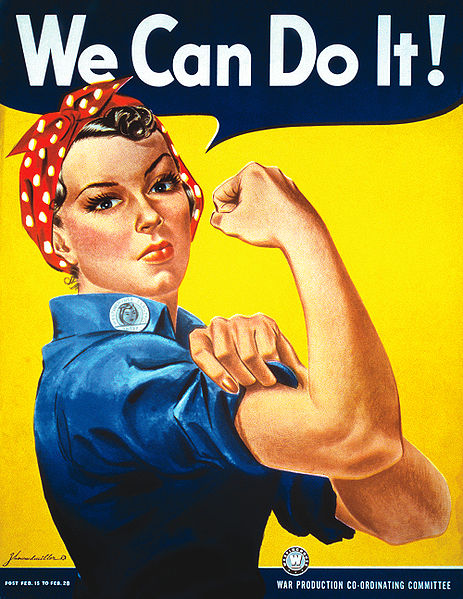
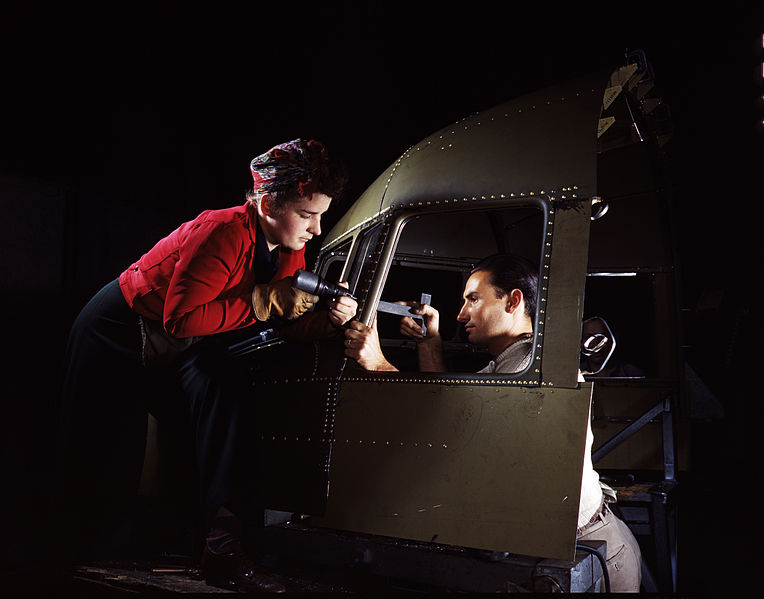
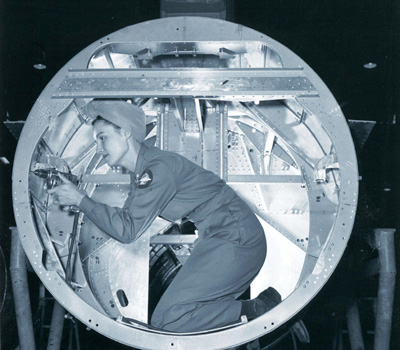
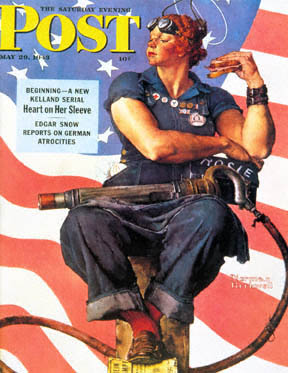
Rosie the Riveter is a cultural icon of the United States, representing the American women who worked in factories during World War Two, many of whom produced munitions and war supplies.

 These women sometimes took entirely new jobs replacing the male workers who were in the military. Rosie the Riveter is commonly used as symbol of feminism and women’s economic power.

The term “Rosie the Riveter” was first used in 1942 in a song of the same name written by Redd Evans and John Loeb. The song was recorded by many artists, including the popular big band leader Kay Kyser, and became a national hit.

 The song portrays ” Rosie” as a tireless assembly line worker, doing her part to help American war effort. The words of the song are: All the day long. Whether rain or shine, She’s part of the assembly line. She’s making history. Working for victory, Rosie the Riveter.

Although women took on male dominated trades during World War two, they were expected to return to their everyday housework once men returned from the war. Government campaigns targeting women were addressed solely at housewives, perhaps because already employed women would move up to the higher-paid essential jobs on their own, perhaps because it was assumed that most would be housewives. One government advertisement asked women “Can you use an electric mixer? If so, you can learn to use a drill.

 Propaganda was also directed at their husbands, many of whom were unwilling to support such jobs. Later, many women returned to traditional work such as clerical or administration positions, despite their reluctance to re-enter the lower paying fields. However, some of these women continued working in the factories.

Rosie the Riveter became most closely associated with another real women, Rosie Will Monroe. She worked as a riveter at the Willow Run Aircaft Factory in Michigan, building B-29 and B-24 bombers for the U. S. Army Air Forces.

Monroe achieved her dream of piloting a plane when she was in her 50s and her love of flying resulted in an accident that contributed to her death 19 years later. Monroe was asked to star in a promotional film about the war effort at home. The song Rosie the Riveter” was popular at the time and Monroe happened to match the woman depicted in the song.

Rosie went on to become perhaps the most widely recognized icon of the era. The films and posters she appeared in were used to encourage women to go to work in support of the war effort.

According to the Encyclopedia of American Economic History, “Rosie the Riveter” inspired a social movement that increased the number of working American women to 20 million by 1944, a 57% increase from 1940. By 1944 only 1.7 million unmarried men between the ages of 20 and 34 worked in the defense industry,while 4.1 million unmarried between those ages did so. What unified the experiences of these women was that they proved to themselves and the country that they could a “man’s job” and could do it well. The average man working in a wartime plant was paid $54.65 per week, while women were paid about $31.50 per week.

Some claim that she forever opened the work force for women, while others dispute that point, noting that many women were discharged after the war and their jobs were given to returning servicemen.

These critics claim that when peace returned few women returned to their wartime positions and instead resumed domestic vocations or transferred into sex-type occupations such as clerical and service work.

Some historians emphasize that the changes were temporary and that immediately after the war was over women were expected to return to traditional roles of wives and mothers. Finally for the first time the working woman dominated the public image and women were riveting housewives in slacks, not mother domestic beings, or civilizers.”

On October 14,200, the Rosie the Riveter/ World War Two Home Front National historical Park was opened. In Richmond, California, site of the four Kaiser shipyards, where thousands of “Rosie’s” from around the country worked. Although ships at the Kaiser shipyards were not riveted, but rather welded. Over 200 former Rosie’s attended the ceremony.

 Most recently Christina Aguilera, emulates the famous Andrews Sisters vocal harmonies of the WW-Two Era. While wearing a red bandanna and shot with the era’s vintage Technicolor processing scheme, Christina gives the famous “Rosie” pose, with fist-up, and right hand on biceps. What is it about “Rosie the Riveter” that we just can’t seem to get enough of?

Create A Family Value’s List

 What are your top five family values?  What traits do you hope your child or grandchildren will have as an adult? 

 Using the following five strategies in the acronym “TEACH”  can help you decide which traits really mean the most to you.

T- Target the value you want to apply right this minute in your home. Focus on only one at a time so you don’t get overwhelmed and spin you wheels trying to do to much. Many moms and grandmothers target a different key value each month. Write down your choices so you don’t forget.

E- Exemplify this value in your own everyday behavior. The easiest way for children and grandchildren to learn any new value is by actually seeing it in action. So intentionally start looking for ways to tune up your chosen value anytime you’re with your children or grandchildren.

A- Accentuate the targeted value in simple ways. For example, if respect is your targeted value seize the opportunity to make a point about treating all people with dignity by showing respect to the people in your life. 

C-Catch your children displaying the value and praise them for it. ” Hey, I know it was hard to admit you broke your brother’s hockey stick. I appreciate your honesty.

H- Highlight the value of the value. ” I loved how you smiled at Grandma today. That was being really kind. Did you see how her face lit up? Whenever you’re kind, it helps make the world a better place.” Whenever you highlight a value be sure you name the value and tell your child exactly how they made a different.

Here is an example of a few values : assertiveness, caring, charitableness, courage, excellence, fairness, friendliness, dependability, determination, generosity, helpfulness, honesty,industriousness, kindness, joyousness, politeness, tolerance, understanding, unselfishness, wisdom, purposefulness and a hundred more words that describe family values. This is something that grandparents can do to.

Kids Say The Darndest Things…

Kids PlayingKids Say the Darndest Things” was a segment on a television show called House PartyArt  Linkletter was the host on CBS radio and television for many years and his interviews were never scripted, the kids said what they really thought. It could have been called “Straight Talk.”  One thing we can count on is that children are still saying the darndest things and they never stop surprising us. Do they? Sometime you just have to wonder how do they come up with some of the questions they ask us grandparents. Don’t we?  Like for instance a few years ago a friend was telling me about a conversation she had the night before with her four-year old grandson while they where watching Cat In The Hat together.

He looked into her eyes and said, Nana you have lines on your face. Then she said, I’m an old person with old skin. You’re a little person, and you have young skin. She figured that was the end of the conversation but then to her surprise he said, Nana when are you going to get them fixed?  My other Nana is old, and she doesn’t have lines on her face.  Wow! He sure is lucky that his Nana has a good sense of humor. Isn’t he?  As she was sharing her experience with me, we laughed at how unexpected his response was. Then I couldn’t help but wonder. How would have Art Linkletter or Billy Crosby reacted if they had that same conversation with a four-year old boy? I can only image the audience laughing because he is such an adorable little boy and enjoys making everyone he meets laugh. This goes to show that grandparents need to remember kids say the darndest things and to keep a good sense of humor.